Yemen Detainee Deal Offers a Humanitarian Opening in a War Still Far From Settled
A UN-backed agreement to release more than 1,600 conflict-related detainees could reunite families and build confidence, but it does not mean Yemen’s war is over.
Save Article
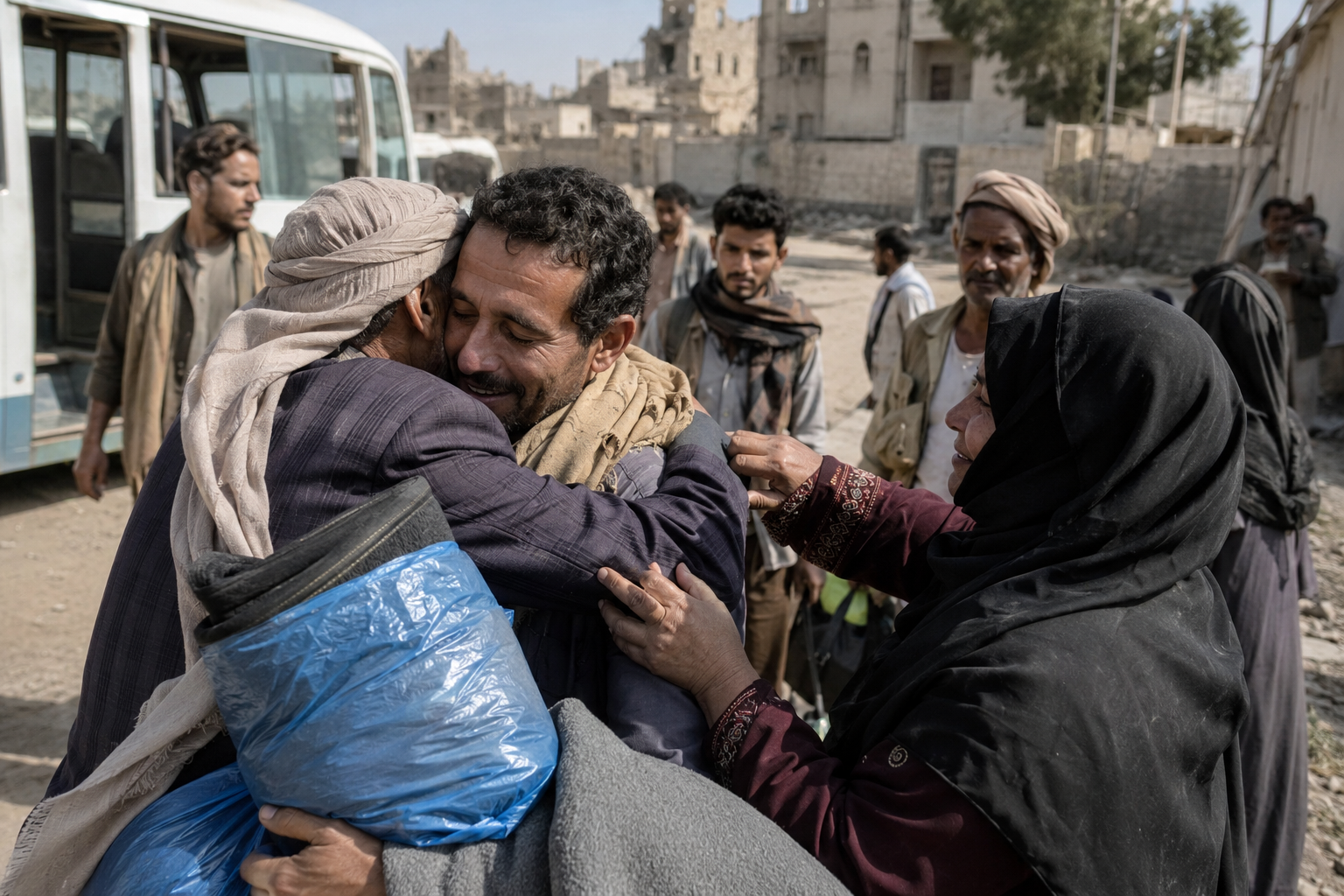
A UN-backed agreement to release more than 1,600 conflict-related detainees could reunite families and build confidence, but it does not mean Yemen’s war is over. Editorial illustration by TheDailyGlobe.
Key Facts
- The UN Special Envoy for Yemen said parties agreed under UN auspices to release more than 1,600 conflict-related detainees.
- The UN said the agreement followed 14 weeks of negotiations in Amman, Jordan.
- The ICRC said it welcomed the agreement and was ready to begin preparations for release, transfer and repatriation.
- AP reported the deal would be the largest detainee swap in Yemen’s 11-year war.
- Al Jazeera reported the UN-backed agreement would see the ICRC facilitate the exchange of detainees.
Yemen’s warring parties have agreed to release more than 1,600 conflict-related detainees, offering a rare humanitarian opening in a war that remains far from settled.
The UN Special Envoy for Yemen said the agreement was reached under UN auspices after 14 weeks of negotiations in Amman, Jordan. The International Committee of the Red Cross said it welcomed the agreement and was ready to begin preparations for release, transfer and repatriation.
For families, the deal could mean something immediate: relatives held because of the conflict may finally come home. For Yemen’s wider peace process, the meaning is more limited. A detainee release can build confidence, but it is not the same as a final political settlement.
Why Detainee Releases Matter
Detainee exchanges matter because they reach families in a way that diplomatic statements often do not. A release can end years of uncertainty for relatives who have not known when, or whether, someone would return.
That human impact is why detainee negotiations often become one of the few areas where opposing sides can make progress before a wider peace agreement exists. They do not require every political issue to be solved first, but they do require enough trust, lists, verification and logistics to move people safely.
AP reported that the agreement would be the largest detainee swap in Yemen’s 11-year war. That scale makes the deal notable, but the number and composition of detainees should still be checked against the latest implementation updates before publication.
The UN and ICRC Roles
The UN role is mediation. The Special Envoy’s office said the agreement came after weeks of negotiations in Jordan, showing that the deal was not a quick announcement but the result of a formal process.
The ICRC role is humanitarian facilitation. The organization said it was ready to begin preparations for release, transfer and repatriation. That work matters because detainee releases involve more than opening doors. People have to be identified, moved, transferred and reunited safely.
Al Jazeera reported that the UN-backed agreement would see the ICRC facilitate the exchange. That gives the deal a practical channel for implementation, though it does not guarantee that every transfer will happen smoothly or immediately.
A Step Forward, Not a Peace Deal
The agreement should be described carefully. It is a humanitarian confidence-building measure, not proof that Yemen’s war has been resolved.
That distinction matters because Yemen’s conflict includes political authority, territorial control, security arrangements, humanitarian access and outside regional interests. A detainee release can reduce suffering and create space for further talks, but it does not settle those questions.
The safest reading is hopeful but limited. If implemented, the agreement could reunite many families and show that negotiation channels still exist. It does not by itself answer whether the parties are ready for a broader settlement.
What Remains Unclear
It remains unclear when all detainees covered by the agreement will actually be released and transferred. Announcing an agreement is one step; completing the movement of detainees is another.
It also remains unclear whether the deal will lead to wider political talks. Humanitarian agreements can build confidence, but they can also remain isolated if the sides do not move on larger issues.
Another unresolved question is whether UN and aid personnel detained by the Houthis will be released through separate channels. The provided source material supports the detainee agreement itself, but not a conclusion that every related detention issue has been resolved.
For now, Yemen’s detainee deal is best understood as meaningful because it could change the lives of families waiting for loved ones. It is also limited because the war, and the political questions behind it, remain unfinished.
Reporting note: Reporting draws on UN Special Envoy materials, ICRC statements, AP reporting, Al Jazeera reporting, and reviewed Yemen conflict context. This article was produced with AI-assisted research and reviewed by an editor before publication.