Iran Strikes Raise New Risk Around Gulf Ceasefire Talks
U.S. strikes on Iranian radar and drone sites, followed by Iran’s claimed attack on U.S. forces in Kuwait, added new pressure to already fragile Gulf diplomacy.
Save Article
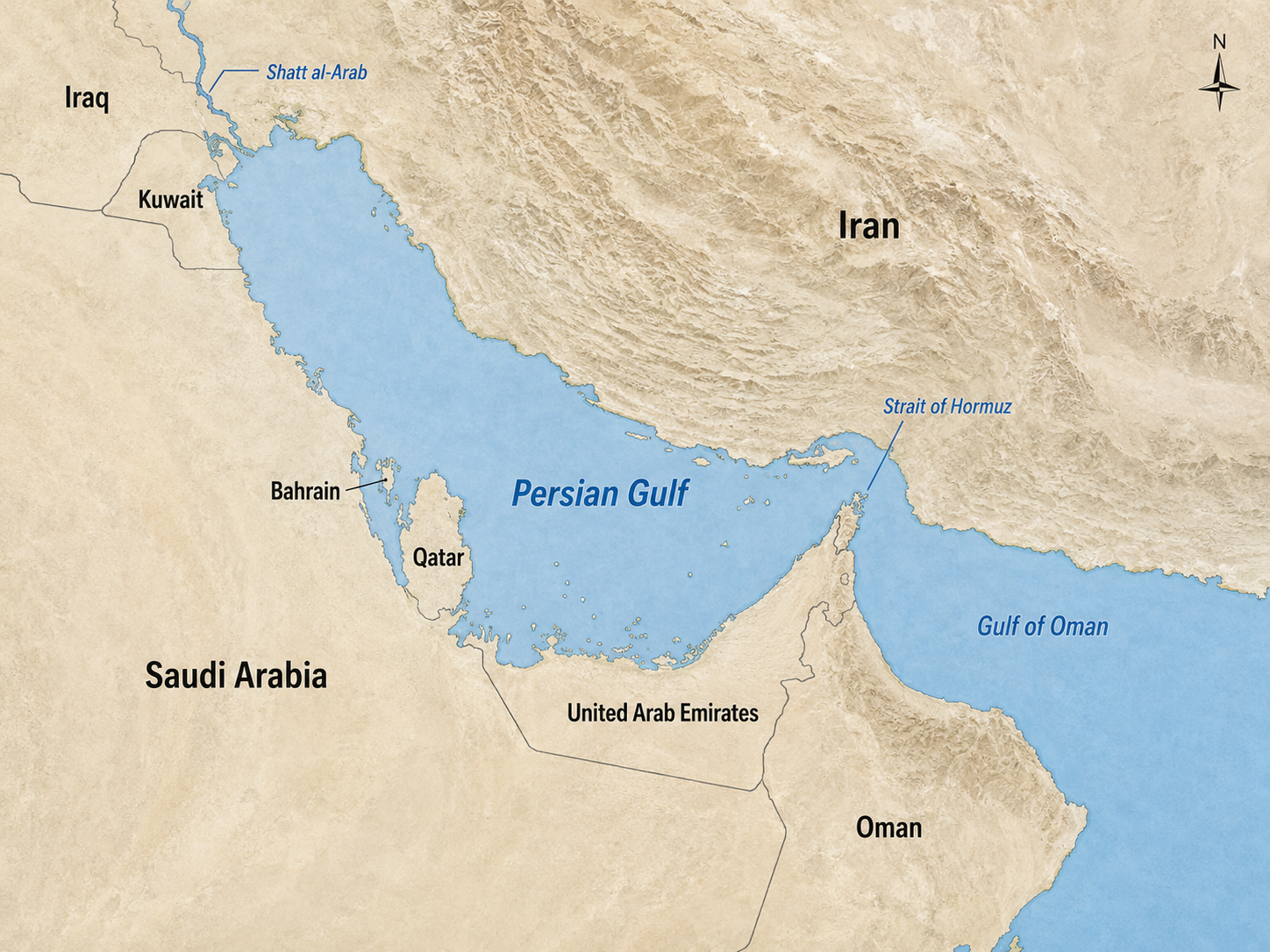
The latest U.S.-Iran exchange adds pressure to regional diplomacy and Gulf security planning. Editorial illustration by TheDailyGlobe.
Key Facts
- The United States said it struck Iranian radar and drone systems after Iran shot down an American drone over international waters.
- Iran said it responded by targeting U.S. forces in Kuwait.
- The United States said Iranian missiles were intercepted and no casualties were reported.
- The exchange comes as ceasefire and regional negotiations remain fragile.
- Oil prices rose after the renewed U.S.-Iran strikes, reflecting concern about Gulf instability.
A military exchange can be contained in the moment and still make the next diplomatic step harder.
That is the risk now facing the Gulf after the United States said it struck Iranian radar and drone-control sites following Iran’s downing of a U.S. drone over international waters. Iran said it responded by targeting U.S. troops in Kuwait, while the United States said the missiles were intercepted and no casualties were reported.
The confirmed details do not point to a wider war by themselves. They do show why the region remains fragile: U.S. forces are exposed across the Gulf, Iran has shown it is willing to answer military action with its own claims of retaliation, and diplomatic efforts are operating under the pressure of real weapons fire.
What Changed in the Gulf
The immediate sequence is important. The United States described its action as a response after Iran shot down an American drone over international waters. The targets, according to the U.S. account, were Iranian radar and drone systems.
Iran’s account focused on its claimed response, saying it targeted U.S. forces in Kuwait. The U.S. said the missiles were intercepted and that no casualties were reported. Those details should be handled carefully because early claims in military exchanges can change as governments release more information.
For readers, the key point is not only that shots were exchanged. It is that the exchange touched several sensitive points at once: American forces in the Gulf, Iranian military systems, ceasefire diplomacy, oil prices and shipping concerns near one of the world’s most watched energy routes.
Why Kuwait Matters
Iran’s claim that it targeted U.S. troops in Kuwait gives the exchange a different weight than a strike confined to one country’s territory. Kuwait hosts U.S. forces, and any claimed attack involving those forces can widen the circle of concern for Gulf governments, military planners and families connected to service members.
The U.S. account that missiles were intercepted and no casualties were reported is important because it limits what can be said about the immediate damage. No casualty report is not the same as no risk. It means the available account does not support a claim of deaths or injuries from that episode.
That distinction matters in a fast-moving regional story. A calm reading of the facts shows a serious military exchange, but not enough confirmed evidence to describe it as a broader conflict shift on its own.
The Pressure on Diplomacy
The exchange comes as ceasefire and regional talks remain fragile. Military action can make those talks harder even when neither side says it wants the situation to expand.
The reason is practical. Negotiators and governments have to account not only for statements at the table, but for events in the air, on bases, at sea and across regional borders. A drone shootdown, a U.S. strike and a claimed attack on U.S. forces all create pressure on leaders to answer, explain or harden their positions.
That does not prove either side is abandoning diplomacy. Available reporting says peace efforts continue. But the more military incidents accumulate, the harder it becomes to keep talks separated from retaliation, domestic pressure and regional security fears.
Oil Markets Are Watching the Same Map
The Gulf is not only a military and diplomatic space. It is also central to global energy markets. Oil prices rose after the renewed U.S.-Iran strikes, reflecting concern that instability could affect supply, shipping or expectations around the Strait of Hormuz.
That does not mean one exchange will automatically raise prices for drivers or businesses everywhere. Oil markets move for many reasons, and price changes can reverse. But Gulf instability is one of the clearest ways a regional security story can become a pocketbook story for people far from the Middle East.
The Strait of Hormuz remains part of that concern because it is a major route for energy traffic. When military action and threats cluster around the Gulf, traders, governments and shipping interests pay attention even before there is a confirmed disruption to every route.
What Remains Unclear
Several important questions remain unanswered. The public record does not yet show whether the exchange will lead to further U.S. or Iranian action. It also remains unclear how much damage was caused to the Iranian sites the United States said it struck.
Iran’s stated targeting of U.S. forces in Kuwait and the U.S. account of intercepted missiles also leave follow-up questions about what systems were used, how the interception unfolded and whether any additional threats were detected. Those details matter, but they should not be filled in without confirmation.
The larger diplomatic question is whether the exchange changes the behavior of governments involved in ceasefire and regional talks. Officials may continue negotiations, slow them, or use the incidents to justify firmer positions. Available reporting does not yet establish which path will dominate.
What to Watch Next
The next useful signals will come from official U.S. and Iranian statements, any confirmed follow-up military activity, updates from Kuwait or other Gulf governments, and reporting on whether ceasefire or regional negotiations remain on track.
Oil prices and shipping traffic near the Strait of Hormuz will also show how markets and maritime interests are reading the risk. A temporary price increase is one signal. A sustained disruption or new warning about shipping would be another.
For now, the story is serious but should not be inflated beyond the facts. The U.S. and Iran exchanged military action. The U.S. says Iranian missiles were intercepted and no casualties were reported. Diplomacy is under more pressure. What happens next will determine whether this remains a contained exchange or becomes another step away from a stable Gulf ceasefire.
Reporting note: Reporting draws on reputable wire reporting, regional security reporting, market reporting, official claims from involved governments, and reviewed background materials. This article was produced with AI-assisted research and reviewed by an editor before publication.