Iran Ceasefire Talks Raise Hopes
Negotiators reportedly reached a tentative 60-day ceasefire extension tied to nuclear talks, but President Trump's approval and Iran's formal position remain unresolved.
Save Article
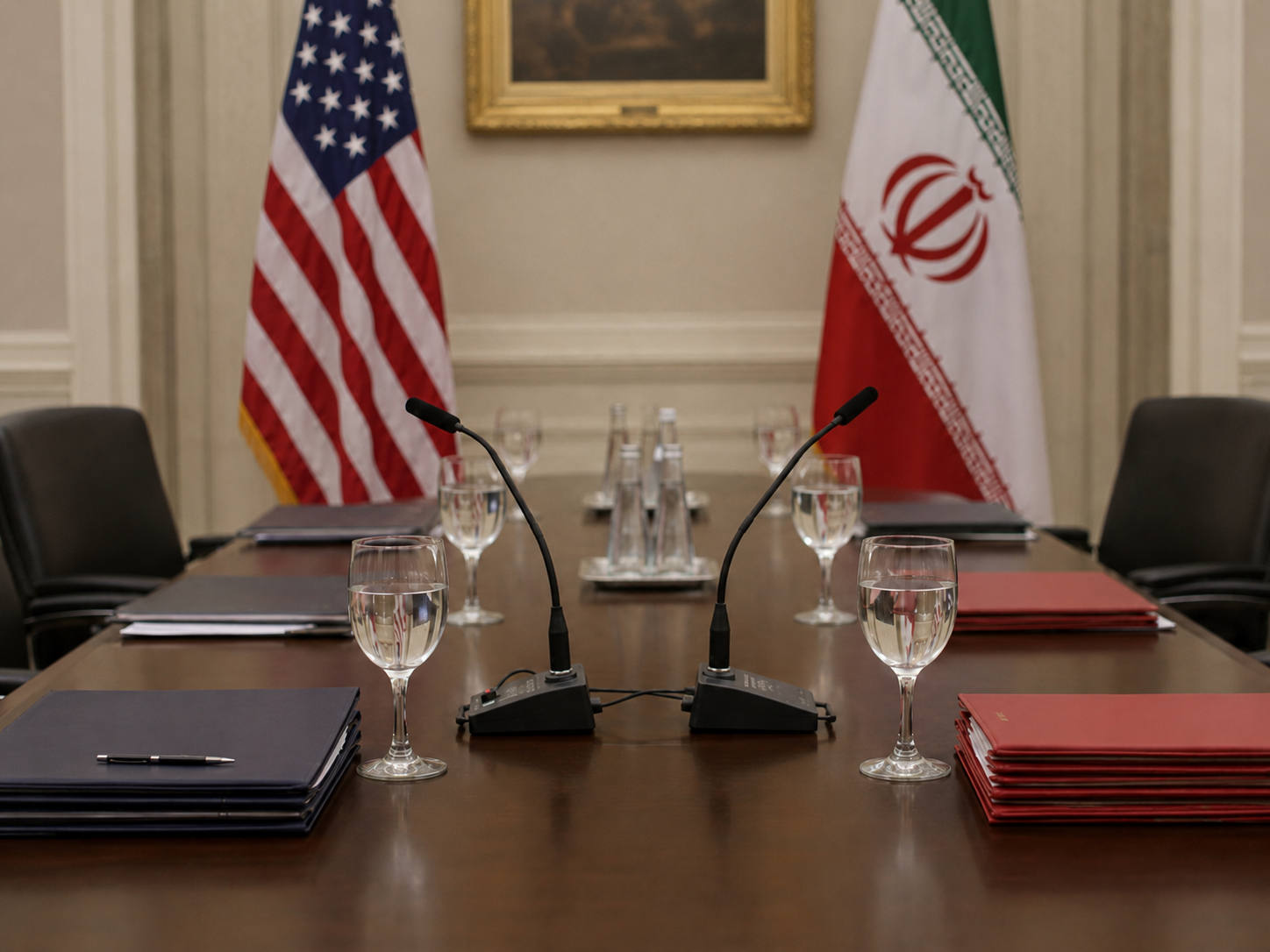
U.S. and Iranian negotiators have reportedly reached a tentative path toward extending a ceasefire and starting nuclear talks, but final approval remains unresolved. Editorial illustration by TheDailyGlobe.
Key Facts
- AP reported that U.S. and Iranian negotiators reached a tentative 60-day ceasefire-extension framework tied to nuclear talks.
- Axios reported that the preliminary memorandum still requires Trump's final approval and confirmation from Iran.
- Sky News reported that Iranian state-linked media pushed back on claims that a final agreement had been reached.
- Unresolved issues include ceasefire enforcement, Iran's nuclear program, sanctions relief, uranium stockpile questions, and access through the Strait of Hormuz.
- The reported framework should not be treated as final unless both sides formally confirm it.
A tentative U.S.-Iran diplomatic opening could extend a fragile ceasefire and create a path back to nuclear talks, but the reported framework is not yet a finished agreement.
AP reported Thursday that U.S. and Iranian negotiators had reached a tentative agreement to extend the ceasefire by 60 days and begin talks on Iran's nuclear program, according to a U.S. official familiar with the matter. The same reporting said President Donald Trump still needs to approve the emerging pact.
That distinction matters. In active diplomacy, a tentative framework can lower immediate war risk, but it can also collapse if leaders reject the terms, if either side disputes what was agreed, or if military incidents break the trust needed to keep talks alive.
What the Reported Framework Would Do
The reported proposal would extend the current ceasefire for 60 days and open negotiations over Iran's nuclear program. Axios described the arrangement as a preliminary memorandum of understanding, citing U.S. officials and a regional source, while also reporting that final approval from Trump and confirmation from Iran are still needed.
The public details remain incomplete. Some reporting has described broader issues around shipping through the Strait of Hormuz, sanctions relief, and Iran's nuclear material. Those terms should be treated as reported elements of a developing negotiation, not as confirmed final obligations.
For readers, the practical point is simple: negotiators may have found a temporary off-ramp, but the hardest decisions are still ahead. A 60-day pause could buy time for nuclear talks, but it would not by itself resolve the larger dispute between Washington and Tehran.
Why Trump's Approval Matters
The reported framework cannot become U.S. policy without Trump's approval. That gives the White House the decisive next move and makes the timing politically important. Approving the memorandum could give negotiators room to test whether Iran will engage on nuclear limits and ceasefire enforcement. Rejecting it could return the situation to a more dangerous posture.
Iran's formal position is just as important. Sky News reported that Iranian state-linked media complicated or pushed back on claims that an agreement had been finalized. That does not necessarily mean talks have failed, but it does reinforce why the deal should be described as tentative.
The Nuclear and Hormuz Questions
The nuclear issue is the reason this is more than a ceasefire story. Any serious agreement would have to address what Iran is willing to do with its nuclear program, how limits would be verified, and what the United States or others would offer in return. Those questions are not answered by a reported ceasefire extension.
The Strait of Hormuz adds another layer. The waterway is one of the world's most important shipping routes for oil and energy supplies. Even the possibility of disruption can affect markets, shipping costs, and regional military planning. That is why diplomats, energy traders, shipping operators, and governments outside the region are watching the talks closely.
What Could Still Break the Talks
Ceasefire enforcement remains a major risk. ABC News reported continuing tensions around the ceasefire, including U.S. accusations of Iranian violations. Military claims from either side should be treated carefully unless independently confirmed, but the broader point is clear: diplomacy can be overtaken quickly by incidents on the ground or at sea.
The exact terms also remain uncertain. Available reporting does not establish a final public text, a verified nuclear framework, a sanctions-relief schedule, or a monitoring mechanism. It also does not show that Iran has formally accepted the reported memorandum.
What Readers Should Watch Next
The next signals are straightforward: whether Trump approves the framework, whether Iran formally confirms it, whether an official text is released, whether ceasefire violations continue, and whether negotiators announce a credible process for nuclear talks.
For now, the story is not peace secured. It is a possible pause with large unresolved questions. That still matters. In a conflict tied to nuclear risk, sanctions, shipping lanes, and regional military danger, even a temporary diplomatic opening can change the next few days. But until both governments confirm the terms, the safest reading is cautious progress, not a final deal.
Reporting note: Reporting draws on wire reporting, live updates, diplomatic reporting, international coverage, and reviewed background materials. This article was produced with AI-assisted research and reviewed by an editor before publication.