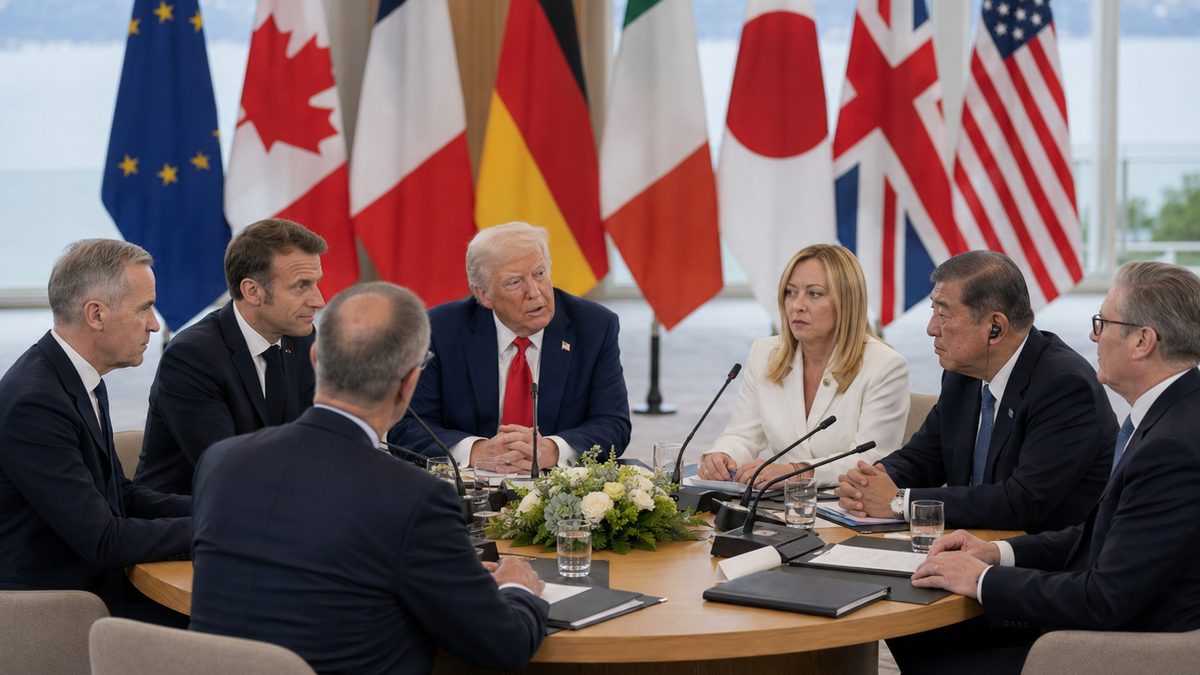
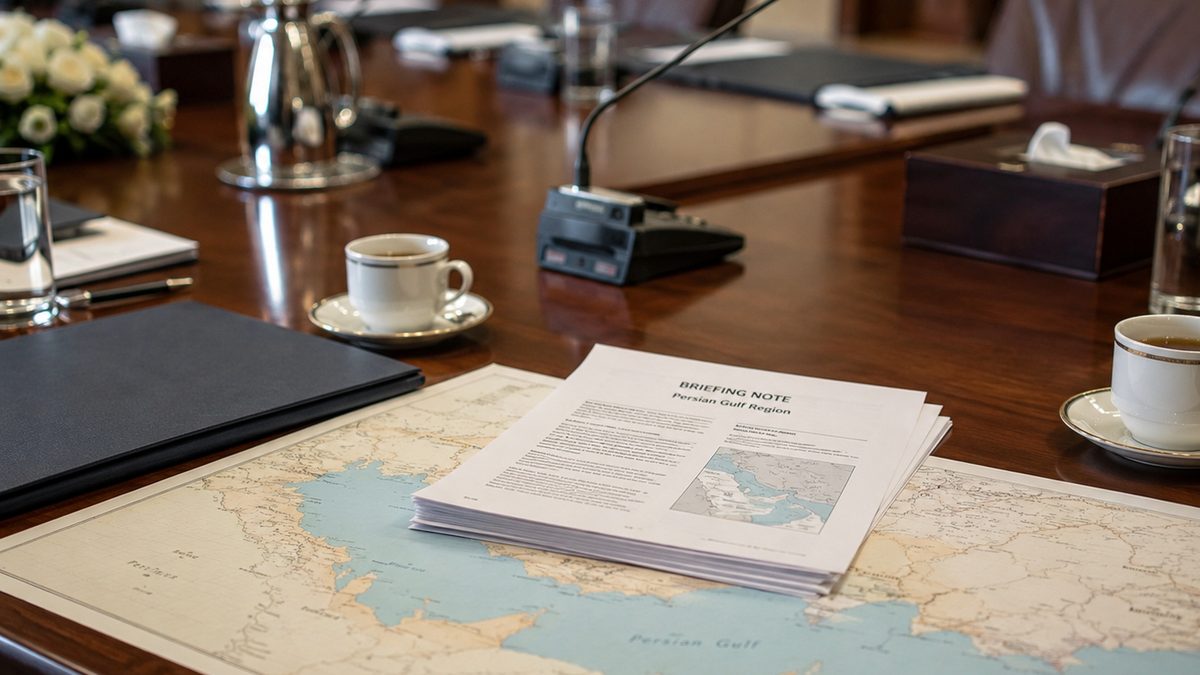
UN Gaza Briefing Shows How Fragile the Ceasefire Process Remains
A UN Security Council briefing showed that Gaza’s ceasefire process still depends on unresolved questions over disarmament, enforcement, governance, and humanitarian access.
Save Article
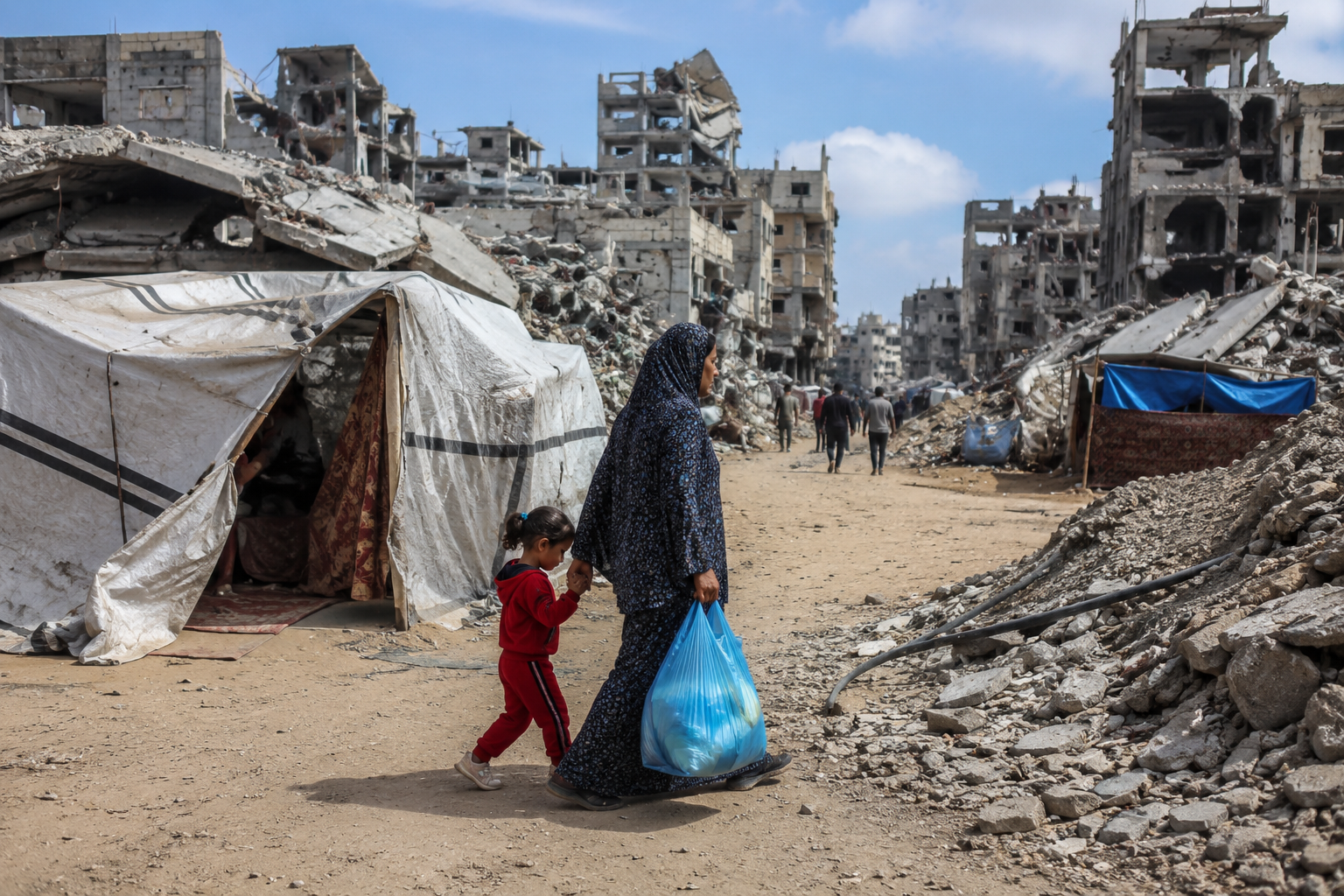
A UN Security Council briefing showed that Gaza’s ceasefire process still depends on unresolved questions over disarmament, enforcement, governance, and humanitarian access. Editorial illustration by TheDailyGlobe.
Key Facts
- A UN Security Council briefing addressed Gaza’s ceasefire and disarmament process.
- The U.S.-brokered Board of Peace framework remains part of the diplomatic process around Gaza.
- Humanitarian concerns in Gaza remain central to international discussions.
- Claims about Israeli, Hamas, Palestinian, and international positions should be attributed separately because compliance issues remain disputed.
- It remains unclear whether Hamas will agree to disarmament conditions or whether humanitarian access will improve.
A UN Security Council briefing on Gaza showed how much of the ceasefire process remains unsettled, even as diplomats continue pressing for a more durable path beyond the fighting.
The briefing addressed Gaza’s ceasefire and disarmament process, including calls for Hamas to disarm and questions about how international pressure should be applied. The U.S.-brokered Board of Peace framework remains part of the diplomatic structure, while humanitarian concerns in Gaza continue to shape international discussions.
For readers, the issue is not just whether a ceasefire exists on paper. A ceasefire only becomes stable if the terms are clear, the parties are held to them, civilians can receive aid, and there is some agreed process for security and governance after the immediate fighting stops.
What the UN Briefing Revealed
The briefing highlighted a basic problem in the Gaza diplomacy effort: the ceasefire process depends on several moving parts that are not yet settled. Disarmament, humanitarian access, international oversight, Israeli compliance claims, Hamas responses, and Palestinian diplomatic positions all remain part of the debate.
Associated Press reporting described the Security Council being urged to press Hamas to disarm. That request reflects one of the central conditions attached to any longer-term framework. But the source material does not show that Hamas has accepted those conditions or that the enforcement process has been fully resolved.
That matters because a ceasefire can pause violence without answering what comes next. The harder work is building a structure that can survive disputes over security, political authority, aid delivery, and responsibility for violations.
The Board of Peace Framework
The U.S.-brokered Board of Peace framework remains part of the diplomatic process, according to the source basis. Security Council Report background materials have described the broader stabilization framework and the role of international authorization in Gaza-related planning.
The purpose of such a framework is to create a structure for what happens after active combat eases. That can include international involvement, security arrangements, governance questions, and steps meant to keep a ceasefire from collapsing into another round of fighting.
But the existence of a framework is not the same as full agreement. The available material does not show that every party accepts the same obligations, the same enforcement standards, or the same political end point. That is why the framework remains important but unfinished.
Disarmament Is the Hardest Condition
The disarmament question is central because it goes directly to who holds armed power in Gaza. International officials and governments pressing Hamas to disarm see it as necessary for a more stable postwar arrangement. Hamas’s position and any response to those demands should be attributed separately, not treated as settled agreement.
Israel’s claims about ceasefire compliance, Hamas’s responses, and Palestinian diplomatic positions also need to be handled carefully. In conflicts like this, each side may describe violations, responsibilities, and obligations differently. Unless a claim is independently confirmed or officially documented, it should be presented as a claim by the party making it.
That distinction is not a technicality. It is how readers can understand the dispute without being pulled into one side’s framing. The ceasefire process depends partly on whether all parties are judged by clear and consistent standards, but the source material shows that question remains unresolved.
Humanitarian Access Remains Central
Humanitarian conditions in Gaza remain a major part of the international discussion. UN OCHA materials continue to provide context on aid needs and humanitarian concerns, and those concerns are not separate from the ceasefire process.
A ceasefire that does not improve access to food, medical care, shelter, and basic services may fail to produce the relief civilians need. At the same time, humanitarian access can become tied to security checks, border control, political disputes, and accusations among the parties.
The source material supports that humanitarian concerns remain central. It does not prove that access will improve, or that any side has fully met the conditions others are demanding. That remains one of the key open questions.
What Remains Unresolved
The largest unresolved issue is whether Hamas will agree to disarmament conditions. Without clarity on that point, the security side of the ceasefire process remains fragile.
It is also unclear whether Israel and Hamas will be judged by the same enforcement standard in the ceasefire process. That question matters because any perception of uneven enforcement can weaken confidence in the process and make future negotiations harder.
Finally, humanitarian access remains uncertain. Diplomats can debate frameworks and enforcement, but civilians experience the ceasefire through whether aid reaches them, whether services return, and whether daily danger recedes.
The UN briefing did not show that the Gaza ceasefire process has collapsed. It showed something more precise: the process is still fragile because the conditions needed to stabilize it are not fully resolved. The next test is whether diplomacy can turn a temporary pause and a broad framework into rules that the parties actually follow.
Reporting note: Reporting draws on Associated Press reporting, UN Security Council background materials, UN humanitarian updates, diplomatic records, and reviewed context. This article was produced with AI-assisted research and reviewed by an editor before publication.