Hormuz Drone Intercepts Show Why an Open Shipping Route Can Still Be Risky
U.S.-reported drone intercepts near the Strait of Hormuz highlight how a vital global shipping route can remain open while security concerns continue to grow.
Save Article
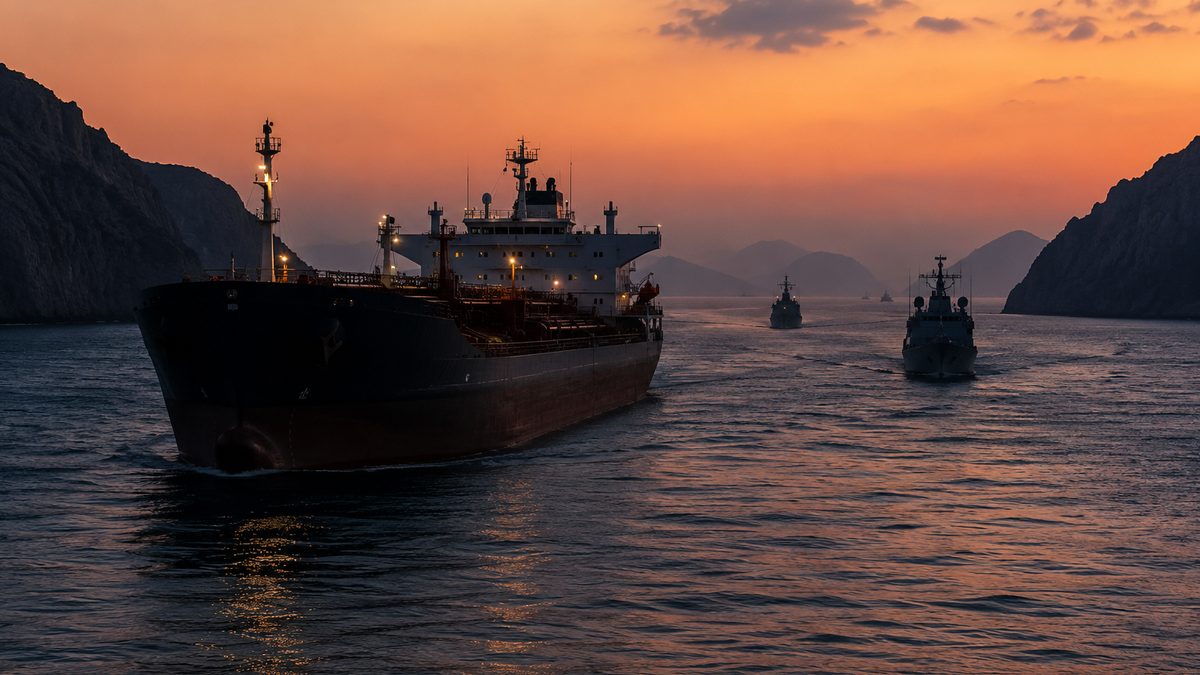
Commercial traffic through the Strait of Hormuz can continue even as security risks rise around the route. Editorial illustration by TheDailyGlobe.
Key Facts
- U.S. Central Command said U.S. forces shot down multiple Iranian one-way attack drones near or heading toward the Strait of Hormuz.
- Reporting citing U.S. military officials said the drones were assessed as threatening commercial vessels or commercial traffic.
- The Strait of Hormuz remains open to commercial shipping.
- The reported incident occurred while public questions about U.S.-Iran diplomacy remained unresolved.
- Iran had not publicly confirmed or fully addressed the reported drone activity at the time of reporting.
A major shipping route does not have to close to become a concern. Sometimes the risk appears in smaller signs: a security warning, a rerouted vessel, higher insurance costs, or a military interception that raises new questions about what could happen next.
That is the situation developing around the Strait of Hormuz after U.S. Central Command said U.S. forces shot down multiple Iranian one-way attack drones near or heading toward the waterway. According to reporting citing U.S. military statements, the drones were assessed as posing a threat to commercial traffic moving through one of the world's most important maritime corridors.
Why the Strait Matters
The Strait of Hormuz is a narrow waterway connecting the Persian Gulf to global shipping lanes. Large volumes of energy exports and commercial cargo move through it every year, making it one of the most closely watched maritime routes in the world.
Because so much trade passes through the strait, even incidents that do not stop shipping can affect how companies, insurers, governments, and markets view the route. A reported drone threat can raise concerns about future disruptions even if vessels continue moving normally.
What the Military Reported
According to U.S. Central Command, American forces intercepted and destroyed multiple drones that the military identified as Iranian one-way attack drones. International reporting from several outlets cited the U.S. assessment that the drones posed a threat to commercial traffic near the strait.
The reported intercepts are significant because they move beyond political statements and into operational security. The military action described by U.S. officials was presented as a measure to protect commercial shipping rather than as evidence that the waterway had been closed or blocked.
At the same time, readers should keep in mind that the attribution and threat assessment come from U.S. military officials and have been reported through international news organizations. As with many fast-moving security incidents, independent public details remain limited.
Shipping Risk and Diplomatic Uncertainty
The timing adds another layer of uncertainty. Reports of the drone incident emerged while public claims and discussions surrounding possible U.S.-Iran diplomatic progress remained unsettled. That means the military development and the diplomatic picture should be viewed as related but separate issues.
A reported security incident does not automatically mean diplomacy has failed, just as diplomatic discussions do not guarantee that security risks disappear. Both tracks can move at the same time, sometimes in conflicting directions.
For shipping companies and insurers, the practical question is often simpler: whether vessels can continue operating safely and predictably. Even without a closure, heightened security concerns can influence risk calculations, insurance decisions, and operational planning.
What Remains Unclear
Several important questions remain unanswered. It is not yet clear whether Iran will publicly acknowledge, dispute, or further explain the reported drone activity. There has also been no broad indication that commercial shipping guidance has changed as a result of the incident.
It is also unclear whether insurers, shipping operators, or regional governments will adjust recommendations for vessels moving through the area. Those decisions often develop over days rather than hours as more information becomes available.
What to Watch Next
The next indicators will likely come from several directions: additional statements from U.S. Central Command, any official response from Iran, advisories issued by maritime authorities or shipping companies, and signs that insurers are reassessing risk in the region.
For now, the most important point is that the Strait of Hormuz remains open. The reported drone intercepts do not show a shutdown of the route. They do, however, illustrate how a shipping corridor can continue operating while becoming more fragile, and why governments, shipping firms, and energy markets will be watching closely for the next development.
Reporting note: Reporting draws on government statements, international reporting, regional coverage, and reviewed background materials. This article was produced with AI-assisted research and reviewed by an editor before publication.