Tuvalu's Climate Visa Shows What Planned Migration Can Look Like
A new migration pathway between Tuvalu and Australia offers a rare example of governments creating a long-term relocation option before a crisis forces people to move.
Save Article
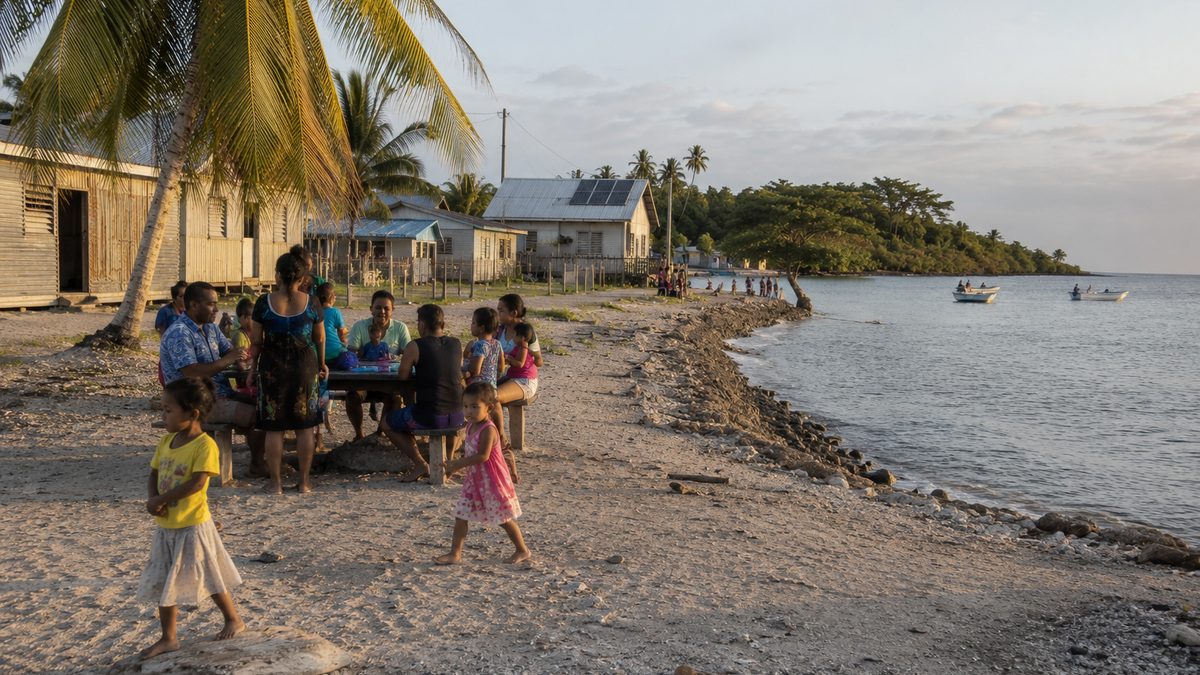
Tuvalu’s migration pathway with Australia offers a concrete example of climate adaptation through planned mobility. Editorial illustration by TheDailyGlobe.
Key Facts
- The Falepili pathway allows eligible Tuvaluans to live, work, and study in Australia as permanent residents.
- Australia's Department of Home Affairs began ballot selections for the 2026-27 program year on June 9.
- The pathway is part of the Australia-Tuvalu Falepili Union treaty.
- ABC News Australia reported that a majority of Tuvalu's population applied for the program.
- Selection is not automatic and depends on eligibility requirements and ballot outcomes.
For many families in Tuvalu, a small Pacific island nation, one of the biggest questions is no longer whether they love home. It is whether future opportunities, jobs, education, and long-term security might eventually require living somewhere else while still remaining connected to the place they come from.
That question sits at the center of a new migration pathway between Tuvalu and Australia. Rather than waiting for an emergency or disaster to force large-scale movement, the two countries have created a system that allows eligible Tuvaluans to apply for permanent residency through a structured ballot process.
A Different Approach to Migration
Migration is often discussed after a crisis begins. People flee conflict, natural disasters, economic collapse, or political instability. The Falepili pathway takes a different approach by creating a legal route before such pressures become overwhelming.
Under the program, selected applicants can move to Australia with the ability to live, work, and study as permanent residents. The arrangement provides families with an option that can be considered over time rather than under immediate pressure.
That distinction helps explain why the program has attracted international attention. It is not being presented as a temporary evacuation plan. Instead, it is a long-term policy designed to give people choices about where they build their futures.
Why Climate Adaptation Is Part of the Conversation
Tuvalu is frequently mentioned in discussions about sea-level rise and climate adaptation because of its low elevation and limited land area. But the current migration pathway is not based on the assumption that the country will suddenly become uninhabitable.
Instead, the agreement reflects an effort to expand options. Climate adaptation is often associated with seawalls, infrastructure projects, and environmental planning. In this case, mobility itself is being treated as one part of an adaptation strategy.
For policymakers, the idea is relatively straightforward. If people have legal pathways to relocate over time, governments may be able to reduce future pressures that could emerge if movement happens only after conditions become more difficult.
Family Decisions Beyond Climate
The decision facing Tuvaluan families is not only about environmental concerns. Education opportunities, employment prospects, healthcare access, and family connections all influence whether someone applies for the ballot.
ABC News Australia reported that a majority of Tuvalu's population applied for the pathway. That figure attracted attention internationally, but it does not mean most residents are preparing to leave permanently. Applying for a program and relocating are not the same thing, and the number ultimately selected remains unknown.
For many applicants, the ballot may represent an opportunity worth keeping open rather than a firm decision about where they will spend the rest of their lives.
Questions About Identity and Sovereignty
The policy also raises questions that cannot be answered by visa rules alone. If larger numbers of citizens live abroad in future decades, how will Tuvalu preserve its cultural identity, community ties, and national institutions?
Supporters argue that migration and national identity do not have to be in conflict. Many countries maintain strong cultural connections with citizens living overseas. Critics and some observers, however, have expressed concerns about long-term population shifts and what they could mean for a small island nation.
At this stage, those questions remain largely theoretical. The current program is new, and its long-term effects have not yet been measured.
What Remains Unclear
Several important details are still unknown. Officials have not yet released final selection outcomes for the current ballot cycle, making it unclear how many applicants will ultimately receive places through the program.
It is also too early to know how migration patterns may evolve over time. Some participants may settle permanently in Australia, while others could maintain strong connections with Tuvalu or move between the two countries during different stages of their lives.
What To Watch Next
The next major indicator will be the number of people selected through the ballot and how many ultimately choose to relocate. Observers will also be watching whether similar programs emerge elsewhere in the Pacific or in other regions facing long-term environmental pressures.
For now, the most notable aspect of the Falepili pathway may be its attempt to replace crisis-driven migration with planning. Rather than responding after displacement occurs, Australia and Tuvalu are testing whether mobility can become part of a long-term strategy that gives families more choices about their future.
Reporting note: Reporting draws on Australian government treaty materials, immigration program information, regional reporting, and reviewed background materials. This article was produced with AI-assisted research and reviewed by an editor before publication.