South Korea Sentence Puts Emergency Power and Security Claims on Trial
A Seoul court sentenced former President Yoon Suk Yeol to 30 years in prison in a drone case tied to martial-law allegations, with appeals still pending.
Save Article
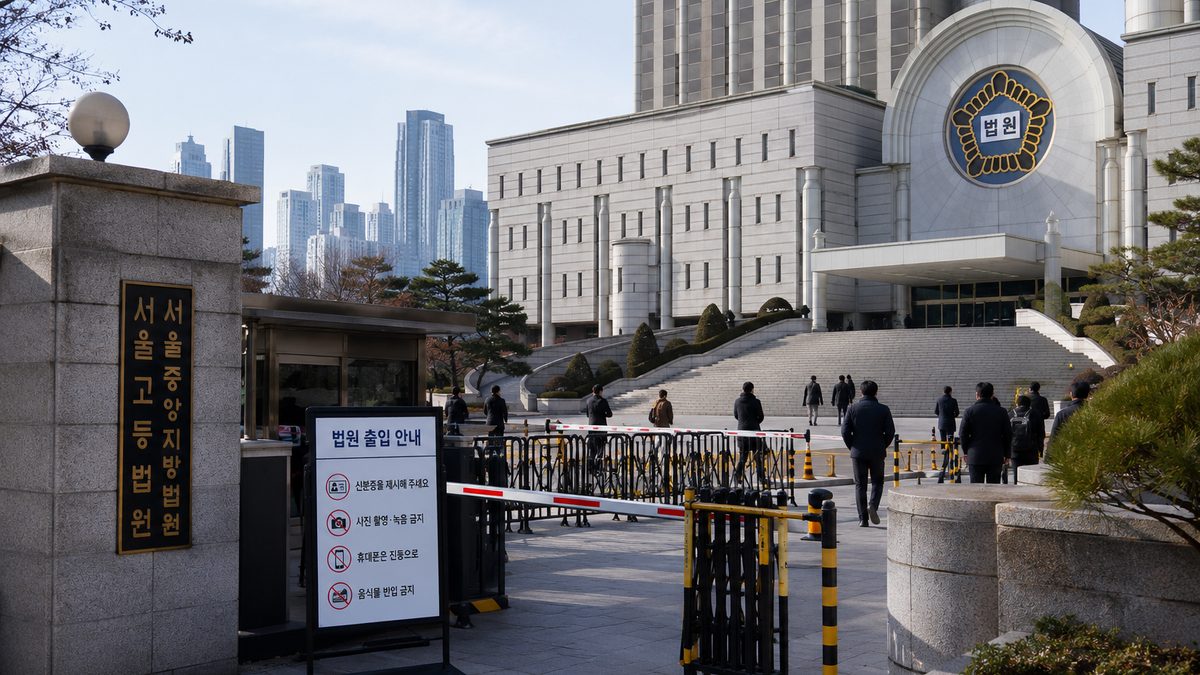
A Seoul court sentenced former President Yoon Suk Yeol in a case tied to drone flights and martial law. Editorial illustration by TheDailyGlobe.
Key Facts
- A Seoul court sentenced former President Yoon Suk Yeol to 30 years in prison in a drone-infiltration case.
- The court linked the case to allegations involving drone flights over Pyongyang and abuse of power.
- Court reporting says the ruling connected the drone operation to an effort to heighten tensions and support a martial-law justification.
- Yoon's lawyers disputed the case, argued the operation was legitimate and appealed.
- Separate martial-law proceedings remain part of the broader legal picture.
The central question in South Korea's latest former-president case is bigger than one leader's fate: can a security crisis be used to justify emergency power, and who decides when that line has been crossed?
A Seoul court has sentenced former President Yoon Suk Yeol to 30 years in prison in a drone-infiltration case tied to allegations involving flights over Pyongyang and abuse of power. Yoon's lawyers have appealed, and related martial-law proceedings remain part of the broader legal picture.
What the Court Found
The case centers on drone flights over Pyongyang, the North Korean capital, and whether those actions were connected to a wider effort to create or intensify a security crisis. According to court reporting, the Seoul court found that the drone operation was tied to abuse of power and to allegations connected with martial law.
That finding matters because South Korea sits in one of the world's most sensitive security environments. Decisions involving North Korea can carry real military risk, and presidents have wide access to national security tools. The court's ruling puts a sharp legal limit around the use of those tools when they are alleged to serve political or emergency-power purposes.
The sentence is severe: 30 years in prison for a former president who was already at the center of a national political and legal crisis. But the legal posture remains important. The ruling is a court decision, not the end of the entire process. Yoon's legal team has appealed.
Why This Matters Beyond South Korea
South Korea is a major U.S. treaty ally, a democracy and a central player in security planning around North Korea. What happens inside its institutions matters to U.S. readers because alliance stability depends not only on military hardware, but also on civilian control, lawful decision-making and public confidence in democratic safeguards.
The case also touches a familiar democratic problem: leaders often have the most power during moments of fear. National security threats can be real, and South Korea faces genuine danger from North Korea. But courts and legislatures exist partly to test whether emergency claims are lawful, justified and limited.
That is the difference between treating this as political spectacle and treating it as an institutional story. The issue is not only whether Yoon is punished. It is whether South Korea's legal system can review decisions made under the banner of security without collapsing into partisan theater.
The Defense Position
Yoon's lawyers disputed the case and argued that the drone operation was legitimate and tied to North Korean provocations. That defense is an important part of the record, especially in a case involving military and security decisions that governments often argue require discretion.
The appeal means higher courts will have a chance to review the ruling, the legal reasoning and the sentence. Until that process is complete, the conviction and sentence should be understood as the result of the Seoul court's ruling, not as a fully settled final outcome across the entire judicial system.
The gap between the court's findings and the defense argument is the heart of the legal dispute. The court treated the drone case as connected to abuse of power and martial-law allegations. The defense says the operation belonged within a legitimate security response.
What Remains Unclear
Several major questions remain unresolved. Appeals courts still have to decide how to handle the drone case. Separate martial-law proceedings also remain part of the larger picture, and it is not yet clear whether additional officials will face final convictions after appeals.
The full impact on South Korean politics and institutions will depend on those next legal steps. A major sentence can signal accountability, but the durability of that accountability depends on whether the appeals process is transparent, credible and grounded in law rather than political pressure.
The case also raises practical questions for South Korea's security establishment. Officials will have to navigate how to preserve readiness against North Korean threats while preventing claims of national security from becoming a shortcut around democratic limits.
What to Watch Next
The next key markers are the appeal timeline, related trials and any institutional reforms that follow the martial-law crisis. Watch whether courts uphold, narrow or overturn parts of the ruling, and whether investigators or prosecutors move against additional officials.
For now, the sentence marks a dramatic moment in South Korea's rule-of-law test. The court has made a finding against a former president. The defense has appealed. The larger question is whether South Korea's institutions can resolve a security-and-emergency-power crisis in a way that strengthens, rather than weakens, democratic trust.
Reporting note: Reporting draws on court reporting, regional wire reporting, international reporting, and reviewed background materials. This article was produced with AI-assisted research and reviewed by an editor before publication.