Trump Arrives in Beijing for High-Stakes Xi Summit
The May 13-15 state visit puts U.S.-China tensions over trade, Taiwan, Iran, artificial intelligence and global security at the center of a closely watched diplomatic test.
Save Article
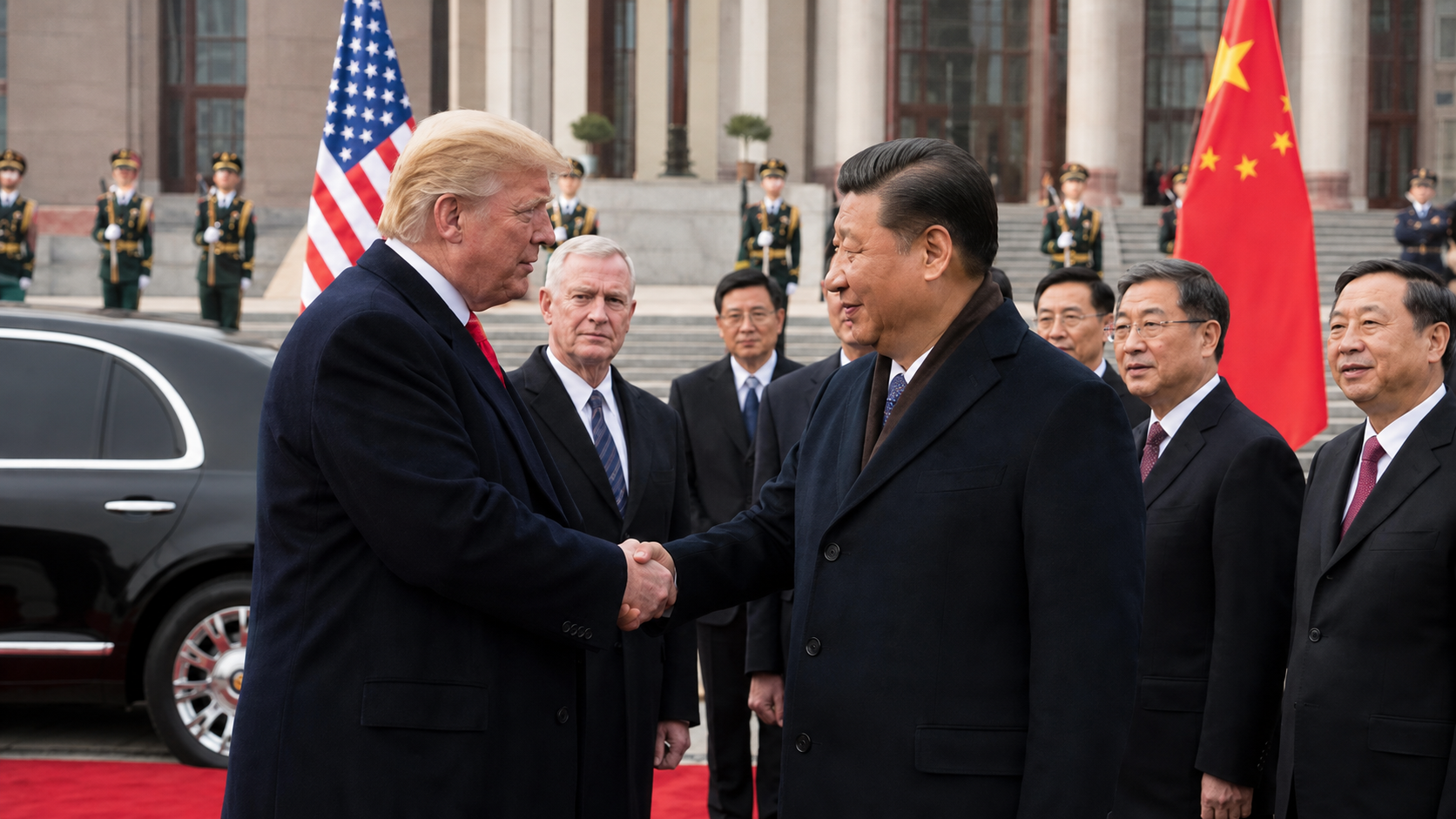
The May 13-15 state visit puts U.S.-China tensions over trade, Taiwan, Iran, artificial intelligence and global security at the center of a closely watched diplomatic test. Editorial illustration by TheDailyGlobe.
Key Facts
- China's Foreign Ministry announced Trump would visit China from May 13 to 15 at Xi Jinping's invitation.
- The Associated Press reported that Trump arrived in Beijing on May 13 for talks with Xi.
- AP reported that the agenda includes Iran, trade and U.S. arms sales to Taiwan.
- The visit comes amid wider global concern about war, trade, artificial intelligence and global security.
- No final summit outcomes had been confirmed in the handoff materials.
President Donald Trump arrived in Beijing on Wednesday for a state visit and summit with Chinese President Xi Jinping, opening a closely watched diplomatic moment at a time when the United States and China are under pressure to manage disputes that reach far beyond their two capitals.
China's Foreign Ministry had announced in advance that Trump would visit China from May 13 to 15 at Xi's invitation. The Associated Press reported that Trump arrived in Beijing on May 13 for talks expected to include Iran, trade and U.S. arms sales to Taiwan.
The meeting comes as global concern over war, trade friction, artificial intelligence and security risks has made U.S.-China communication especially important. The summit is not just a formal state visit. It is a test of whether the world's two largest powers can keep competition from hardening into a more dangerous confrontation.
Why the Summit Matters
For readers, the importance of this summit is not limited to diplomatic ceremony. U.S.-China relations affect supply chains, prices, technology rules, military risk in the Pacific and the way other countries judge the strength of the international order. When Washington and Beijing talk directly, markets, allies and rivals all look for signs of whether tensions are being managed or allowed to grow.
The confirmed agenda puts several sensitive issues in the same room at once. Trade disputes can affect businesses and consumers. Taiwan arms sales touch one of the most dangerous flashpoints in U.S.-China relations. Iran adds a wider security dimension. Artificial intelligence and global security raise questions about technology competition, military risk and the rules that may shape the next decade.
That combination makes the visit a major world story even before any agreement is announced. The value for readers is understanding what is on the table, what has been confirmed, and what remains unsettled.
Trade Is Still Central
Trade remains one of the clearest pressure points between the United States and China. The handoff materials identify trade as a confirmed agenda item, but do not include specific proposals, deadlines or concessions. That distinction matters. A summit can create space for negotiation, but it does not automatically mean a breakthrough has occurred.
For U.S. households, trade policy can show up indirectly through prices, business costs, supply chains and job decisions. For companies, even the tone of U.S.-China talks can affect planning. When tariffs, market access, export controls or investment conditions are uncertain, businesses often slow decisions or build extra costs into their operations.
The Beijing visit may provide a clearer view of whether both governments want to steady the relationship or keep using economic pressure as leverage. The confirmed facts, however, do not support any claim yet that either side has agreed to a new trade framework.
Taiwan Remains the Sharpest Security Question
AP reported that U.S. arms sales to Taiwan are part of the agenda. That makes Taiwan one of the most sensitive issues surrounding the summit.
The United States and China have long disagreed over Taiwan's status and security. Beijing objects to U.S. arms sales to Taiwan, while Washington has maintained security-related ties with Taiwan under its own legal and strategic framework. The handoff does not provide details on what Trump or Xi planned to propose, so the article should not assume a change in policy or predict a concession.
What can be said is that Taiwan is not a side issue. It is a core test of how both governments manage military risk, alliance expectations and regional stability. Any public language from the summit on Taiwan will likely be watched closely by governments across Asia and by U.S. lawmakers.
Iran Adds a Wider Security Layer
Iran is also listed as a confirmed agenda item in AP's reporting. The handoff materials do not provide details about what role China may be asked to play, what the United States may seek, or what Beijing may offer. That means the safest reading is simple: Iran is expected to be discussed, but the direction of those talks remains uncertain.
Even without a confirmed outcome, Iran's presence on the agenda shows that the summit is not only about bilateral U.S.-China disputes. It also touches broader global security concerns. When Washington and Beijing discuss conflicts or instability beyond their own relationship, the talks can affect diplomatic pressure, economic calculations and the way other countries interpret U.S. and Chinese priorities.
Readers should be cautious about claims that either government is prepared to resolve the issue through this meeting. The confirmed record supports the narrower point that Iran is part of the discussion.
AI and Global Security Are Part of the Backdrop
The visit also comes amid wider concern about artificial intelligence and global security. The handoff identifies AI as part of the summit context, but does not specify a confirmed agreement, framework or negotiation text.
That context is still important. Artificial intelligence is no longer just a technology business story. It is tied to economic competition, national security, military capabilities, information systems and industrial policy. U.S.-China tension over advanced technology can influence what companies can sell, what researchers can access and how governments prepare for future security risks.
A summit between Trump and Xi gives both sides a chance to signal whether they see AI competition as something that can be managed through rules and communication, or mainly as another front in strategic rivalry. The confirmed facts do not show which path the meeting will take.
What Is Confirmed and What Is Not
The confirmed story is straightforward: China's Foreign Ministry announced the May 13-15 visit at Xi's invitation, and AP reported Trump's arrival in Beijing on May 13. AP also reported that the agenda includes Iran, trade and U.S. arms sales to Taiwan. The visit is taking place against a broader backdrop of concern about war, trade and artificial intelligence.
What is not confirmed from the handoff is just as important. There is no confirmed final agreement. There is no confirmed trade deal. There is no confirmed change in Taiwan policy. There is no confirmed Iran-related breakthrough. There is no confirmed AI security framework.
That does not make the summit unimportant. It makes it a live diplomatic event where the outcome should be judged by what the two governments actually announce, not by expectations, leaks or political theater.
A Diplomatic Reset Attempt, Not a Spectacle
TheDailyGlobe's frame for this story is a diplomatic reset attempt under pressure. That means focusing less on personalities and more on the issues that could affect everyday life: prices, security, technology, business confidence and the risk of conflict.
The United States and China remain competitors, and in some areas, direct rivals. But competition between major powers is more dangerous when communication breaks down. A state visit does not erase disagreements. It can, however, create a channel for clearer signals, fewer misread intentions and more direct accountability between leaders.
For now, the most useful takeaway is measured: Trump is in Beijing for a summit with Xi, the agenda includes some of the world's most consequential disputes, and the results remain to be seen.
What Happens Next
The state visit is scheduled to run through May 15. During and after the talks, the key questions will be whether the two governments announce any concrete steps on trade, whether Taiwan-related language changes or stays familiar, whether Iran produces any diplomatic coordination, and whether AI or global security becomes part of a more formal discussion.
Until those details are confirmed, readers should treat the summit as significant but unresolved. The arrival marks the beginning of a high-stakes diplomatic test, not the conclusion of one.
Reporting note: Reporting draws on Associated Press coverage and the Ministry of Foreign Affairs of the People's Republic of China announcement of the May 13-15 state visit. This article was produced with AI-assisted research and reviewed by an editor before publication.