Syria’s Worst Drought in Decades Threatens a Fragile Postwar Recovery
Drought, weak harvests and water shortages are testing Syria’s recovery after years of war, leaving food security and rural livelihoods under renewed pressure.
Save Article
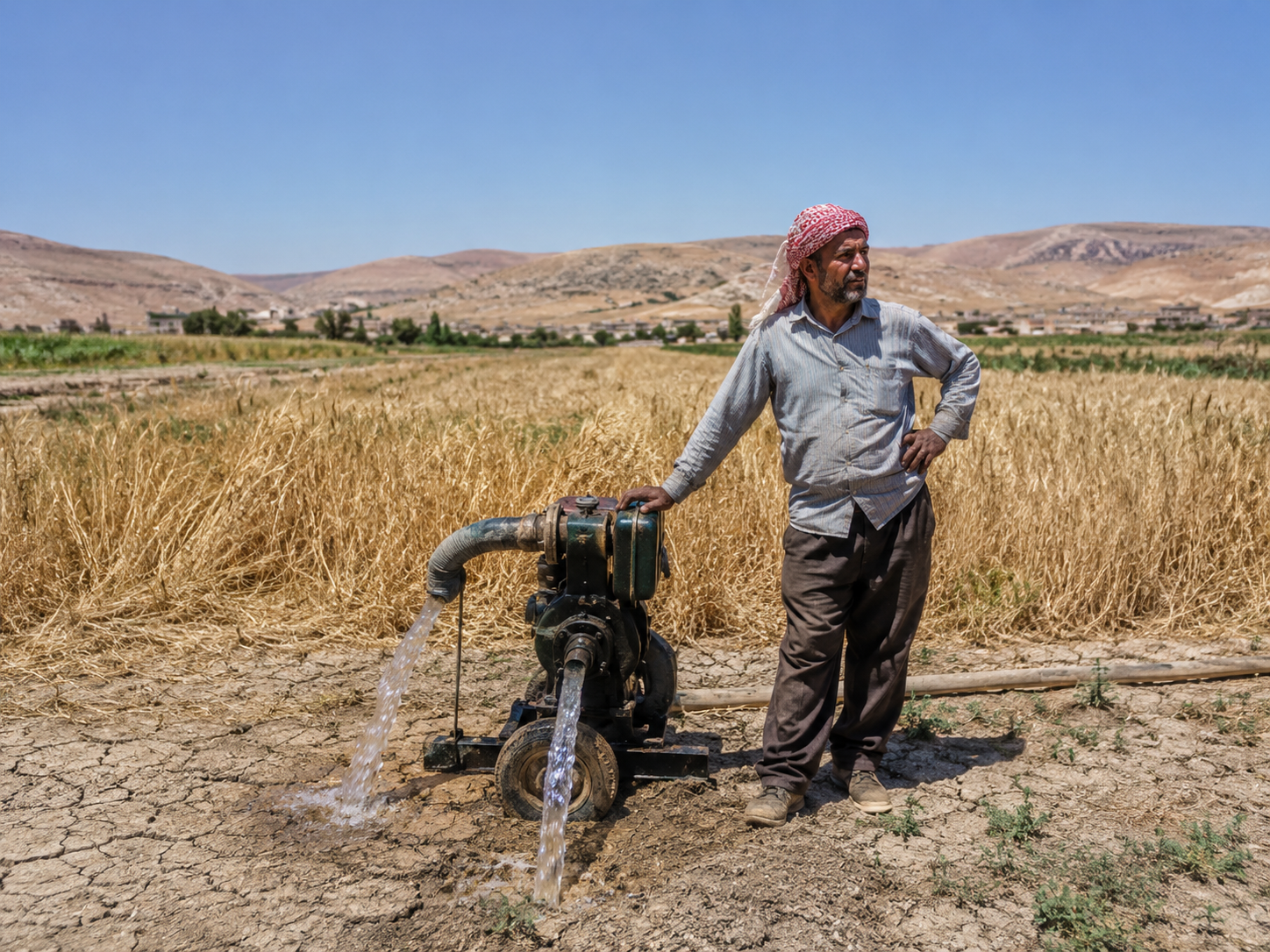
Drought, weak harvests and water shortages are testing Syria’s recovery after years of war, leaving food security and rural livelihoods under renewed pressure. Editorial illustration by TheDailyGlobe.
Key Facts
- AP reporting says severe drought is gripping much of the Eastern Mediterranean and Middle East, with Syria facing particularly serious effects.
- AP reported Syria’s wheat harvest was expected to fall to about 1 million tons, far below prewar averages of 3.5 million to 4.5 million tons.
- FAO says Syria’s 2025 cereal production was estimated at 1.2 million tonnes, more than 60 percent below average, because of severe drought conditions.
- FEWS NET says food-security outcomes aligned with Crisis and Stressed levels are likely to persist in Syria through September 2026.
- UN Security Council reporting has warned that regional escalation and displacement could derail Syria’s fragile recovery.
Syria’s recovery from years of war is being tested by a quieter but deeply consequential threat: drought. Severe water shortages, weak harvests and damaged agricultural systems are putting new pressure on a country where food security was already fragile and public infrastructure remains uneven after years of conflict.
Recent reporting by The Associated Press describes the worst drought in decades across much of the Eastern Mediterranean and Middle East, with Syria facing especially severe effects. For Syria, the drought is not just a weather story. It reaches into wheat production, food imports, rural livelihoods, water access, reconstruction and the ability of families to return to stable lives after years of displacement.
Wheat is at the center of the pressure. Before the war, Syria’s annual wheat production was often enough to support domestic demand, with prewar output commonly reported in the range of 3.5 million to 4.5 million tons. AP reporting on the current drought says this year’s harvest was expected to bring in about 1 million tons, leaving the country more dependent on imports and aid. That kind of gap matters because bread is not a luxury item in Syria. It is a basic food-security anchor.
The Food and Agriculture Organization’s country brief on Syria describes the 2025 cereal harvest as sharply below average, with total cereal production estimated at 1.2 million tonnes, more than 60 percent below average. FAO attributes that shortfall to severe drought conditions, including rainfall between November 2024 and May 2025 that was more than 50 percent below the long-term average. Localized unrest and high input prices also affected planting.
That combination — drought, high costs, damaged infrastructure and insecurity — makes the current crisis more difficult than a single bad farming season. Farmers need seed, fuel, fertilizer, irrigation systems, access to markets and some confidence that they can harvest and sell what they grow. In many parts of Syria, each part of that chain has been weakened by war. A dry season can therefore hit a system that was already struggling to stand back up.
FEWS NET’s food-security outlook for February through September 2026 says outcomes aligned with Crisis and Stressed levels are likely ongoing across Syria and expected to persist through September. That does not mean every household faces the same level of need. It does mean that large parts of the country remain vulnerable to food-access problems, especially where families have limited income, high prices, poor harvests or reduced access to assistance.
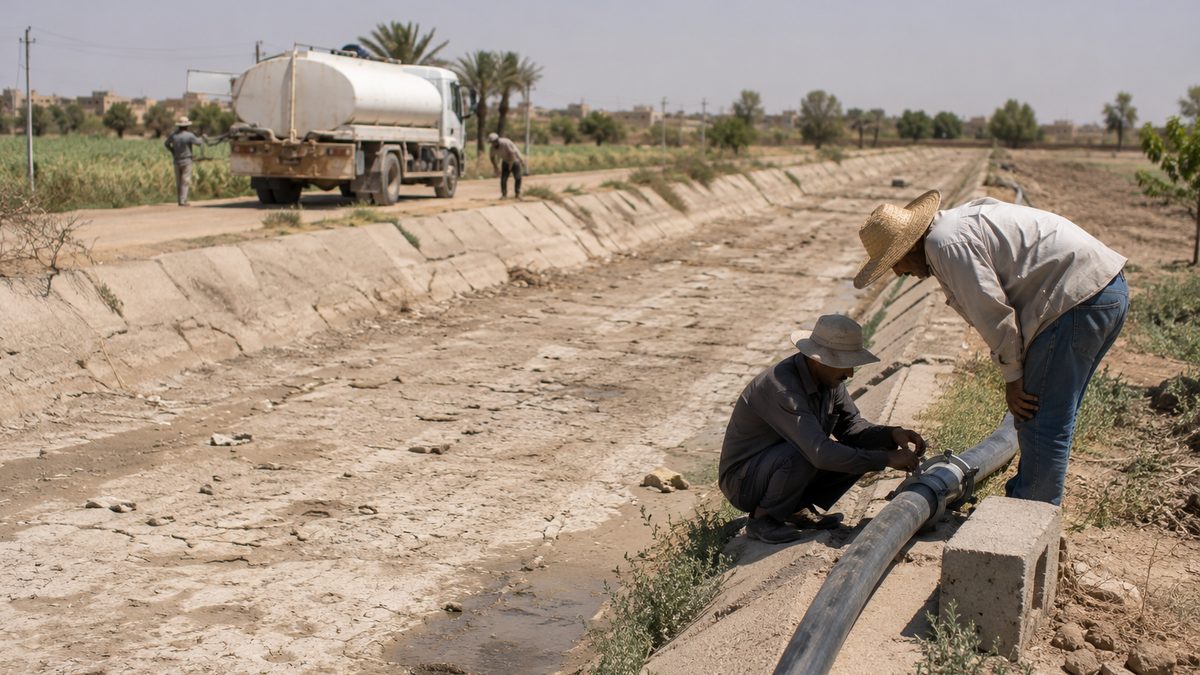
Water shortages also affect life beyond farms. When wells, springs and irrigation networks decline, cities and villages face pressure at the same time. Households may rely more heavily on trucked water or informal sources. Farmers may reduce planting or shift crops. Livestock owners may face higher feed costs and animal losses. Public health can also be affected if water scarcity pushes families toward unsafe water sources or reduces hygiene.
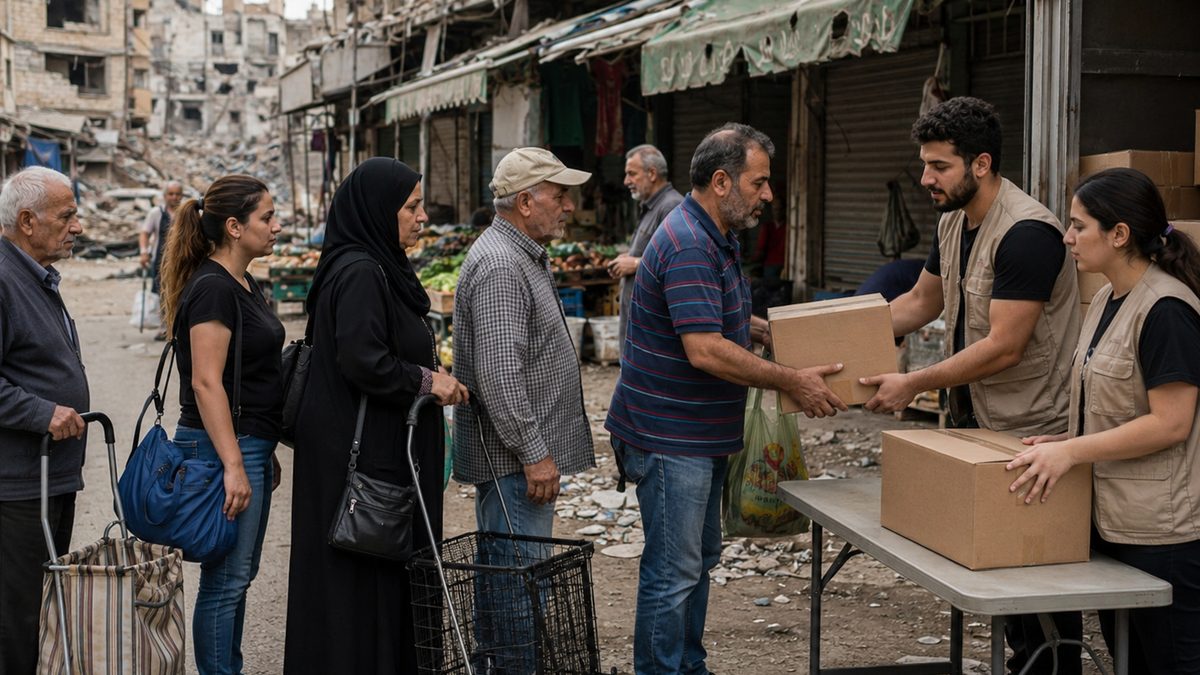
The drought is unfolding as Syria remains politically and socially fragile. United Nations Security Council coverage in March warned that regional escalation spilling into Syria was driving displacement and civilian harm and could derail the country’s fragile recovery. ReliefWeb Response reporting has also tracked cross-border movement into Syria after the Lebanon ceasefire, showing that displacement pressures have not disappeared. Drought adds another layer to that recovery problem: people cannot rebuild stable communities if food, water and livelihoods remain uncertain.
The humanitarian stakes are broader than one harvest. A weak wheat season can increase import needs. Import dependence can strain public finances and foreign currency reserves. Higher food prices can deepen household hardship. Rural income losses can push more people toward cities, aid dependence or migration. In a country still recovering from war, those pressures can slow reconstruction and make local stability harder to sustain.
There is also a policy challenge. Governments and aid agencies can respond to drought with food assistance, seed support, irrigation repair, water trucking, livestock support and price measures. But each option has limits. Food aid depends on funding and access. Irrigation repair takes time and equipment. Imports depend on money, transportation and functioning markets. Climate adaptation requires longer-term investment in water management and agricultural resilience.
The clearest risk is that Syria’s drought becomes a recovery blocker. A country can stop large-scale fighting and still remain unstable if rural livelihoods collapse, food prices rise and families cannot access water. That is why the drought should be understood as part of Syria’s postwar challenge, not as a separate environmental story. Food security, water systems, reconstruction and displacement are all connected.
There are still important unknowns. Rainfall could improve in future seasons, or drought conditions could persist. Wheat imports and food aid could narrow the gap, or funding and logistics could fall short. Local agricultural production could recover in some areas while other regions continue to struggle. But the latest reporting and food-security assessments point in the same direction: Syria’s recovery remains fragile, and drought is making that recovery harder.
For readers, the lesson is straightforward. Syria’s future will not be shaped only by diplomacy, reconstruction pledges or the absence of major battles. It will also be shaped by whether families can grow food, buy bread, access water and rebuild rural economies. In that sense, the drought is not a side story. It is one of the tests that will determine whether recovery becomes real for ordinary Syrians.
Reporting note: Reporting draws on AP, FAO, FEWS NET, UN Meetings Coverage and ReliefWeb Response materials. This article was produced with AI-assisted research and must be reviewed by an editor before publication.