Sudan Food Warning Shows How Conflict Keeps Aid From Reaching People Most At Risk
UN agencies warn that nearly 19.5 million people in Sudan face acute food insecurity as conflict, access limits and funding needs strain the aid response.
Save Article
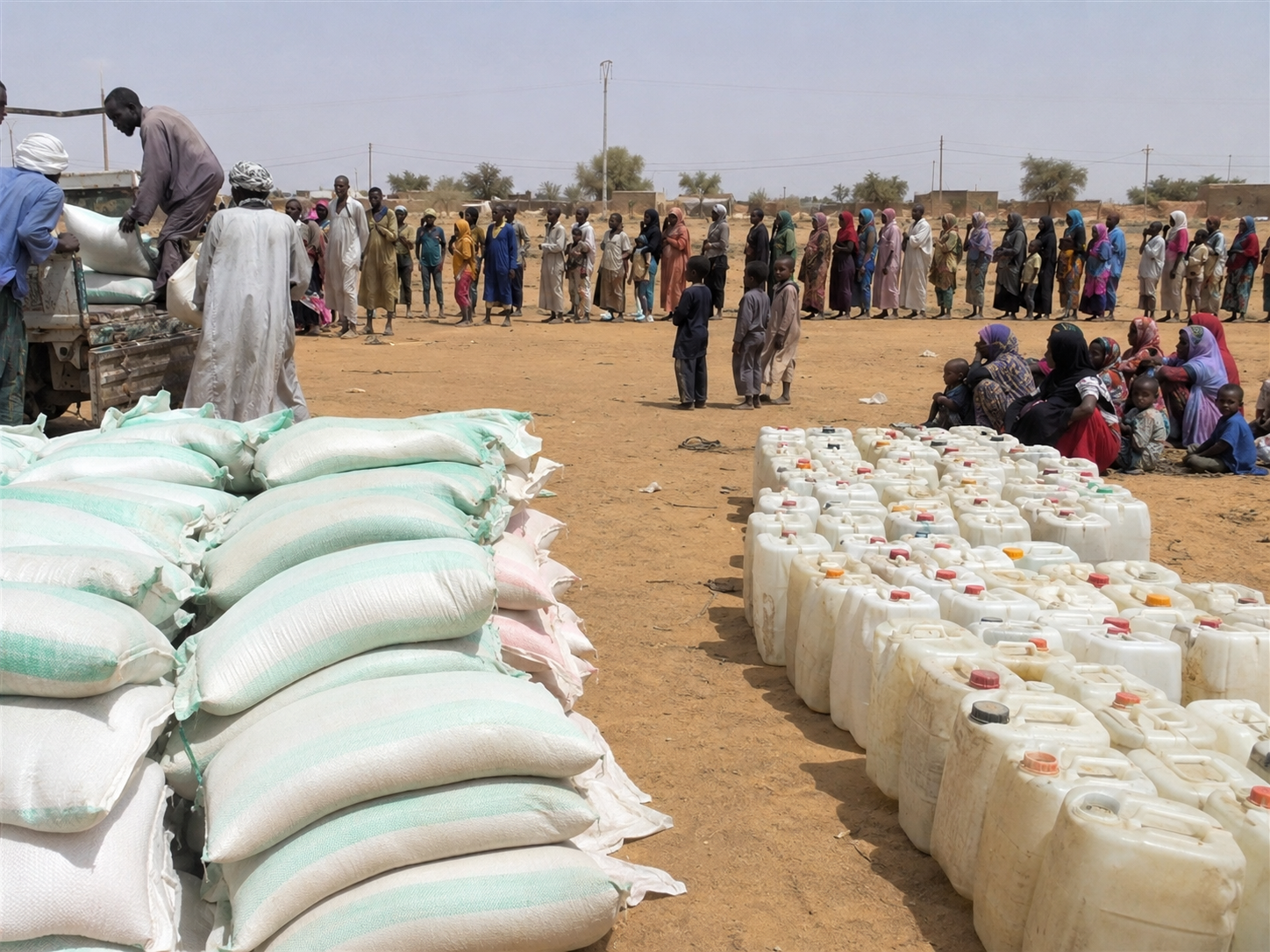
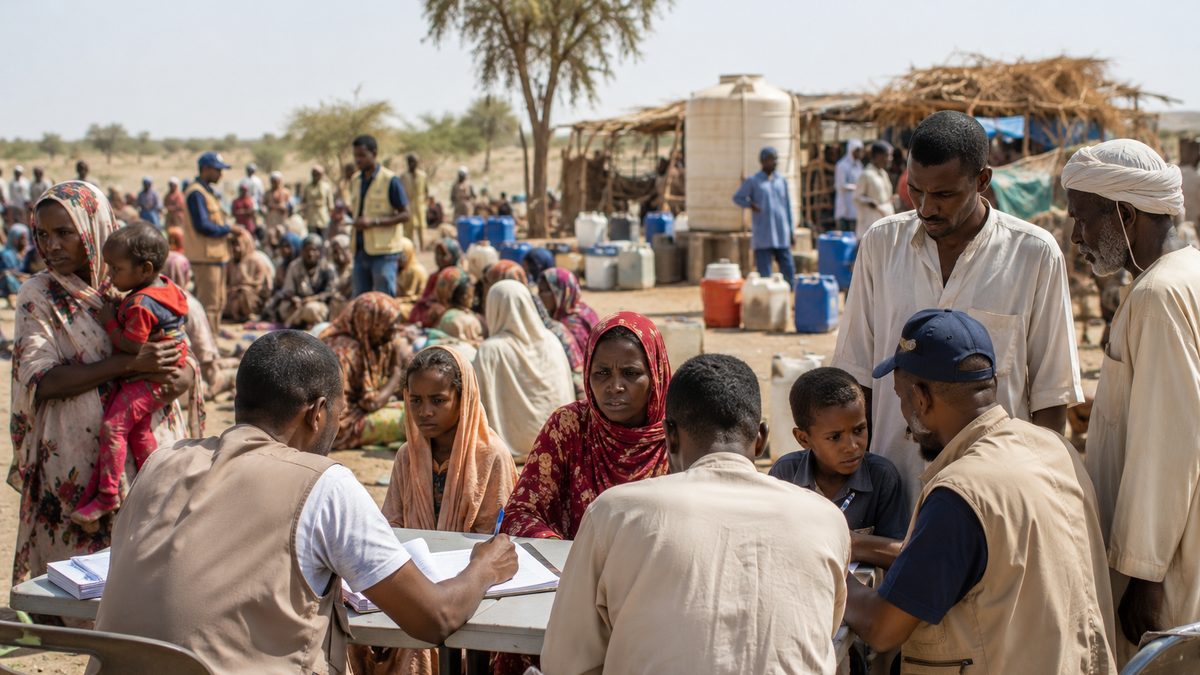
Sudan's hunger crisis is tied not only to food supply, but to whether aid can safely reach people in conflict-affected areas. Editorial illustration by TheDailyGlobe.
Key Facts
- WFP, FAO and UNICEF warned that nearly 19.5 million people in Sudan face acute food insecurity.
- The agencies said more than 825,000 children are at risk of death from severe malnutrition in 2026.
- OCHA reported that more than 20 areas are either in or at risk of famine.
- The warning is tied to conflict, displacement, limited humanitarian access and strained aid operations.
- It remains unclear whether access and funding will improve enough to meet needs in the coming months.
Families facing hunger in Sudan are not only waiting for food. Many are waiting for the roads, security conditions, funding and permissions that make aid delivery possible in the first place.
United Nations agencies warned in May that nearly 19.5 million people in Sudan face acute food insecurity, as conflict continues to block or complicate the systems meant to reach people most at risk. The warning came from WFP, FAO and UNICEF, which also said more than 825,000 children are at risk of death from severe malnutrition in 2026.
The numbers are severe, but the central issue is not only the size of the crisis. It is why hunger keeps worsening: conflict displaces families, disrupts markets, damages infrastructure and limits the ability of aid groups to reach communities before conditions deteriorate.
Why Hunger Is Spreading
Food insecurity in Sudan is not simply a question of whether enough food exists somewhere in the region. For families in conflict-affected areas, food must be affordable, reachable and safe to collect. Aid groups also need enough money, staff access and security guarantees to move supplies.
War breaks those links. Families may flee their homes and lose income. Farmers may miss planting or harvesting seasons. Markets may stop functioning normally. Roads may become unsafe or unusable. Clinics and nutrition centers may be overwhelmed or cut off.
That is why humanitarian agencies describe Sudan's food crisis as both a hunger emergency and an access problem. A warning about famine risk is also a warning about whether help can get through in time.
Children Face The Sharpest Risk
The most alarming part of the UN agency warning is the estimate that more than 825,000 children are at risk of death from severe malnutrition in 2026. That figure should be understood as an agency projection tied to current conditions, not as a final count.
Severe malnutrition can become deadly when children lack food, clean water and medical care at the same time. It can also make common illnesses more dangerous, especially when health systems are damaged or families cannot safely reach clinics.
The warning also points to a larger problem for families. When parents are displaced, markets fail or aid is delayed, children are often the first to show the effects. By the time malnutrition is visible at scale, the systems around them have usually been under strain for months.
Famine Risk Depends On Access
OCHA reported that more than 20 areas are either in or at risk of famine. Famine classifications and projections should be read as technical humanitarian assessments, not as political slogans. They depend on evidence about food consumption, malnutrition, mortality and access.
The access piece is especially important in Sudan. If aid agencies cannot reach an area, conditions may worsen faster and may also become harder to measure. That can leave responders working with incomplete information while needs continue to grow.
Responsibility for access restrictions can be difficult to state broadly without specific evidence from a particular area. The practical result, however, is clear: when fighting, roadblocks, insecurity or administrative barriers slow aid, civilians bear the cost.
What Remains Unclear
The first unresolved question is whether humanitarian access will improve. Aid agencies can scale up only if they can safely move supplies and staff into the areas where needs are greatest.
The second question is funding. OCHA's Sudan Humanitarian Needs and Response Plan lays out major response needs, but plans depend on donor money arriving quickly enough to support food, health, water, shelter and protection work.
The third question is how conflict lines will affect food delivery in the months ahead. If fighting shifts, access routes may open in some places and close in others. That makes the crisis difficult to stabilize even when agencies know where help is needed.
What To Watch Next
The next updates to watch will come from WFP, FAO, UNICEF and OCHA, especially on food security projections, child malnutrition, funding gaps and access conditions. Any change in those areas will help show whether the response is catching up or falling further behind.
Donor response will also matter. Humanitarian warnings do not move food by themselves. Funding, transportation, staff access and security arrangements have to follow.
For readers, the key point is that Sudan's hunger crisis is not only a disaster statistic. It is a conflict-driven aid crisis, where the ability to reach people may determine whether warnings turn into wider catastrophe.
Reporting note: Reporting draws on World Food Programme, FAO, UNICEF and OCHA humanitarian updates, IPC-related food security analysis, response planning materials, and reviewed background materials. This article was produced with AI-assisted research and reviewed by an editor before publication.