Russian Barrage Puts Ukraine's Air Defense Shortage Back Before Washington
Ukraine says Russia launched 73 missiles and 656 drones overnight, killing at least 22 people and renewing pressure on the United States over Patriot air-defense support.
Save Article
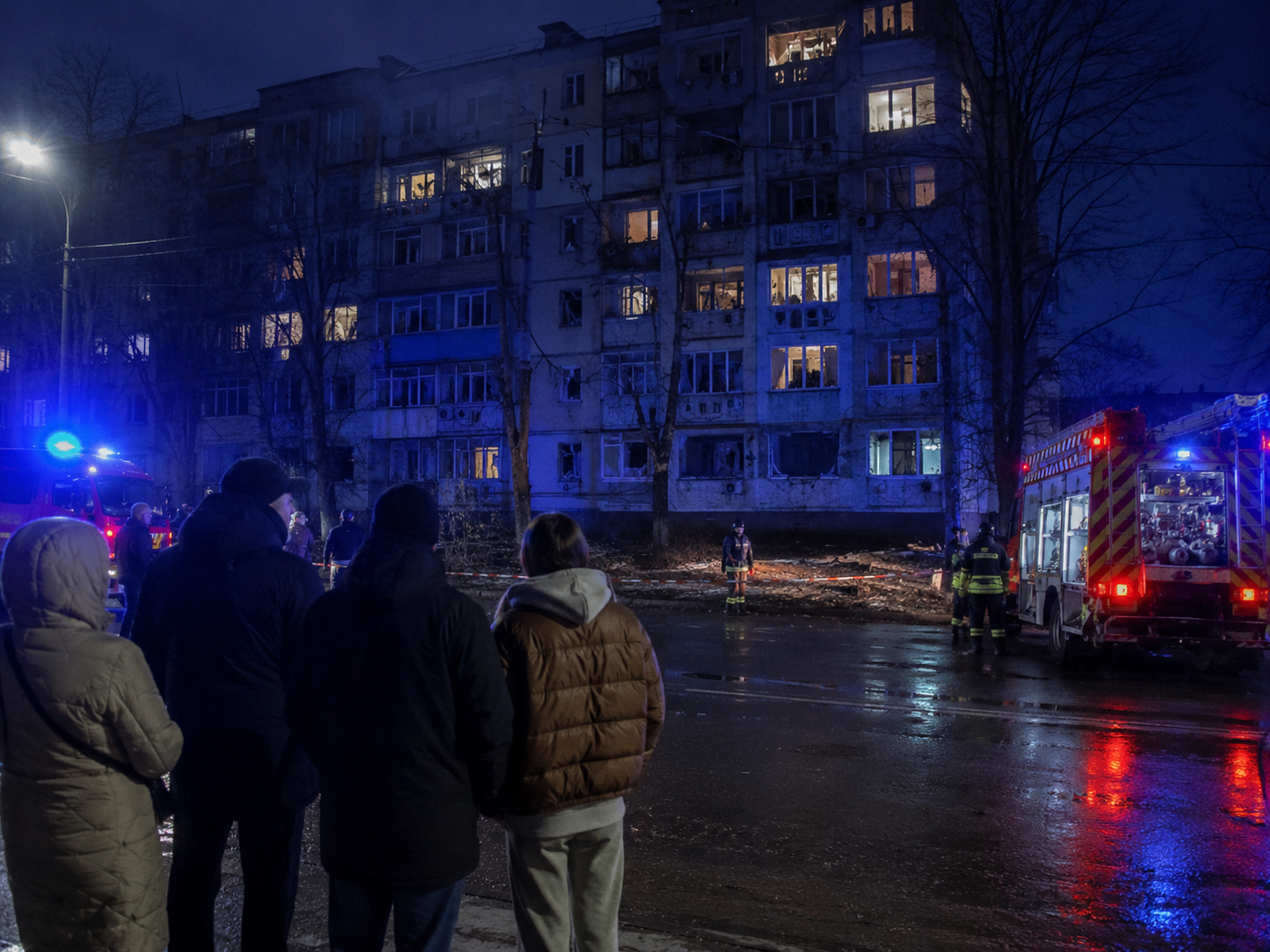
Ukraine's air-defense shortage has become a practical question for civilians, cities and governments weighing what support comes next. Editorial illustration by TheDailyGlobe.
Key Facts
- Ukrainian officials said at least 22 people were killed and 138 injured in the overnight Russian attack.
- Ukraine said Russia launched 73 missiles and 656 drones during the barrage.
- Ukrainian air defenses intercepted or neutralized many of the missiles and drones, but not all of them.
- The attack affected several cities, including Kyiv, Dnipro, Kharkiv, Poltava and Zaporizhzhia.
- Zelenskyy renewed calls for expanded Patriot missile deliveries as Ukraine faces continued pressure on its air-defense network.
For people in Ukrainian cities, the latest Russian overnight barrage was not an abstract measure of missiles, drones and military stockpiles. It was another night of sirens, damaged buildings, emergency crews and the same practical question that has followed Ukraine through much of the war: can its air defenses keep up?
Ukrainian officials said at least 22 people were killed and 138 injured after Russia launched a large missile-and-drone attack across the country overnight. The strike hit multiple cities, including Kyiv, Dnipro, Kharkiv, Poltava and Zaporizhzhia, according to reporting from the Associated Press and other outlets.
The attack also pushed Ukraine's air-defense shortage back into direct view for Washington. President Volodymyr Zelenskyy renewed his appeal for more U.S.-made Patriot systems or interceptors, arguing that Ukraine needs stronger protection against ballistic missiles and other aerial attacks.
What Ukraine Says Happened Overnight
Ukraine said Russia fired 73 missiles and 656 drones in the attack. Ukrainian air defenses reported intercepting or neutralizing a large share of them, but officials said strikes still caused deaths, injuries and damage across several cities.
The numbers may change as local authorities continue assessing damage and confirming casualties. In fast-moving wartime attacks, early casualty counts often shift as emergency crews search damaged buildings, hospitals update injury totals and regional officials revise reports.
Russia said it targeted military-industrial facilities. Ukraine reported damage to civilian areas, and Ukrainian officials accused Russia of deliberately striking civilians. That accusation should be understood as Ukraine's claim; Russia's motive cannot be independently established from the available public reports.
Why Patriots Matter In This Fight
The renewed focus on Patriot systems comes down to what they are designed to do. Ukraine has relied on Western-supplied air defenses to protect cities, energy infrastructure and military sites from Russian missiles and drones. Patriot systems are especially important because they can help counter certain ballistic missile threats that are harder for other systems to stop.
That makes the issue more than a weapons request. For Ukraine, it is a question of how many cities can be protected at once, how long existing interceptor supplies can last and whether future Russian attacks can be blunted before they reach residential neighborhoods or critical infrastructure.
For U.S. readers, the question is also close to Washington. Patriot systems and interceptors are limited, expensive and tied to U.S. defense planning. Sending more to Ukraine could help protect Ukrainian cities, but any decision also depends on American stockpiles, military commitments and the priorities of the administration and Congress.
The U.S. Decision Is Still Unclear
Zelenskyy's request does not mean more systems will automatically arrive. It remains unclear whether the United States will approve additional Patriot deliveries, how many interceptors could be provided or how quickly any new support could reach Ukraine.
That uncertainty matters because air defense is not only about launchers. Ukraine also needs a steady supply of interceptors, trained crews, maintenance support and coordination with other Western systems already in use. Even when a government announces new support, getting equipment into place can take time.
European governments may also face renewed pressure to help fill gaps, either by sending systems directly, financing purchases, supplying interceptors or coordinating with Washington. But the immediate question raised by Ukraine's latest appeal is whether the United States will move more air-defense support at a moment when Kyiv says the need is urgent.
What To Watch Next
The next signal to watch is the U.S. response. If Washington announces additional Patriot support, the key details will be the number of systems or interceptors, the delivery timeline and whether the aid is new equipment, redirected supplies or part of a broader allied package.
The second question is whether Russia continues large-scale aerial attacks at this pace. One major barrage can be devastating on its own. Repeated attacks would put more pressure on Ukraine's defenses, local emergency services, power systems and civilian morale.
For now, the confirmed picture is narrow but serious: Ukraine says Russia launched a major overnight attack, civilians were killed and injured, and Kyiv is again asking Washington for the kind of air defense it says can save lives. What remains unresolved is whether that appeal changes the flow of weapons quickly enough to matter before the next barrage.
Reporting note: Reporting draws on wire reporting, international reporting, official Ukrainian statements, Russian claims, and reviewed background materials. This article was produced with AI-assisted research and reviewed by an editor before publication.