NATO Plans Around Fewer U.S. Aircraft and Warships for a Europe Crisis
The United States says it is shifting some military commitments as NATO looks for ways to fill gaps in European crisis planning.
Save Article
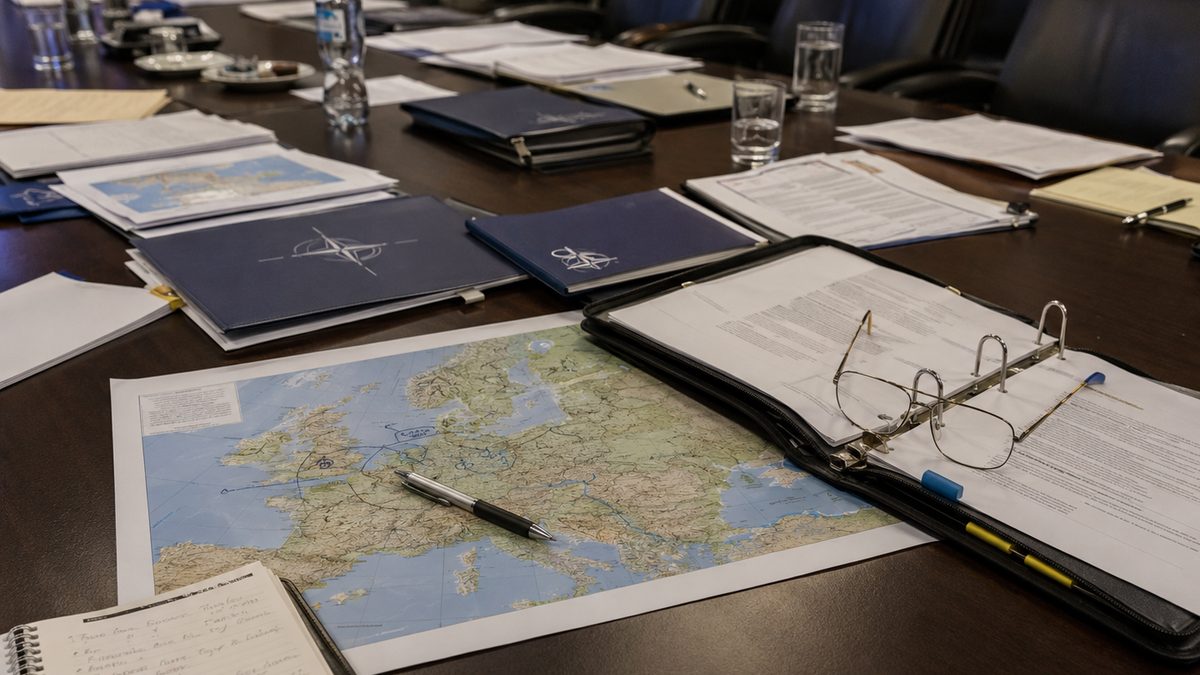
Defense planning documents sit on a conference table as NATO allies review future security commitments. Editorial illustration by TheDailyGlobe.
Key Facts
- NATO is reviewing alternative defense plans after the United States told allies it would reduce some force contributions available for a European crisis.
- U.S. officials have framed the shift as part of burden-sharing and broader military prioritization.
- Reported affected capabilities include aircraft and warship assets that are not easy for allies to replace quickly.
- The final NATO replacement plan, including which allies would fill which gaps, has not been made public.
- The operational effect depends on planning decisions and timelines that remain limited in public reporting.
The practical question for NATO is simple, even if the military planning is not: if a crisis in Europe moves fast, who provides the aircraft, ships and other hard-to-replace forces commanders expected to have available?
That question is now more urgent after the United States notified allies that it plans to scale down some military contributions available under NATO planning for a European security crisis. The change does not mean the United States is leaving NATO, and it does not mean Europe is suddenly undefended. It does mean the alliance is reviewing how it would cover gaps if certain U.S. assets are no longer counted on in the same way.
What Changed in NATO Planning
NATO’s defense planning relies on member countries making forces available for peace, crisis and war. Those plans are not public in full detail, but the basic idea is that commanders need to know what assets they can call on if the alliance has to respond quickly.
The U.S. shift affects that planning because American forces provide capabilities that many allies cannot replace overnight. Reported reductions include aircraft and warship assets, including categories such as fighter jets, naval vessels and other support capabilities. Some of those details come from defense officials and reporting rather than fully public planning documents, so they should be understood as reported planning changes, not a complete public inventory.
The United States has described the move as a rightsizing of NATO Force Model contributions. In plain English, that means Washington says it is adjusting what it commits to the alliance as it weighs other military priorities and presses European allies and Canada to carry more of the load.
Why This Matters for U.S. Readers
For U.S. readers, this story sits at the intersection of military strategy, public spending and alliance responsibility. The United States has long been NATO’s largest military power, and European defense planning has often depended on U.S. forces for capabilities that are expensive, specialized or scarce.
A reduction in U.S. availability does not automatically weaken NATO in every scenario. It does, however, force a practical test: whether European allies can provide more of the aircraft, ships, drones and other forces that would be needed in a fast-moving crisis. That is a real planning issue, not just a diplomatic talking point.
The change also reflects a broader U.S. debate about where American military power should be focused. U.S. officials have pointed to wider force prioritization, including attention to potential threats outside Europe. European governments, meanwhile, have been under pressure for years to spend more on defense and make their forces more usable in a crisis.
What Europe May Need to Fill
The hardest part for NATO is not agreeing in theory that allies should do more. The harder part is finding real equipment and trained forces on a timeline that matches the alliance’s defense plans.
Aircraft, naval vessels and support systems are not simple line items. They require crews, maintenance, ammunition, command systems and coordination across countries. A country can promise more defense spending today, but that does not instantly produce a carrier group, fighter squadrons or maritime patrol capacity ready for NATO commanders.
That is why the planning question matters. If the United States provides fewer assets in one part of the NATO plan, allies have to decide whether another country can step in, whether the plan needs to be adjusted, or whether commanders would have to accept more risk in the early stages of a crisis.
What Remains Unclear
The public record does not yet show exactly which allies will provide substitute capabilities, how quickly those commitments could be ready, or how much the changes would affect deterrence or response time. Defense plans often remain partly classified, and governments usually avoid describing gaps in ways that could help adversaries.
It is also important not to overread the move. NATO is not collapsing, and the United States has not said it is abandoning the alliance. The confirmed story is narrower but still important: Washington is reducing some planned contributions, NATO is looking for alternatives, and European allies may have to carry more of the near-term burden.
U.S. officials’ explanation should be treated as one part of the picture. Governments often frame defense changes in the most favorable terms. At the same time, allied concern does not prove the alliance cannot adapt. The real answer will come from what NATO members actually commit, not only what they say.
What to Watch Next
The next test is whether NATO can turn concern into a clear replacement plan. Watch for ministerial decisions, European capability commitments and formal U.S. defense planning documents that show whether the gaps are being filled or simply renamed.
The bigger issue is alliance credibility. NATO does not need every detail public for its plans to work, but it does need member countries to provide real forces when commanders need them. If the United States is giving less in some areas, the central question is whether Europe and Canada can provide enough, soon enough, to keep the plan believable.
Reporting note: Reporting draws on official U.S. military statements, NATO-related public reporting, reputable wire reporting, and reviewed background materials. This article was produced with AI-assisted research and reviewed by an editor before publication.