One in 70 People Remain Displaced Even After the First Decline in a Decade
Global displacement fell for the first time in about a decade, but UNHCR estimates show nearly 118 million people remained uprooted at the end of 2025.
Save Article
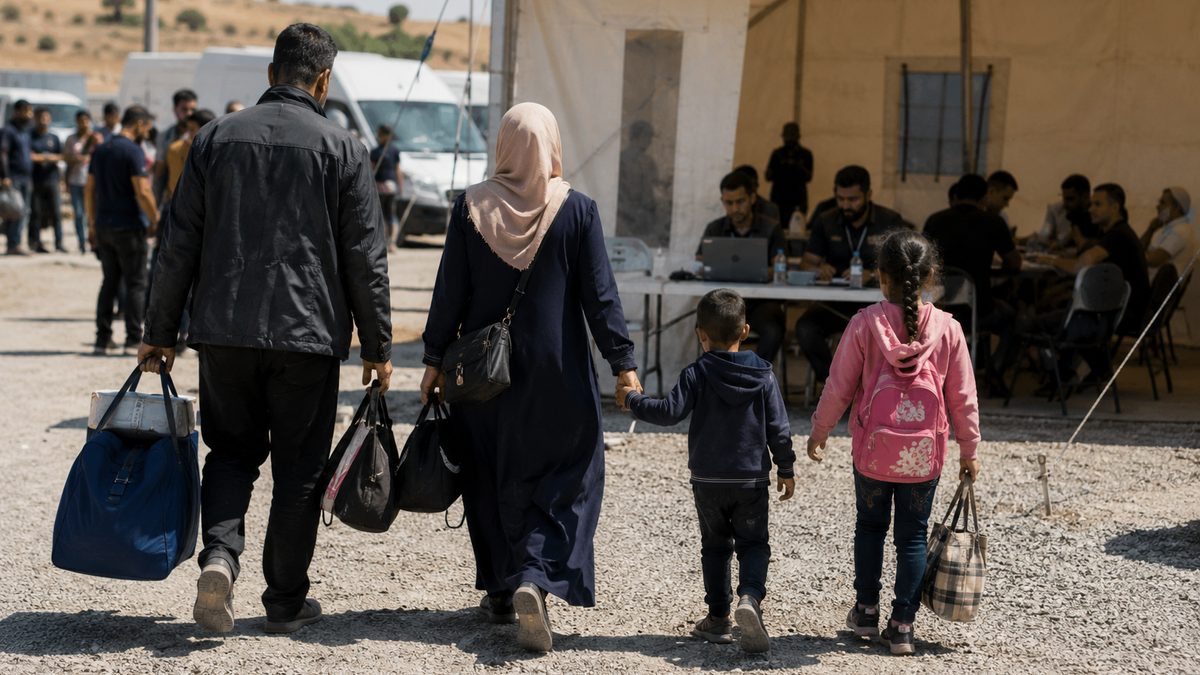
UNHCR says global displacement declined for the first time in years, but millions remain uprooted. Editorial illustration by TheDailyGlobe.
Key Facts
- UNHCR estimated that 117.8 million people were forcibly displaced worldwide at the end of 2025.
- Associated Press reported that global displacement declined for the first time in about a decade.
- UNHCR's figures include refugees, asylum seekers, internally displaced people, and other displaced populations.
- The agency reported that returns increased in some areas during the year.
- UNHCR cautioned that global displacement remained near record levels despite the decline.
A decline in a global crisis usually sounds like good news. But when nearly one out of every 70 people on Earth remains unable to live safely at home, the word 'decline' can hide as much as it reveals.
That is the picture emerging from the latest Global Trends report from the United Nations High Commissioner for Refugees, or UNHCR. The agency reported that forced displacement worldwide fell for the first time in roughly a decade, yet the overall number of displaced people remained historically high at an estimated 117.8 million at the end of 2025.
Why The Report Matters
Large displacement figures can become difficult to grasp because the numbers are so vast. Yet every statistic represents people who have left homes because of conflict, persecution, violence, or instability.
The report's significance lies in the tension between two realities. On one hand, the overall trend moved in a more positive direction. On the other, the scale of displacement remains enormous by historical standards. Both facts are true at the same time.
For readers trying to understand world events, the report offers a reminder that global migration pressures are often shaped by events far beyond border crossings. Wars, political instability, security conditions, and humanitarian emergencies can affect millions of people long before they ever reach another country's immigration system.
A Decline Driven By More Returns
According to UNHCR, one reason the global total moved lower was an increase in returns. Some displaced people were able to go back to areas they had previously left, reducing the overall count of people considered forcibly displaced.
That does not necessarily mean conditions have fully normalized in those locations. Return figures measure movement back home, not whether long-term stability has been permanently restored. Some returnees continue to face economic hardship, damaged infrastructure, or uncertain security conditions after returning.
The distinction matters because displacement is not a single category. Refugees, asylum seekers, internally displaced people, and returnees each face different circumstances. A decline in one category does not automatically mean every part of the broader displacement picture is improving.
Why The Numbers Remain So High
Even after the decline, UNHCR's estimate of 117.8 million displaced people remains one of the highest totals ever recorded by the agency. The figure reflects years of accumulated conflicts and crises that have uprooted people faster than durable solutions have emerged.
Many displaced families spend years away from home. Some remain displaced for decades. As a result, global displacement is shaped not only by new emergencies but also by unresolved crises that continue year after year.
Host countries, aid organizations, and international agencies often must balance immediate humanitarian needs with longer-term challenges such as housing, education, employment, and public services for displaced populations.
What The Report Cannot Predict
The latest figures describe where displacement stood at the end of 2025. They do not tell us whether the decline will continue during 2026.
Several factors could influence future trends. New conflicts could increase displacement. Successful peace efforts could support additional returns. Funding levels for humanitarian operations may also affect how effectively international organizations can assist displaced communities.
Available data also cannot guarantee that returns will prove durable over time. Some areas experiencing returns today could face renewed instability later, while other regions could see conditions improve more quickly than expected.
What To Watch Next
Future UNHCR updates will help determine whether the decline reported in 2025 becomes the start of a longer trend or a temporary pause in a decade-long rise. Analysts will also be watching major conflict zones, return patterns, and humanitarian funding levels throughout the year.
For now, the report offers a useful reality check. The world recorded a modest improvement in a problem that has grown for years. But a decline from an exceptionally high level is not the same thing as a solution, and tens of millions of people remain displaced despite the first encouraging movement in the numbers in about a decade.
Reporting note: Reporting draws on United Nations High Commissioner for Refugees reports, international organization materials, Associated Press reporting, and reviewed background materials. This article was produced with AI-assisted research and reviewed by an editor before publication.