Putin-Xi Meeting Shows Russia and China Building Around U.S. Pressure
A Beijing meeting between Vladimir Putin and Xi Jinping highlighted Russia-China cooperation on energy, trade, and diplomacy while leaving open how far the relationship may go.
Save Article
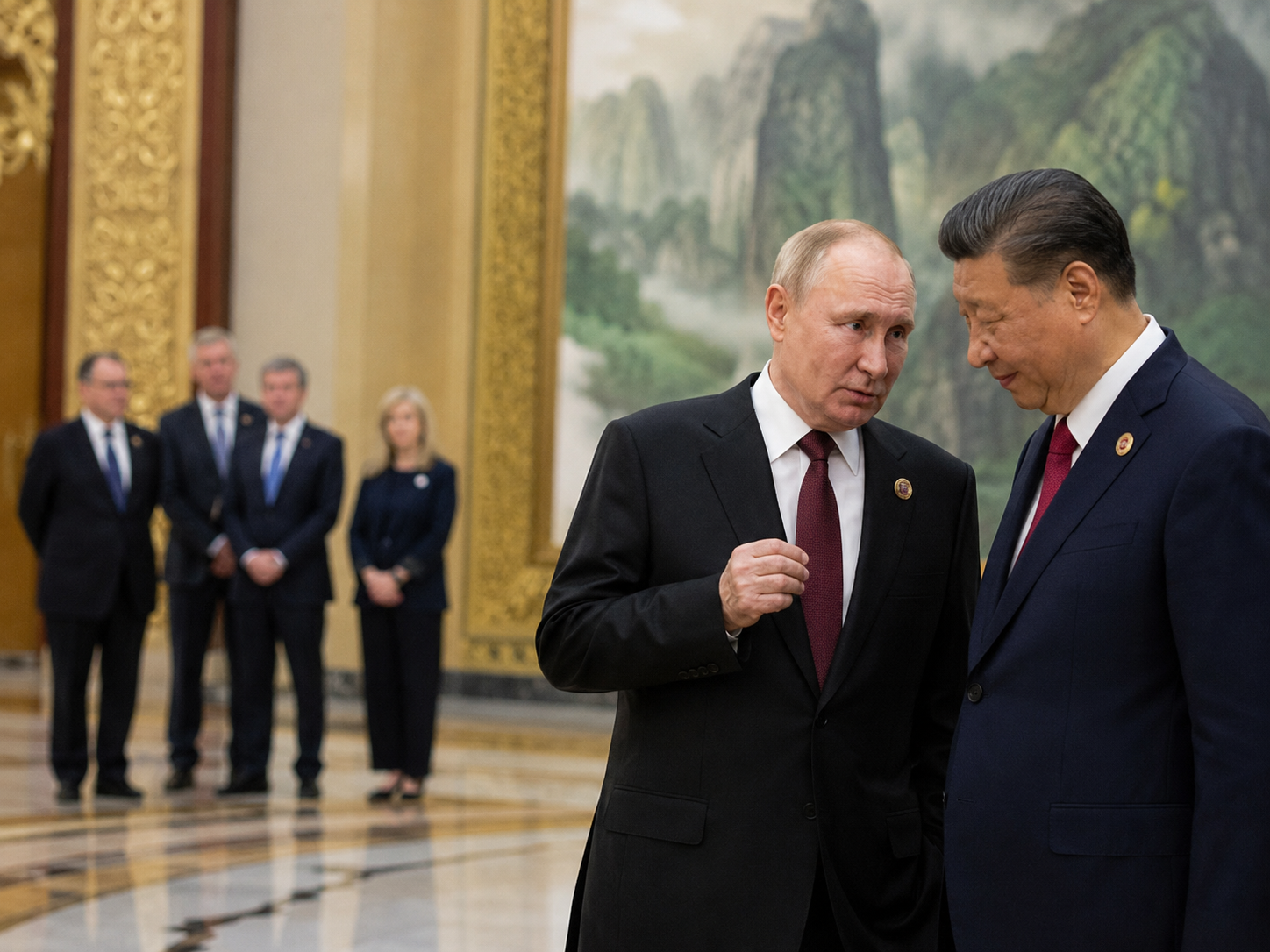
A Beijing meeting between Vladimir Putin and Xi Jinping highlighted Russia-China cooperation on energy, trade, and diplomacy while leaving open how far the relationship may go. Editorial illustration by TheDailyGlobe.
Key Facts
- Vladimir Putin and Xi Jinping met in Beijing.
- The meeting emphasized Russia-China cooperation, including energy and trade.
- The leaders framed their relationship as strategically important.
- Claims by Russia and China about U.S. policy or the global order should be attributed as their positions.
- It remains unclear how far China will go in materially supporting Russia or whether new agreements will meaningfully change energy flows or sanctions pressure.
Russian President Vladimir Putin and Chinese President Xi Jinping met in Beijing, using the visit to emphasize cooperation on energy, trade, and diplomacy at a time when both governments are trying to reduce the impact of U.S. and European pressure.
The meeting highlighted a relationship that Moscow and Beijing describe as strategically important. Associated Press reporting said the leaders praised their friendship and growing energy trade, while official Chinese and Russian materials provide the diplomatic framing for how each government wants the relationship understood.
For U.S. readers, the meeting matters because Russia-China cooperation touches several issues Washington is already watching: the war in Ukraine, sanctions pressure, global energy flows, and the competition between the United States, China, and Russia. The relationship should not be described as a formal alliance unless the sources support that wording, but it is clearly an important partnership.
What the Beijing Meeting Signaled
The meeting gave both leaders a visible way to show that their governments are working closely despite pressure from Washington and European capitals. For Putin, appearing in Beijing helps show that Russia is not isolated, even as it faces sanctions and diplomatic pushback over the war in Ukraine.
For Xi, the meeting allows China to present itself as a major power with influence over global diplomacy and trade relationships. Beijing has its own tensions with the United States and Europe, and closer ties with Moscow fit into China’s broader effort to shape a world less dominated by U.S. power.
That does not mean every Russian and Chinese interest is identical. The source material supports cooperation and diplomatic alignment, not a conclusion that the two countries are operating as one bloc on every issue.
Energy Is a Practical Link
Energy is one of the clearest parts of the relationship. Russia needs buyers for its oil, gas, and other exports, especially as sanctions and European policy changes have narrowed some of its options. China has large energy needs and can use trade with Russia as part of its broader supply strategy.
AP reporting described the leaders as highlighting growing energy trade. Any specific trade or energy figures should be verified before publication if added later, because the handoff does not provide confirmed numbers.
The practical question is whether new agreements will meaningfully change energy flows or reduce the pressure that sanctions place on Russia. That remains unclear. Diplomatic language can signal direction, but contracts, infrastructure, pricing, and enforcement all determine how much trade actually changes.
Why This Matters for Ukraine and Sanctions
Russia’s relationship with China matters directly to the war in Ukraine because Moscow’s ability to withstand sanctions depends partly on whether it can keep selling energy, accessing goods, and maintaining diplomatic support outside the West.
The source material does not show how far China will go in materially supporting Russia. That is one of the most important open questions. Chinese and Russian statements may emphasize friendship, partnership, or shared views of the global order, but material support is a more specific claim and should be handled carefully.
For the United States and Europe, the concern is not only what was said in Beijing. It is whether Russia can use deeper ties with China to soften sanctions pressure, sustain its economy, and avoid diplomatic isolation.
The U.S. and Europe Are Part of the Backdrop
Moscow and Beijing often frame their cooperation in response to U.S. influence and Western pressure. Claims from either government about the United States, Europe, sanctions, NATO, or the global order should be attributed as their positions, not presented as neutral fact.
The U.S. and Europe now face a familiar policy challenge. If Russia and China deepen cooperation, Western sanctions and diplomatic pressure may become harder to enforce. But overreacting to every meeting can also exaggerate what has actually changed.
The careful reading is that the meeting matters because it shows sustained alignment and practical cooperation, especially on energy and diplomacy. It does not by itself prove that China is ready to take every risk Russia may want it to take.
What Remains Unclear
Several important questions remain unresolved. It is unclear how far China will go in materially supporting Russia, especially in ways that could trigger stronger U.S. or European responses.
It is also unclear whether any new agreements will significantly change energy trade or sanctions pressure. Some deals may be more symbolic than immediate. Others may matter over time if they build new routes, contracts, or financial arrangements.
The response from Washington and European governments is another open question. They may treat the meeting as part of a continuing pattern rather than a sudden shift, or they may respond more sharply if later evidence shows deeper material support.
For now, the Beijing meeting is best understood as a signal of direction. Russia and China are continuing to build cooperation around shared pressure from the United States and Europe. The harder question is how much that cooperation changes the real balance of energy, sanctions, and diplomacy in the months ahead.
Reporting note: Reporting draws on Associated Press reporting, official Chinese and Russian government materials, diplomatic background, and reviewed context. This article was produced with AI-assisted research and reviewed by an editor before publication.