NATO's Kyiv Meeting Puts Ukraine Air Defense Back in Focus
NATO held its first NATO-Ukraine Council meeting in Kyiv as Ukraine pressed Europe for help buying U.S.-made Patriot systems and missiles.
Save Article
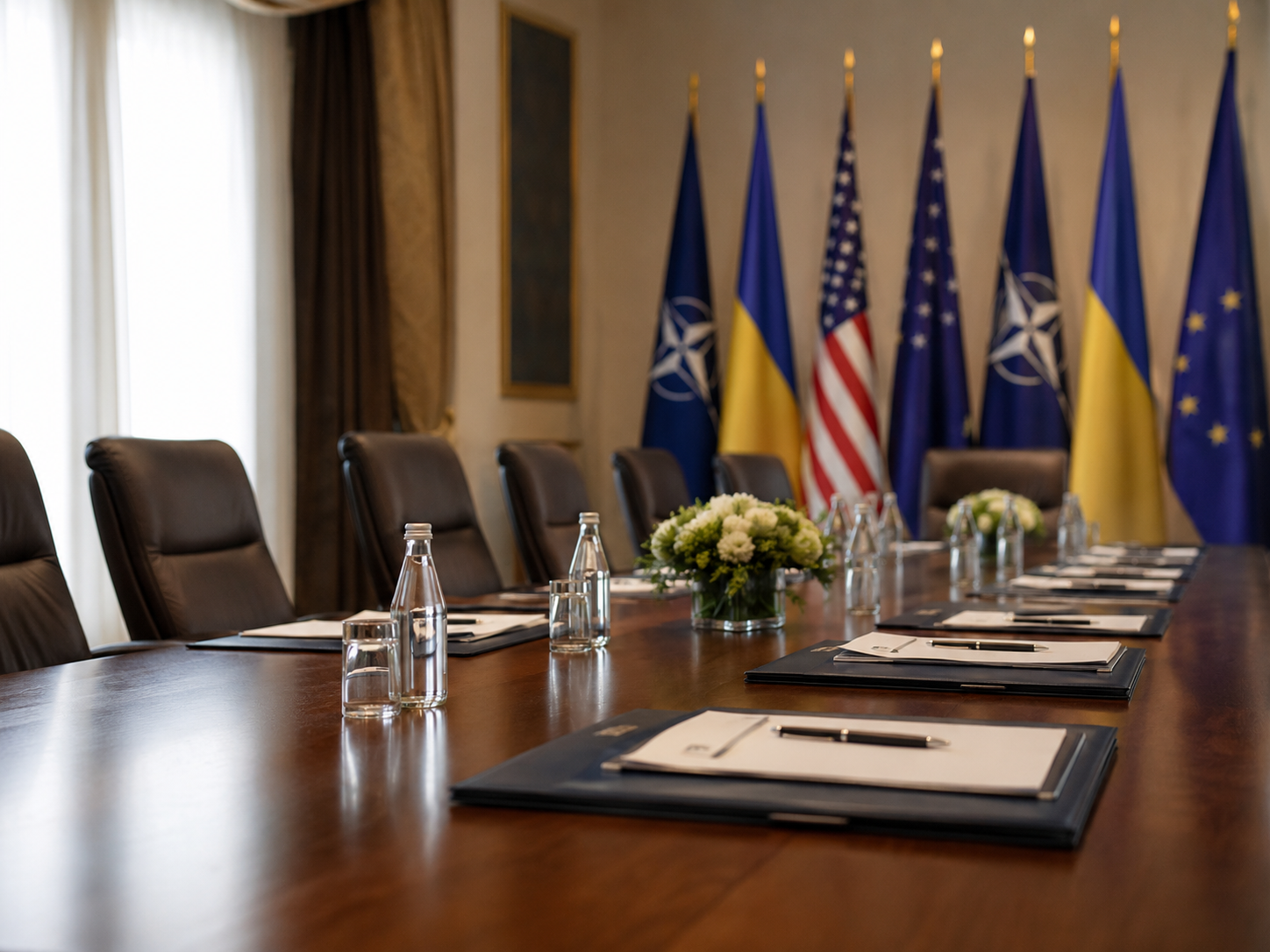
Security meetings matter most when they turn public support into practical decisions. Editorial illustration by TheDailyGlobe.
Key Facts
- NATO said the secretary general and North Atlantic Council were in Ukraine on June 3 for the first NATO-Ukraine Council meeting held in Kyiv.
- The Kyiv Independent reported that the visit followed a major Russian attack that killed more than 20 people and injured more than 100 across Ukraine.
- Ukraine's foreign minister called for Europe to use the European Peace Facility to buy U.S.-made Patriot systems and missiles for Ukraine.
- NATO confirmed the Kyiv meeting, but immediate new air-defense deliveries had not been publicly confirmed in the information reviewed for this article.
Ukraine's air-defense problem is not abstract. When missiles and drones reach cities, the question for civilians is not whether governments have expressed support, but whether protection arrives in time to matter.
That practical concern sat behind a major diplomatic step on June 3, when NATO said its secretary general and the North Atlantic Council were in Ukraine for the first NATO-Ukraine Council meeting held in Kyiv.
The meeting did not, by itself, prove that new air-defense systems are on the way. But it put Ukraine's security needs in the same room as the alliance governments that have spent more than two years trying to balance military support, political limits and their own defense planning.
What Changed in Kyiv
The NATO-Ukraine Council is the formal setting where Ukraine and NATO members meet on security issues. Holding the council in Kyiv gave the meeting added weight because it placed alliance officials inside Ukraine at a time when the country is still asking for more protection from Russian attacks.
NATO's public confirmation established the central fact: the alliance's top political decision-making body, represented through the North Atlantic Council, was in Ukraine for a council meeting. That is a concrete diplomatic development, not merely another statement of support from a distance.
For Ukraine, the location matters because Kyiv has repeatedly pressed allies to move faster on air defense. Ukrainian officials have argued that systems such as Patriots can help intercept incoming missiles and reduce the toll on civilians and infrastructure.
Why Air Defense Is the Practical Test
The Kyiv Independent reported that the NATO visit came one day after a mass Russian strike that killed more than 20 people and injured more than 100 across Ukraine. Those casualty figures should be read as reported by Ukraine-based sources and officials, not as independently verified battlefield numbers by NATO.
Still, the timing helps explain why air defense is the central issue. Diplomatic visits can signal unity, but the immediate question for Ukraine is whether that unity turns into interceptors, launchers, funding and delivery schedules.
Ukraine's foreign minister called for Europe to use the European Peace Facility to buy U.S.-made Patriot systems and missiles for Ukraine. That request links European money, American-made equipment and Ukraine's battlefield needs in one policy problem.
For U.S. readers, that connection matters because the United States remains central to NATO's military capacity and to the weapons systems Ukraine is requesting. Even when European governments provide the money, some of the equipment Ukraine wants may still depend on U.S. production, approval and supply chains.
What NATO Has and Has Not Said
The confirmed development is the meeting itself. NATO said its secretary general and the North Atlantic Council were in Ukraine, and that the council meeting was the first of its kind held in Kyiv.
That does not mean NATO announced a new weapons package during the visit. The information reviewed for this article does not establish that the Kyiv meeting produced immediate Patriot deliveries, a new procurement agreement or a firm public timeline.
That distinction is important in an active war. Ukraine's need for air defense is clear from its public requests, but the pace of deliveries depends on politics, funding, available systems, manufacturing capacity and allied decisions that were not resolved publicly in the confirmed meeting details.
What to Watch Next
The next question is whether the Kyiv meeting is followed by specific action. Readers should watch for decisions from NATO defense ministers, European Peace Facility funding moves and any confirmed steps to procure Patriot systems or missiles for Ukraine.
The meeting shows that Ukraine's security needs remain high on Europe's agenda. What remains unproven is whether that attention will shorten delivery timelines or turn into the particular air-defense systems Ukraine says it needs most.
Reporting note: Reporting draws on NATO statements, Ukraine-based reporting, government remarks, international security context, and reviewed background materials. This article was produced with AI-assisted research and reviewed by an editor before publication.