Five Miners Rescued From Flooded Laos Cave
A multinational rescue effort has freed five men trapped for days inside a flooded cave in central Laos, while crews continue searching for two others still missing.
Save Article
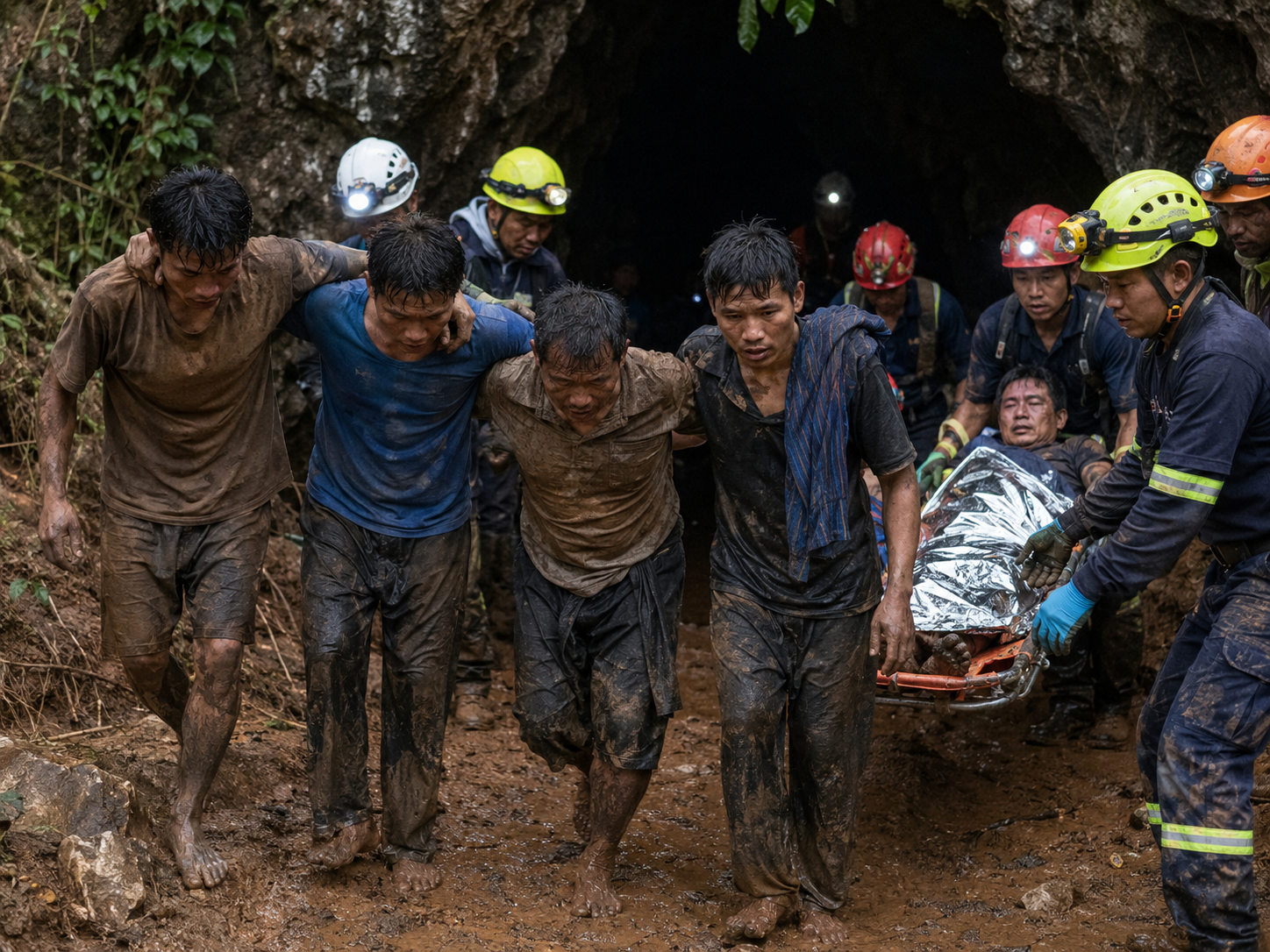
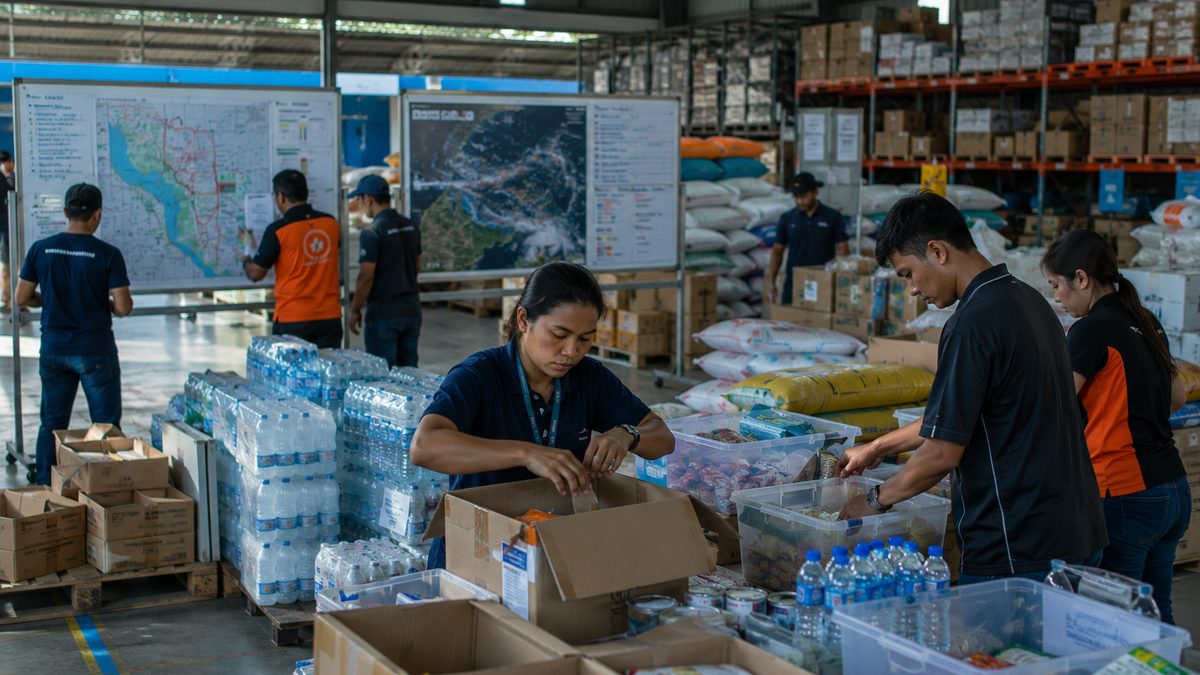
Rescue crews continue efforts in central Laos after flash flooding trapped a group of men inside a cave. Editorial illustration by TheDailyGlobe.
Key Facts
- Five men have been rescued from a flooded cave in central Laos after being trapped for days.
- Two others remain missing as rescue crews continue searching deeper inside the cave system.
- The men were part of a group that entered the cave while reportedly searching for gold or valuable minerals.
- Flash flooding blocked the way out, leaving the group trapped in dangerous, low-visibility conditions.
- The rescue effort has included Lao and Thai teams, with support from international cave-diving specialists.
Five men have been brought out alive from a flooded cave in central Laos after a dangerous rescue operation that drew help from teams across the region and beyond, while two others remain missing.
The men were part of a group that entered a cave in Xaisomboun province, north of the Lao capital Vientiane, while reportedly searching for gold or other valuable minerals. Flash flooding later blocked their exit, leaving several trapped inside. One member of the group escaped early and alerted authorities, setting off a rescue effort that stretched for days.
Rescue officials and regional reports said five men have now been freed, including one who was brought out first and four others who followed after conditions improved. Two men remain unaccounted for, and teams have continued searching in difficult terrain inside the flooded cave system.
A Rescue Shaped by Water, Time and Narrow Passages
The operation has unfolded in the kind of environment that makes cave rescues especially dangerous: confined spaces, unstable rock, mud, poor visibility and changing water levels. Divers and rescuers had to wait for water to recede enough to make parts of the cave passable, while still moving carefully through flooded or partially flooded sections.
Reports from the rescue effort described the survivors as being found on a rocky ledge inside the cave, separated from the entrance by narrow and hazardous passages. Even after rescuers made contact, bringing the men out was not immediate. The route out had to be assessed for safety, and crews had to move slowly through spaces where one mistake could endanger both rescuers and survivors.
That careful pace is one reason the rescue drew comparisons to other high-risk cave operations, including the 2018 rescue of a youth soccer team from a flooded cave in Thailand. Some specialists connected to past cave-rescue efforts have reportedly been involved or consulted as part of the Laos mission.
Who Was Trapped
The trapped men have been described in multiple reports as villagers or artisanal prospectors who entered the cave to search for minerals. Authorities have not released a full public account of the group’s identities, conditions or decisions before the flooding.
Associated Press reporting identified the five rescued men by first names only: Khamla, Mued, Ee, Ing and Laen. The conditions of the two still missing men were not immediately clear.
The limited public information reflects both the remote nature of the rescue and the uncertainty that often surrounds fast-moving emergency operations. For now, the confirmed picture is narrower: five have emerged alive, two remain missing and search crews are still working.
What Happened
The group reportedly entered the cave on May 20. Heavy rain and flash flooding later blocked the exit, trapping several men inside. One man escaped and raised the alarm, allowing rescue teams to begin searching.
After days of uncertainty, rescuers located five people alive. The discovery changed the mission from a search into a complex extraction. Crews then faced the challenge of moving survivors through a flooded cave environment where visibility was poor and physical movement was limited.
The first successful extraction was followed by the rescue of four more men. Video and images from the scene showed emotional moments as survivors emerged muddy and exhausted from the cave area. Their rescue was a major breakthrough, but not the end of the operation.
Why the Search Remains Difficult
The remaining search is complicated by the same conditions that slowed the initial rescue. Flooded caves can change quickly. Water levels may rise or fall depending on rain, pumping, drainage and the cave’s structure. Mud, sharp rocks and narrow passageways can delay crews or force them to turn back.
Search teams also must balance speed with safety. Rushing into unstable or flooded areas can risk more lives, especially if rescuers lose visibility, become trapped or encounter collapses. That is why cave rescues often rely on small teams of specialists, careful staging and repeated assessments of route conditions.
The presence of international support underscores how specialized these operations can become. Cave diving is not ordinary search-and-rescue work. It demands equipment, training and experience in environments where rescuers may have only inches of clearance and little room to maneuver.
A Regional Rescue Effort
The rescue has involved Lao and Thai teams, with additional support from international specialists reportedly including experts from Japan, Malaysia, Indonesia, France and Australia. The regional response reflects both the seriousness of the operation and the cross-border expertise developed after earlier high-profile cave rescues in Southeast Asia.
Thailand’s 2018 cave rescue remains the best-known example in the region, after 12 boys and their soccer coach were saved from the Tham Luang cave system. The Laos rescue is different in scale and circumstance, but the shared challenges of flooding, darkness and narrow underground routes have made experienced cave divers especially valuable.
For families waiting outside, the operation has been measured in hours of uncertainty. Each successful rescue has brought relief, but the missing two men keep the mission open and urgent.
What Is Confirmed
- Seven men were trapped after entering a cave in central Laos.
- One person escaped early and alerted authorities.
- Five trapped men have been rescued alive.
- Two men remain missing.
- The cave was affected by flash flooding.
- Rescue efforts have included Lao, Thai and international specialists.
What Remains Unclear
Several important details remain unclear or incomplete. Authorities have not released a full account of the missing men’s likely location, the full condition of the rescued men, or whether additional sections of the cave remain accessible to rescue teams.
It is also unclear what safety rules or local warnings, if any, were in place before the group entered the cave. Reports have described the men as searching for gold or valuable minerals, but the broader circumstances around that activity have not been fully detailed.
Those questions may matter later for local authorities. For now, the immediate priority remains the search for the two missing men.
Why It Matters
The rescue is a human story first: five men survived an ordeal that could easily have ended differently, and two families are still waiting. But it also highlights the risks faced by people who enter caves, mines or informal prospecting areas in places where weather and terrain can change quickly.
In rural and mountainous parts of Southeast Asia, informal mining and prospecting can draw people into dangerous environments with limited safety infrastructure. Heavy rain can turn those risks into emergencies within minutes.
The operation also shows how rescue capacity in the region has evolved. International cave-diving expertise, regional cooperation and lessons from past operations have become part of the emergency response toolkit. That does not remove the danger, but it can improve the chances when time, water and terrain are working against rescuers.
For now, the rescue remains unfinished. Five men are out. Two are still missing. The difference between those facts is where the operation continues.
Reporting note: Reporting draws on Associated Press reporting, regional coverage, international wire reporting, and rescue updates cited by news organizations covering the operation. All claims should be reviewed by an editor before publication.