Japan and Philippines Deepen Defense Ties as Pacific Security Pressures Grow
Japan and the Philippines upgraded their relationship and agreed to expand defense cooperation, including talks on weapons sales and intelligence sharing.
Save Article
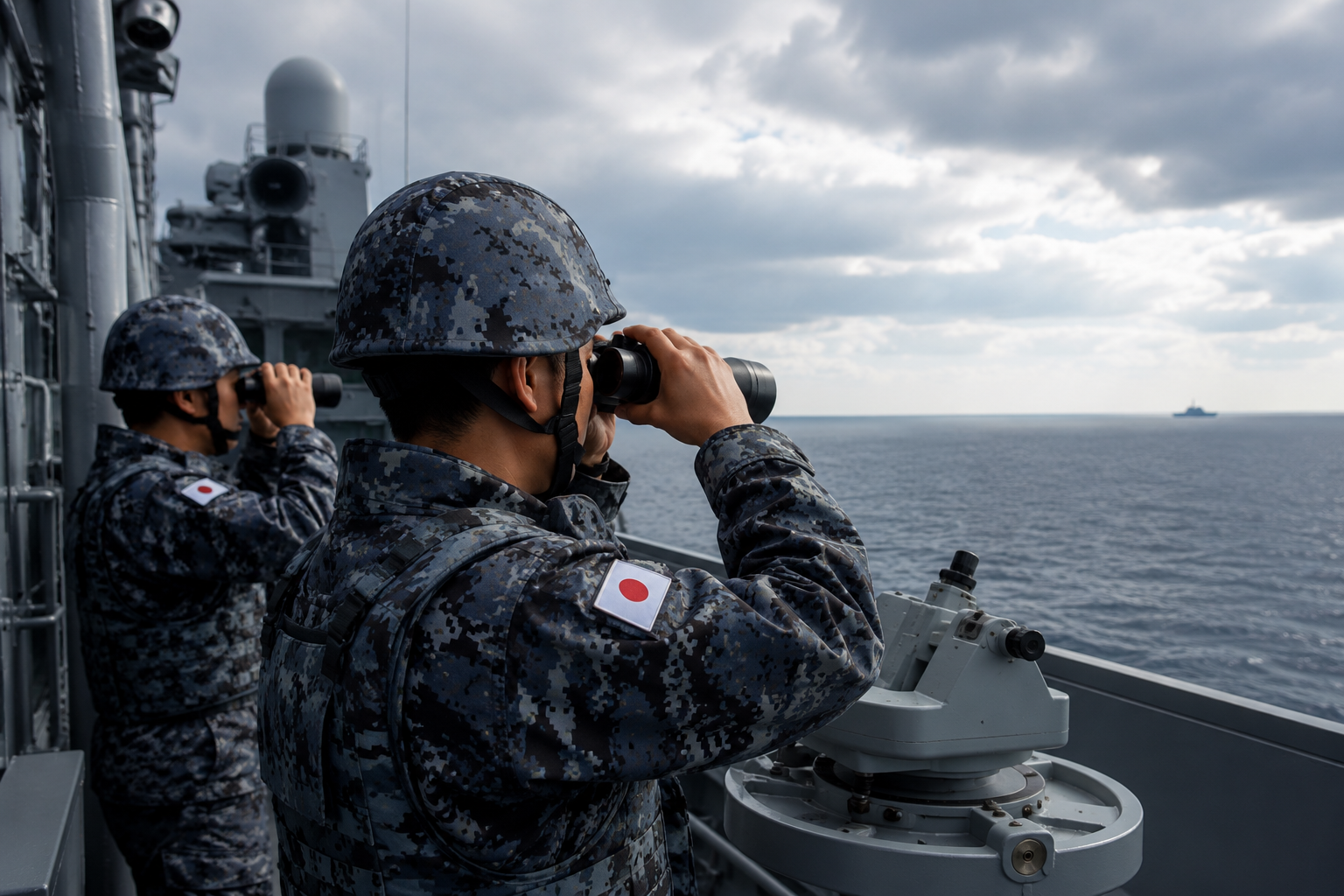
Pacific security decisions often begin at sea before they reshape military cooperation. Editorial illustration by TheDailyGlobe.
Key Facts
- Japan and the Philippines agreed on May 28 to strengthen defense cooperation.
- The two countries upgraded their relationship to a Comprehensive Strategic Partnership.
- Talks include possible Japanese weapons sales and intelligence-sharing cooperation.
- Maritime security and energy resilience were identified as major agenda items for Philippine President Ferdinand Marcos Jr.'s Japan visit.
- Specific weapons transfers and the timing of any intelligence-sharing pact remain unsettled.
Sea lanes in the western Pacific may feel far away from daily life in the United States, but they touch a lot more than maps. They affect shipping routes, energy supplies, military planning, treaty commitments and the security choices facing American allies and partners.
That is why a defense agreement between Japan and the Philippines matters beyond the ceremony of a state visit. On May 28, the two countries agreed to strengthen defense cooperation and upgraded their relationship to a Comprehensive Strategic Partnership, a move that reflects growing attention to security pressure around contested waters in the region.
What Changed Between Tokyo and Manila
The agreement gives Japan and the Philippines a more direct framework for defense cooperation at a time when both countries are watching China’s military activity and maritime claims with concern. The upgrade does not mean every defense plan is finished. It does mean the two governments are moving their relationship into a more formal and security-focused phase.
Associated Press reporting on the summit confirmed that weapons discussions and intelligence-sharing talks are part of the broader cooperation. Philippine government reporting ahead of the visit identified maritime security and energy resilience as major items on the agenda, while Japan’s foreign ministry background materials describe a relationship that has already been developing through diplomatic and security cooperation.
For readers trying to understand the region, the key point is not that one meeting suddenly changed the Pacific. It is that countries near contested waters are building tighter links with one another, instead of relying only on older diplomatic habits or on U.S.-led security arrangements.
Why the Pacific Security Picture Is Shifting
Japan and the Philippines sit in different parts of the region, but both are tied to the same larger security picture. Maritime routes through and around the South China Sea carry trade and energy supplies. Military activity near those waters can affect fishing communities, commercial shipping, energy planning and the calculations of governments that depend on stable sea routes.
The Philippines has been at the center of repeated maritime disputes with China in the South China Sea. Japan has its own security concerns in the East China Sea and across the wider Indo-Pacific. The new defense cooperation should be understood against that backdrop: two U.S.-linked regional partners are trying to make their own cooperation more practical.
That matters for the United States because Washington has treaty ties and strategic interests in the region. A closer Japan-Philippines relationship could fit into a broader network of cooperation among countries that share concerns about maritime security, though the public record does not show that every future step has been decided.
What Is Still Not Final
The most important unresolved details are practical ones. Officials have not confirmed which Japanese weapons systems could ultimately be transferred, if any. They also have not laid out a final timeline for intelligence-sharing negotiations or explained how quickly such an agreement could be put into operation.
That distinction matters. Defense talks can signal intent, but they are not the same as completed transfers, signed intelligence rules or deployed capabilities. It would be too strong to describe possible weapons sales as finished. It would also be too strong to treat the summit as proof that conflict is becoming inevitable.
China’s response is another open question. Beijing has often objected to security cooperation that it views as aimed at containing China. But the available reporting does not establish how China will respond to this specific upgrade, either diplomatically or militarily.
What Readers Should Watch Next
The next test is whether the summit language turns into specific agreements. Weapons talks will matter most if they lead to a defined transfer, a public procurement step or an official implementation plan. Intelligence-sharing talks will matter if both governments agree on rules for what information can be exchanged, how it will be protected and how it will be used.
The wider question is whether Japan, the Philippines and the United States continue building more connected security arrangements in the region. For now, the May 28 agreement is a clear marker: Japan and the Philippines are not treating Pacific security as a distant or symbolic issue. They are moving to make their defense relationship more concrete, while some of the most important details remain unfinished.
Reporting note: Reporting draws on wire reporting, official government statements, diplomatic background materials, and reviewed regional security context. This article was produced with AI-assisted research and reviewed by an editor before publication.