Small Signs of Progress in Iran Talks Leave Larger War Risks Unresolved
U.S. officials reported slight progress in talks involving Iran, but the larger questions over nuclear concessions, regional security, and the risk of renewed conflict remain unsettled.
Save Article
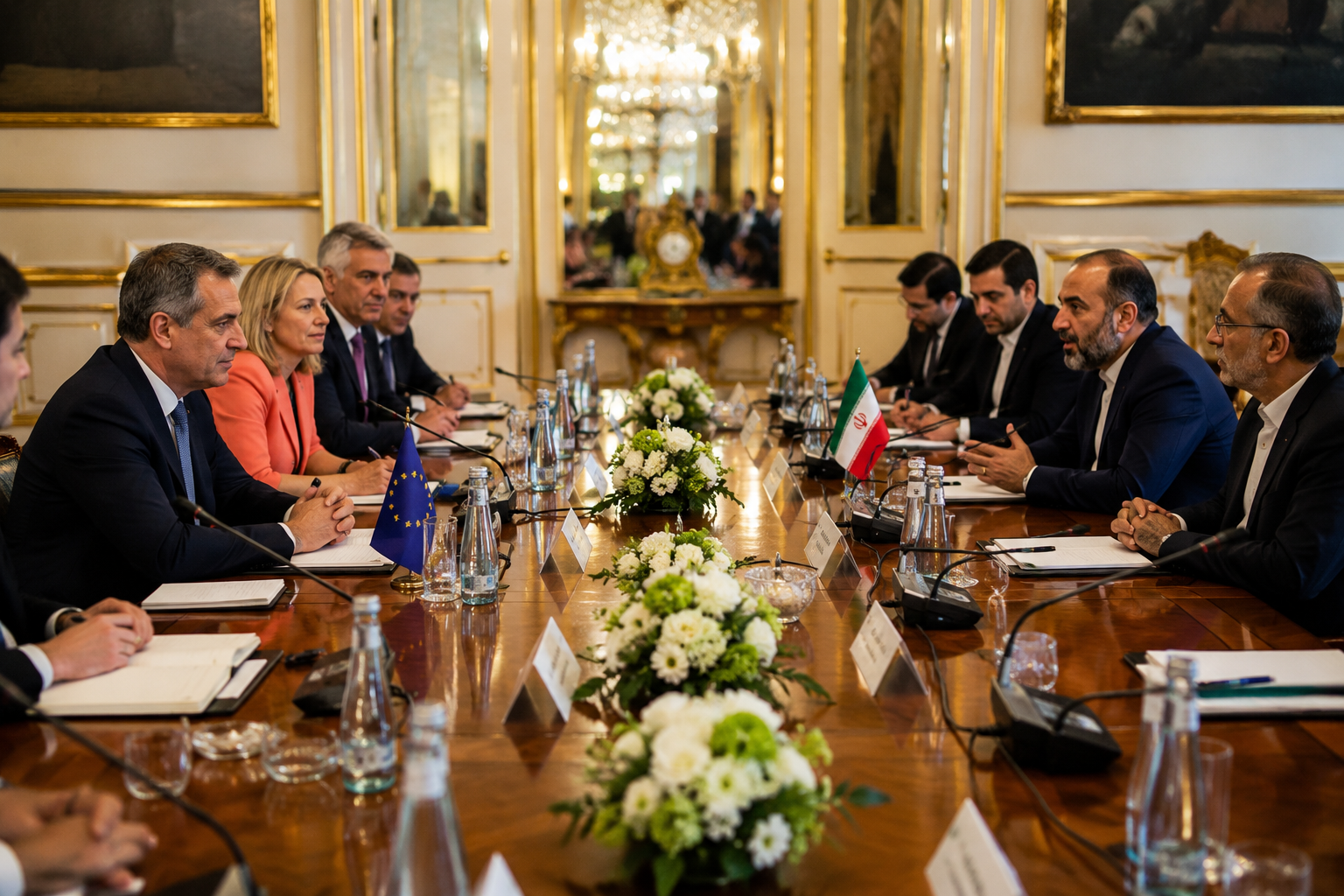
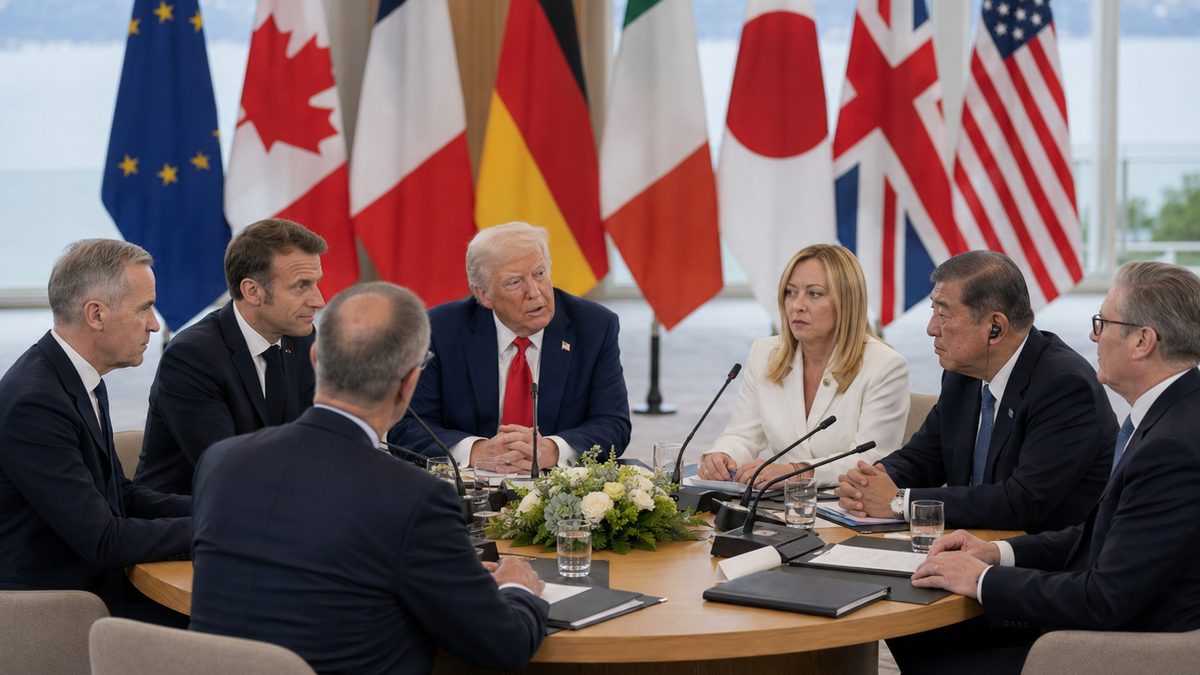
U.S. officials reported slight progress in talks involving Iran, but the larger questions over nuclear concessions, regional security, and the risk of renewed conflict remain unsettled. Editorial illustration by TheDailyGlobe.
Key Facts
- U.S. officials reported slight progress in talks involving Iran.
- Major issues remain unresolved, including nuclear concessions and regional security.
- IAEA safeguards reporting continues to provide important context for Iran’s nuclear program and monitoring concerns.
- U.S., Iranian, Israeli, and regional accounts of threats, concessions, and military posture should be attributed separately.
- It remains unclear whether the talks will produce a durable agreement or whether military action could resume if diplomacy stalls.
U.S. officials reported slight progress in talks involving Iran, but the central issues behind the diplomatic push remain unresolved, including nuclear concessions, regional security, and whether military action could resume if negotiations fail.
The latest movement is meaningful, but limited. Associated Press reporting described U.S. officials as seeing “slight progress” while uncertainty remains over whether conflict could restart. State Department materials confirm recent U.S. diplomatic activity, and International Atomic Energy Agency safeguards reporting continues to provide the technical backdrop for concerns about Iran’s nuclear program.
For U.S. readers, the story matters because Iran diplomacy sits at the crossing point of several major public concerns: foreign policy, U.S. military commitments, energy routes, nuclear monitoring, and the security of American partners in the Middle East. A small step forward in talks does not remove those risks, but it can change the room in which the next decision is made.
What Changed Today
The clearest new development is that U.S. officials are describing some diplomatic movement, but not a breakthrough. That distinction matters. “Slight progress” is not the same as a deal, and it is not the same as a public agreement on the hardest issues.
In a conflict-prone setting, even limited movement can matter because it suggests the sides are still talking or at least still testing whether talks can produce a result. But the available source material does not support saying a settlement is close. It supports a narrower conclusion: diplomacy is still active, and the biggest disagreements remain.
That is often how difficult negotiations move. Public signals can be small, cautious, and heavily qualified. Governments may want to show that diplomacy is alive without committing themselves to concessions that could draw criticism at home or alarm allies abroad.
The Nuclear Issue Remains Central
The nuclear question remains at the center of the talks because Iran’s program has long been a source of international concern and monitoring. IAEA safeguards reporting provides the technical context for how the international system tracks Iran’s nuclear commitments, access questions, and inspection concerns.
The source material does not show that Iran has agreed to the nuclear concessions the United States wants, or that the United States has accepted Iran’s position. It shows that the issue remains unresolved.
That uncertainty is important because nuclear diplomacy is not only about what leaders say publicly. It can involve inspection access, enrichment levels, stockpiles, sanctions relief, sequencing, verification, and what happens if either side believes the other is not complying. Those details are where many agreements succeed or fail.
Readers should be careful with broad claims in this area. U.S., Iranian, Israeli, and regional accounts may describe nuclear risks, threats, or concessions differently. Some claims may be official. Others may be reported through diplomatic or security sources. They should not be merged into one single, certain story unless the record supports it.
Regional Security Is the Harder Layer
The talks are not only about nuclear terms. Regional security is also part of the unresolved picture. That includes how Iran’s actions are viewed by the United States, Israel, and governments across the Middle East, as well as how those governments may be shaping the pressure around the talks.
The available source material does not show exactly how regional governments are influencing the U.S. and Iranian positions behind the scenes. That remains unclear. But the issue is plainly part of the diplomatic environment because any agreement over Iran would be judged not just by what it says on paper, but by whether governments in the region believe it reduces or increases danger.
This is where the risk of overstatement is high. It would be easy to frame the region as on the edge of a wider war. The better reading is more careful: officials see some progress, but the conflict risks that made the talks urgent have not gone away.
That uncertainty can affect ordinary Americans in indirect but real ways. A renewed conflict could affect U.S. military planning, oil and shipping routes, global markets, and the political choices facing Washington. Diplomacy that lowers the temperature could reduce some of those pressures. But the sources do not show that either outcome is guaranteed.
Why “Slight Progress” Still Matters
In diplomacy, small language can carry weight. A government that says talks are going nowhere sends one signal. A government that says there is slight progress sends another. It can give negotiators room to keep working, reassure some partners that talks have not collapsed, and avoid making claims that would be hard to defend later.
At the same time, careful wording can also reveal how limited the movement is. If officials had reached a major framework, they could say more. If the core disputes were close to settled, the public language would likely be stronger. The cautious phrasing suggests movement without resolution.
That is why the right reader takeaway is not optimism or panic. It is clarity. There appears to be some diplomatic motion. There is no confirmed durable agreement. The same issues that made the talks difficult remain in front of the negotiators.
What Remains Unclear
The largest unanswered question is whether the talks can produce any durable agreement. A durable agreement would likely need more than a temporary pause or a public statement. It would need terms the sides can accept, a way to verify compliance, and enough political support to survive pressure from opponents.
It is also unclear whether military action could resume if diplomacy stalls. The source material raises that uncertainty but does not support a prediction. Claims about military readiness, covert activity, or backchannel discussions should be treated as reported claims unless officially confirmed.
Another open question is how much room each side has to compromise. Public demands are often firmer than private negotiating positions, but the available material does not show which concessions are possible. That means readers should be cautious about any account that presents a deal, or renewed conflict, as inevitable.
What Happens Next
The next stage will depend on whether the slight progress becomes more concrete. That could mean clearer public statements, more detailed diplomatic engagement, or signs that the sides are narrowing specific disagreements. It could also mean talks stall again, leaving the same risks in place.
The IAEA context will remain important because nuclear monitoring gives governments and the public a way to judge more than rhetoric. State Department materials will also matter because they show how the United States is officially describing its diplomatic activity.
For now, the story is not that peace is close or that war is certain. It is that diplomacy has shown a small sign of life while the hardest questions remain unanswered. That is a narrow development, but in U.S.-Iran relations, narrow developments can still matter because the alternatives carry real costs.
Reporting note: Reporting draws on State Department materials, international nuclear monitoring records, Associated Press reporting, diplomatic background, and reviewed context. This article was produced with AI-assisted research and reviewed by an editor before publication.