Iran Nuclear Monitoring Gap Adds Pressure to Fragile Regional Talks
A reported IAEA monitoring gap in Iran leaves diplomats without a full verified picture of enriched uranium stocks as regional tensions remain strained.
Save Article
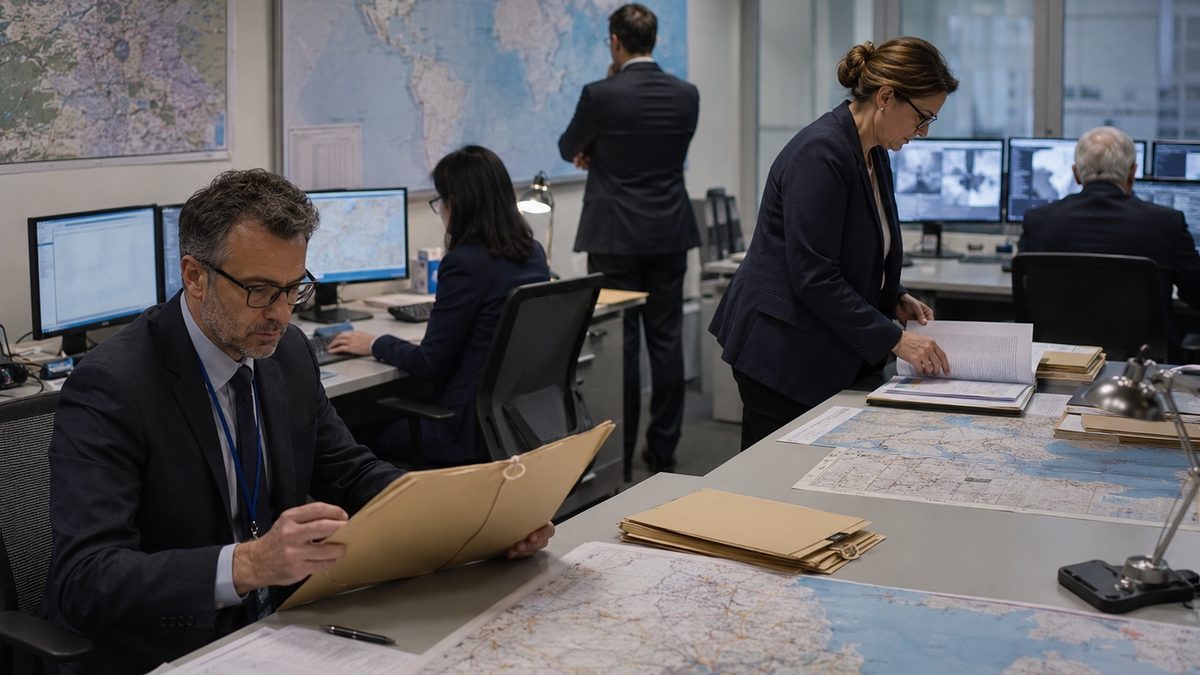
Verification work often matters most when officials cannot yet answer the basic questions. Editorial illustration by TheDailyGlobe.
Key Facts
- AP reported that an IAEA report says the agency cannot currently provide full information on the size, composition or whereabouts of Iran’s enriched uranium stockpile.
- AP reported that IAEA inspectors had inspected only the Bushehr nuclear power plant since the agency’s previous February report.
- The exact current status and location of Iran’s enriched uranium stockpile remain unverified in the cited reporting.
- United Nations updates have urged restraint amid rising Gulf tensions.
- It remains unclear when broader IAEA access in Iran could resume.
Nuclear diplomacy depends on more than statements from governments. It depends on inspectors being able to verify what is happening on the ground.
That is the problem now facing talks over Iran’s nuclear program. The Associated Press reported Thursday that an International Atomic Energy Agency report circulated to member states says the agency cannot provide current information on the size, composition or whereabouts of Iran’s enriched uranium stockpile. In plain terms, the watchdog cannot fully answer one of the most important questions in the dispute.
The gap does not prove what Iran is doing with the material. It does mean diplomats, inspectors and governments are operating with less verified information at a moment when the region is already under strain.
Why Verification Matters
The IAEA’s job is not to settle every political dispute around Iran. Its role is narrower and more practical: inspect, monitor and report what can be verified. When inspectors have access, governments still may disagree about policy, sanctions or diplomacy, but they have a stronger factual base for those decisions.
When that access is limited, the room for uncertainty grows. The AP report says the agency cannot provide current information about Iran’s enriched uranium stockpile. That is a technical finding, but it has real diplomatic weight because enriched uranium is at the center of the long-running dispute over Iran’s nuclear program.
The careful point is this: the monitoring gap should not be turned into a claim that has not been proven. The cited reporting does not establish where the stockpile is now, what Iran intends to do next, or whether a new agreement is close. It establishes that inspectors do not currently have the full verified picture they need.
What Inspectors Can and Cannot Confirm
According to AP’s account of the IAEA report, inspectors had inspected only the Bushehr nuclear power plant since the previous February report. That matters because one inspected site does not give the agency a complete view of the wider program.
Bushehr is part of Iran’s nuclear infrastructure, but the central question in the latest reporting is broader: whether the agency can verify the size, makeup and location of enriched uranium. The answer, based on AP’s reporting on the IAEA document, is that the agency cannot currently provide that information.
That limitation creates a practical problem for negotiations. Diplomacy often turns on details: what material exists, where it is, what access inspectors have, and whether commitments can be checked. Without those answers, any agreement is harder to measure and any public claim is harder to test.
Why U.S. Readers Should Care
For U.S. readers, the issue can sound distant and technical. It is not. Nuclear verification affects U.S. diplomacy, sanctions policy, military risk, regional stability and energy-market uncertainty. Even when the direct decisions are made by officials, the consequences can reach households through fuel prices, market swings, military deployments or broader instability.
The United Nations has also urged restraint amid Gulf tensions, adding regional context to the nuclear monitoring issue. That does not mean every part of the crisis is the same story. It does mean nuclear oversight is unfolding in a region where diplomatic space is already tight and miscalculation can carry real costs.
The most useful way to read the latest development is not as a prediction of war or a promise of a deal. It is a warning about information. When the watchdog cannot verify basic facts, every government involved has less solid ground under its public position.
What Remains Unclear
Several important questions are still unanswered. It is not clear when full IAEA access could resume. It is not clear whether Iran will provide enough information for inspectors to verify the stockpile. It is also not clear whether regional talks can address inspection access while fighting and diplomatic pressure continue elsewhere in the region.
Government statements connected to the broader regional conflict should be read carefully and attributed clearly. In a tense environment, officials often speak for audiences at home and abroad. The IAEA’s value is that it is supposed to test claims against inspections and records, not simply repeat what governments say.
What to Watch Next
The next practical question is whether inspectors regain access that allows the IAEA to restore a clearer view of Iran’s nuclear material. Iranian statements, IAEA updates, U.S. and European diplomatic steps, and any movement in regional ceasefire talks will all matter.
For now, the confirmed issue is narrower but serious: the nuclear watchdog says it cannot fully carry out its monitoring responsibilities in Iran, and AP reports that key details about the enriched uranium stockpile are not currently verified. In a region already under pressure, that is exactly the kind of gap diplomacy is supposed to close.
Reporting note: Reporting draws on Associated Press reporting on International Atomic Energy Agency materials, United Nations regional updates, diplomatic context, and reviewed background materials. This article was produced with AI-assisted research and reviewed by an editor before publication.