Gaza Ceasefire Still Holds, but Recovery Cannot Begin Without Full Implementation
The ceasefire remains the basis for Gaza’s recovery, but the UN says aid access, security arrangements and political commitments still have not produced normal life for civilians.
Save Article
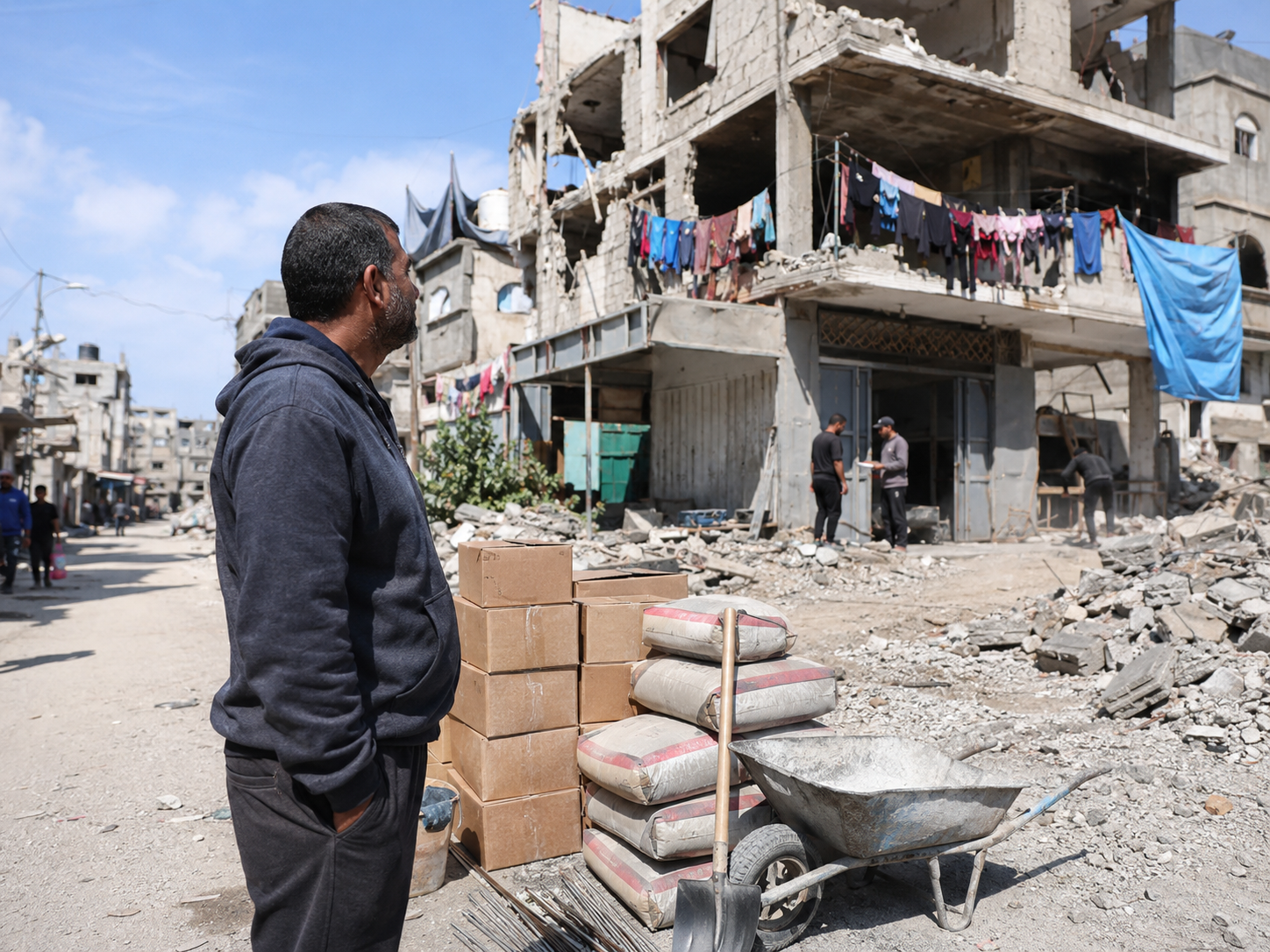
The ceasefire remains the basis for Gaza’s recovery, but the UN says aid access, security arrangements and political commitments still have not produced normal life for civilians. Editorial illustration by TheDailyGlobe.
Key Facts
- UN Security Council coverage on May 21 said the Gaza ceasefire remained “far from perfect” and that recovery had not meaningfully begun.
- AP reported that the Board of Peace urged the UN Security Council to press Hamas to disarm.
- UN coverage said humanitarian needs remain acute and aid access remains restricted despite some improvement.
- WHO materials say health needs in the occupied Palestinian territory remain severe and rehabilitation needs are substantial.
- ReliefWeb and WFP reporting says families in Gaza continue to face severe economic hardship and reliance on humanitarian assistance.
The Gaza ceasefire is still holding, but the United Nations says recovery has not meaningfully begun.
UN Security Council coverage on May 21 described the ceasefire as “far from perfect” while saying it remains the basis for Gaza’s recovery. The same coverage said humanitarian needs remain acute and aid access is still restricted despite some improvement.
For civilians, that is the difference between a pause in fighting and a path back to livable conditions. A ceasefire can reduce immediate violence, but recovery depends on food, medical care, shelter, security arrangements, political commitments and enough access for aid groups to work at scale.
A Ceasefire Is Not the Same as Recovery
The ceasefire matters because it creates the possibility of relief. But the UN’s message is that a ceasefire on paper does not automatically reopen hospitals, rebuild homes, restore income or make aid distribution reliable.
Humanitarian groups are still describing severe need. WHO materials say health needs in the occupied Palestinian territory remain severe and rehabilitation needs are substantial. ReliefWeb and WFP reporting says families in Gaza continue to face severe economic hardship and dependence on humanitarian assistance.
That means the main question has shifted from whether diplomacy can produce a ceasefire to whether the ceasefire can be implemented well enough to change daily life for civilians.
What the Board of Peace Is Asking For
AP reported that the Board of Peace urged the UN Security Council to use its influence to press Hamas to disarm. That position frames Hamas disarmament as a barrier to full implementation and longer-term stability.
That is one part of the dispute, not the whole picture. Hamas and Palestinian representatives point to Israeli non-compliance and humanitarian restrictions. Israeli, Hamas, Palestinian, UN and aid-group positions should be kept separate because each is making different claims about what is blocking progress.
The available source material does not show that every implementation dispute has been resolved. It also does not show that the ceasefire has failed. The more accurate reading is narrower: the ceasefire remains in place, but the next steps are contested and incomplete.
Why Aid Access Is Central
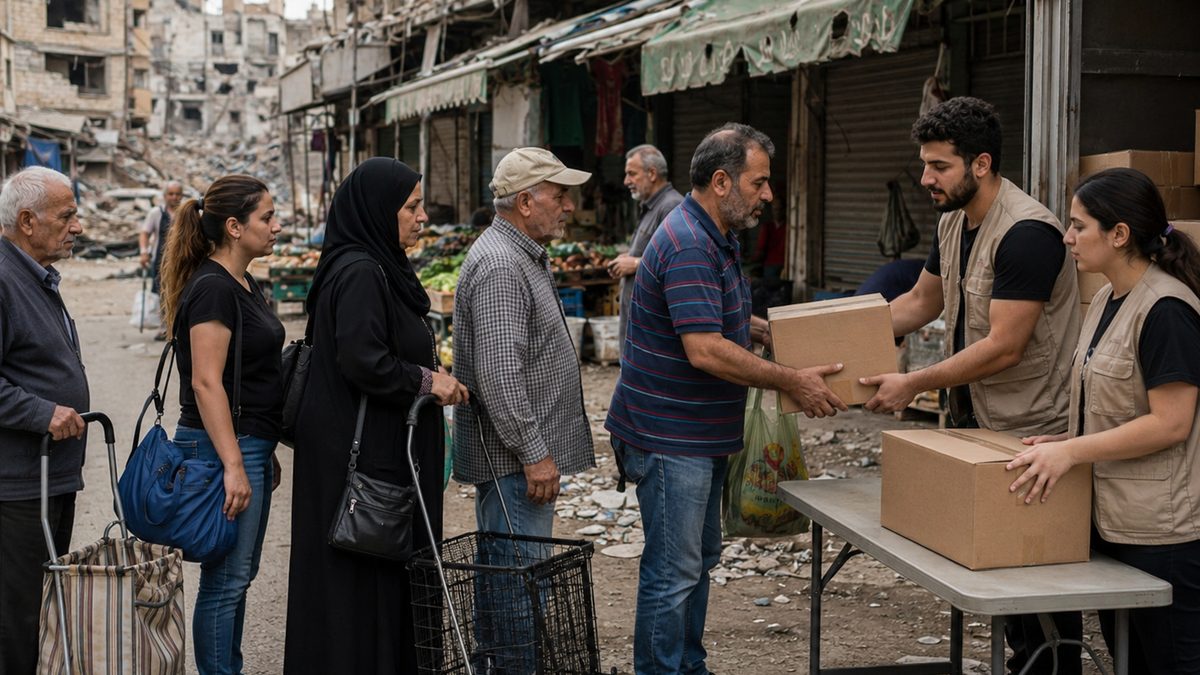
Aid access is not a side issue in Gaza. If food, medicine, fuel, shelter supplies and medical support cannot move reliably, civilians remain stuck in emergency conditions even without large-scale fighting.
UN coverage said aid access remains restricted despite some improvement. That leaves humanitarian agencies trying to respond to severe needs while still facing limits on movement, capacity and delivery.
For families in Gaza, the practical effect is straightforward. Recovery cannot begin in a meaningful way if people remain dependent on aid that is too limited, too delayed or too uncertain to support daily life.
What Remains Unresolved
Several core pieces remain unclear. It is not yet clear whether Hamas disarmament, Israeli withdrawal and the International Stabilization Force can move forward in a way all parties accept.
It is also unclear whether aid access will increase enough to support recovery, or whether the ceasefire will hold if implementation stalls. Those are not technical details. They are the difference between a temporary pause and a durable transition toward safety.
For now, the ceasefire remains the starting point. What has not yet happened, according to UN and humanitarian reporting, is the full implementation needed for civilians to see recovery begin in real terms.
The Humanitarian Situation in Gaza
As of mid-May 2026, the humanitarian situation in Gaza remains dire. The UN Office for the Coordination of Humanitarian Affairs (OCHA) reported that many displaced families are still living in overcrowded tents or severely damaged structures, with limited access to clean water and impaired waste-management systems.
The World Food Programme (WFP) states that while the ceasefire has allowed humanitarian agencies to expand their operations, food security remains fragile. Approximately 1.6 million people, or 77 percent of Gaza’s population, are facing high levels of acute food insecurity. Although aid is reaching more than 1 million people each month, the need for reliable access to food and other essentials remains critical.
Moreover, WHO estimates suggest that over 43,000 individuals in Gaza have life-changing injuries, with one in four being children. The health system, already under-resourced before the conflict, has been severely weakened by ongoing hostilities, leading to shortages of medicines and supplies, power outages, and limited patient-referral options.
Political Implications of the Ceasefire
The ceasefire's implications extend beyond humanitarian needs. Nickolay Mladenov, Gaza’s High Representative on the newly established Board of Peace, emphasized the need for recovery to advance broader political goals, including the reunification of Gaza and the West Bank under a single legitimate Palestinian government. He called for a renewed political process toward a two-state solution.
This political dimension underscores that recovery is not merely about rebuilding infrastructure but also about establishing a stable governance framework that can support long-term peace and security.
The UN Security Council's recent assessments have highlighted the urgent need for full implementation of security, aid, governance, and reconstruction commitments. Without these, civilians may remain trapped between reduced fighting and an unrepaired humanitarian collapse.
Reporting note: Reporting draws on UN Security Council coverage, AP reporting, WHO materials, OCHA humanitarian reporting, WFP situation reports, and reviewed regional context. This article was produced with AI-assisted research and reviewed by an editor before publication.