European Governments Push Back After Russian Threats Over Kyiv Diplomats
European governments and EU officials are using formal diplomatic channels to challenge Russian messaging tied to threats involving Kyiv and foreign diplomats.
Save Article
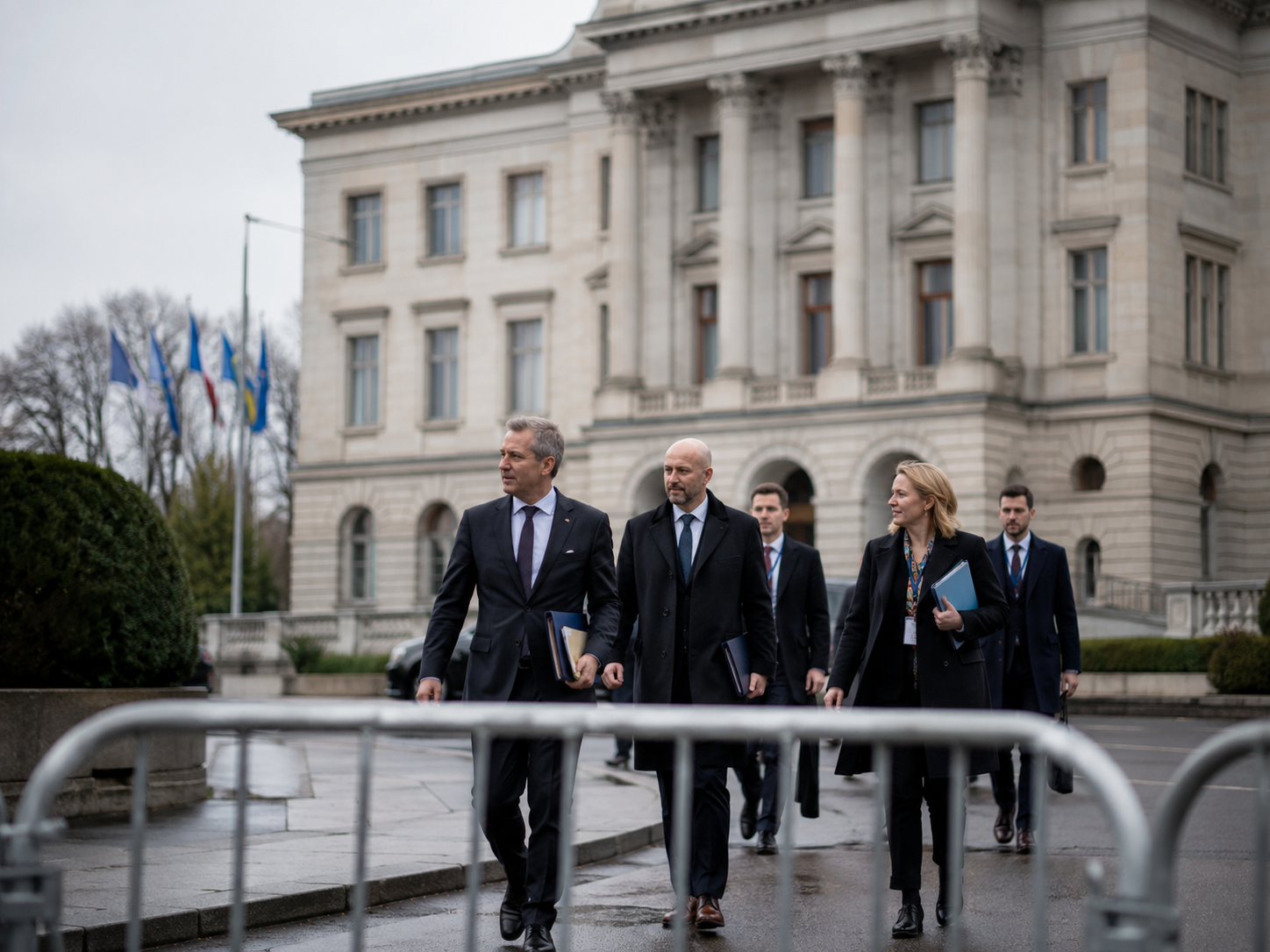
European governments often use diplomatic summonses to register formal objections during security disputes. Editorial illustration by TheDailyGlobe.
Key Facts
- The Guardian reported that multiple European countries and the EU challenged Russian diplomatic messaging over threats tied to Kyiv.
- The reported diplomatic response involved countries summoning or confronting Russian ambassadors or diplomatic representatives.
- EU officials have repeatedly framed support for Ukraine as defense of Ukraine’s sovereignty and territorial integrity.
- The Council of the European Union lists ongoing sanctions and support measures tied to Russia’s war against Ukraine.
- The available source material does not show whether the protests will change Russian messaging or military behavior.
European governments are pushing back through diplomatic channels after Russian threats tied to Kyiv and foreign diplomats, adding another formal dispute to the wider confrontation over Russia’s war against Ukraine.
The Guardian reported Tuesday that countries summoned or challenged Russian diplomatic messaging over threats connected to Kyiv. The details matter because a diplomatic summons is not just a symbolic gesture. It is one of the formal ways governments register an objection, demand clarification, and signal that another country’s conduct or language has crossed a line.
The dispute comes as the European Union continues to frame its support for Ukraine around sovereignty and territorial integrity, while maintaining sanctions and other measures tied to Russia’s war.
Why a Diplomatic Summons Matters
A diplomatic summons can sound procedural, but it is a real tool in international disputes. Governments use it when they want to make a formal complaint directly, not just issue a public statement.
That matters in this case because the issue involves threats tied to Kyiv and foreign diplomats. Diplomatic personnel operate under rules and expectations that countries have a strong interest in protecting, even during periods of conflict or sharp political tension.
The available source material should be read carefully. Russian claims or threat language should be treated as Russian messaging, not as independently verified military fact. The confirmed development is the European diplomatic response and the broader EU position on Ukraine.
Europe’s Broader Ukraine Position
The Council of the European Union’s materials on Russia’s war against Ukraine describe the EU’s continuing support for Ukraine and its measures against Russia. The EU has maintained sanctions tied to the war and has repeatedly framed its position around Ukraine’s sovereignty and territorial integrity.
That background helps explain why governments would respond formally to Russian threats connected to Kyiv. For European countries, the issue is not only one message or one diplomatic exchange. It fits into a larger security picture shaped by Russia’s war, European sanctions, military and economic support for Ukraine, and concerns about escalation.
At the same time, the diplomatic response should not be exaggerated. A summons does not by itself change the battlefield, end a threat, or prove that Russia will shift its behavior. It shows that European governments wanted the objection placed directly in front of Russian officials.
Keeping Threats and Claims in Proportion
In conflict coverage, the wording matters. Threats, allegations and military claims can move quickly through live reporting and official statements, especially when Russia and Ukraine are involved.
The careful approach is to separate what is confirmed from what is claimed. The same-day reporting confirms that European governments and EU officials reacted diplomatically to Russian messaging over Kyiv-related threats. It does not establish every detail behind those threats as fact.
That distinction is important for readers because diplomatic disputes can become more alarming when claims are repeated without attribution. A responsible account should make clear who said what, who objected, and what remains uncertain.
What Remains Unclear
The most immediate unknown is whether the diplomatic protests will change Russian messaging or behavior. Governments can object formally, but another government can choose to ignore the complaint, repeat its position, or respond with new accusations.
It also remains unclear whether additional NATO or EU security steps will follow. The available source material supports the diplomatic response and the broader EU sanctions and support context. It does not confirm a new military measure or a specific next step beyond the reported diplomatic challenges.
That uncertainty does not make the story unimportant. It means the story should be understood as a diplomatic marker in a larger conflict, not as proof of a new phase by itself.
Why U.S. Readers Should Care
For U.S. readers, the issue matters because Europe’s response to Russia is closely tied to American foreign policy, NATO security, sanctions, defense spending, energy concerns, and long-term support for Ukraine.
A diplomatic summons may seem far removed from daily life, but these formal disputes are part of how governments manage pressure without immediately moving to more dangerous steps. They create a record. They signal red lines. They tell allies and adversaries that a message was not accepted quietly.
The key is not to treat every diplomatic flare-up as a dramatic turning point. It is to understand what the action shows: European governments are continuing to contest Russian pressure tied to Kyiv while keeping their response, at least for now, inside formal diplomatic channels.
That is a serious development, but not one that needs to be inflated. It is part of the slow, tense work of managing a war-adjacent security dispute in Europe while trying to avoid panic-driven escalation.
Reporting note: Reporting draws on reputable live reporting, European Union materials, sanctions records, diplomatic context, and reviewed background materials. This article was produced with AI-assisted research and reviewed by an editor before publication.