China Patrols Near Taiwan Add Pressure to Japan-Philippines Maritime Talks
China said it patrolled waters east of Taiwan after Japan and the Philippines moved toward maritime boundary talks, adding tension to a sensitive Pacific dispute.
Save Article
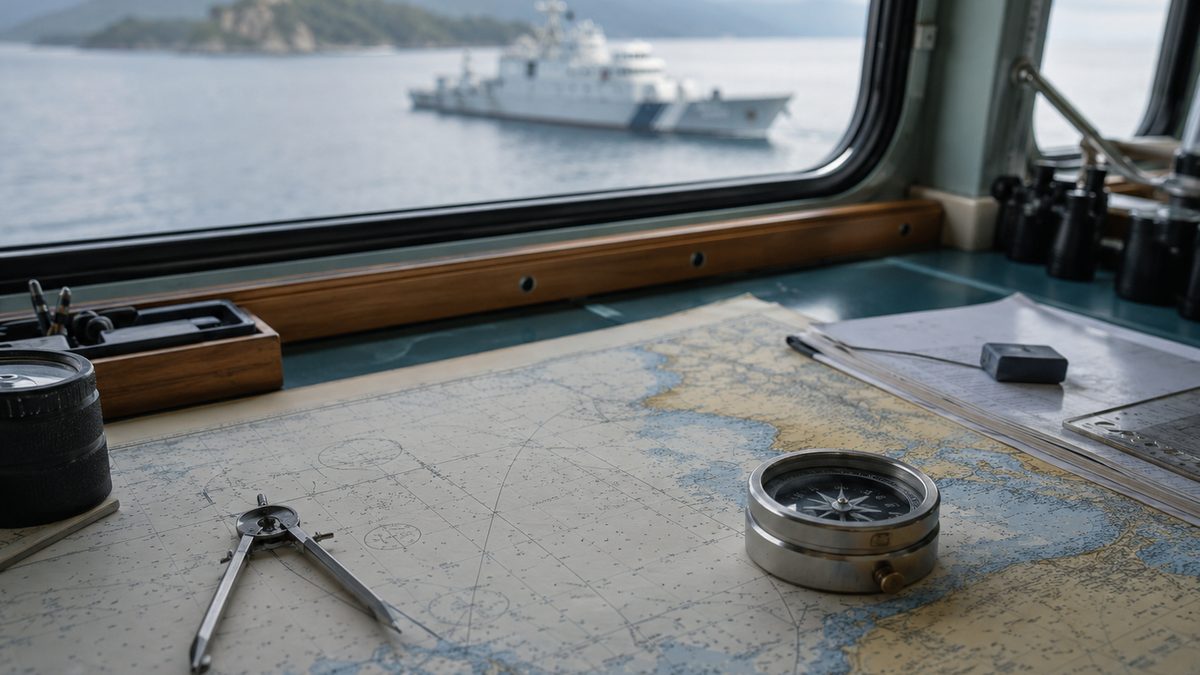
Maritime boundary talks can become security stories when several governments claim the same waters. Editorial illustration by TheDailyGlobe.
Drawing a sea boundary can sound like a technical exercise. In the western Pacific, it can quickly become a security story.
China's coast guard said it conducted patrols in waters east of Taiwan after Japan and the Philippines announced plans for maritime boundary talks. The Straits Times, citing Reuters reporting, reported that Beijing described the patrols as a response to talks involving waters China also claims.
Taiwan said it spotted two Chinese ships southeast of Orchid Island, but said they did not enter restricted waters. That detail matters because it keeps the incident in scale: the patrols added pressure, but the cited reporting does not show that Chinese ships crossed into Taiwan's restricted waters.
Why the Talks Drew China's Attention
Japan and the Philippines are discussing how to define maritime boundaries tied to exclusive economic zones and continental shelves. Japan has said any Japan-Philippines maritime agreement would not be legally binding on third parties.
China rejects parts of that framing and has used sovereignty language to criticize the talks. That should be read as China's position, not as a settled legal finding. Taiwan also rejects China's claims over Taiwan, another reminder that several governments describe the same waters in sharply different ways.
Why It Matters in the Pacific
The issue matters to U.S. readers because Japan and the Philippines are both U.S. partners, and Taiwan-adjacent waters remain one of the most sensitive security areas in the Pacific. A boundary discussion between two governments can affect patrol patterns, diplomatic pressure and how other countries signal their claims.
The current facts do not point to imminent conflict. They point to a familiar regional pattern: governments using ships, legal language and public statements to defend competing positions before talks even produce a final agreement.
What to Watch Next
The main questions now are practical ones. It remains unclear exactly what boundary Japan and the Philippines will define, whether China will increase patrols, and whether the talks will produce a formal agreement soon.
The next signs to watch are formal talks, patrol patterns and statements from Tokyo, Manila, Beijing and Taipei. In contested waters, the words governments choose often matter almost as much as where their ships go.
Reporting note: Reporting draws on Reuters-backed regional reporting, South China Morning Post context, official government statements, and reviewed background materials. This article was produced with AI-assisted research and reviewed by an editor before publication.