ASEAN Digital Trade Talks Point to a Regional Push on Online Commerce
ASEAN says negotiations have concluded on a digital economy framework, a quieter trade story that could shape data, online services and business access in the region.
Save Article
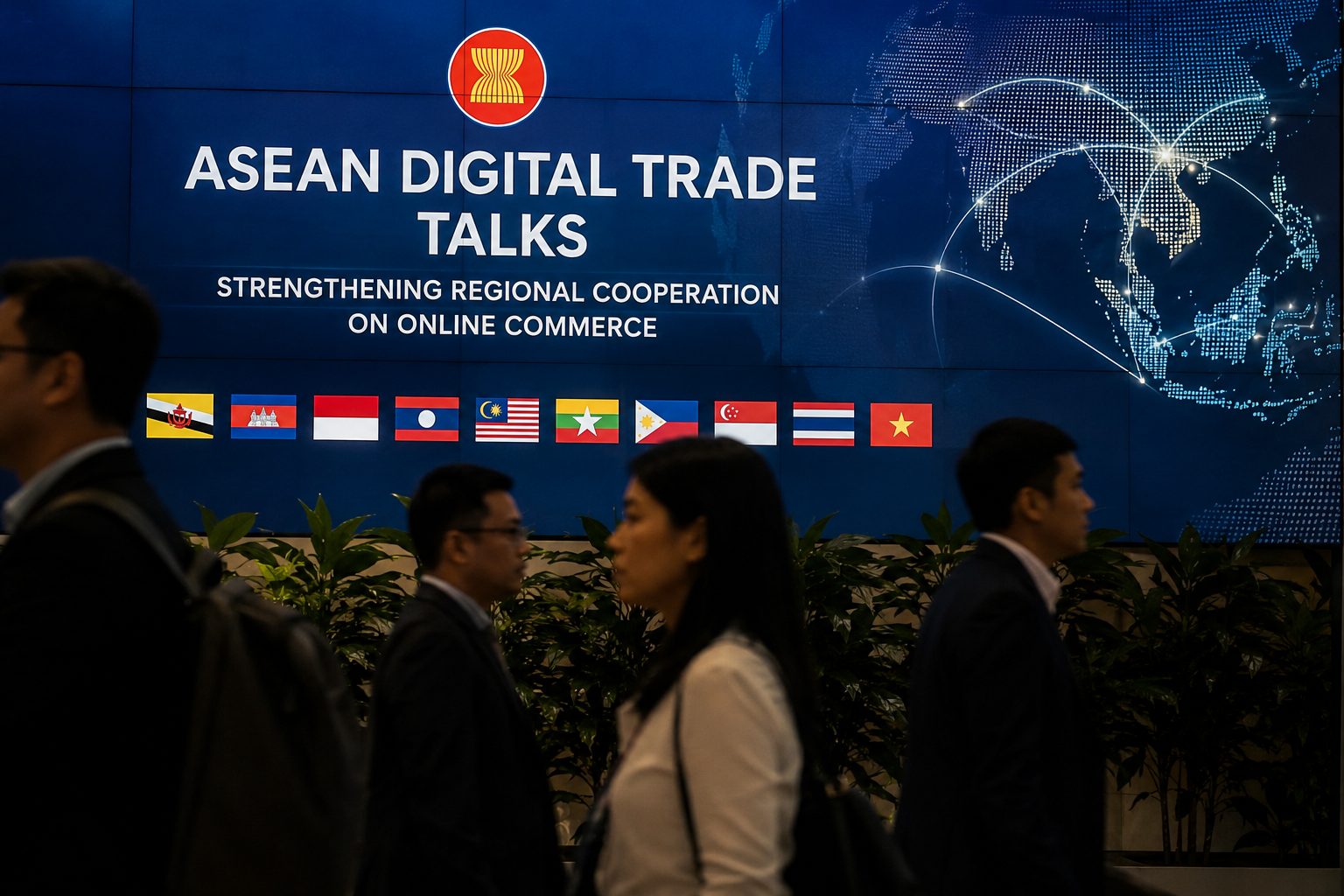
Digital trade rules shape how services, data and businesses move across borders. Editorial illustration by TheDailyGlobe.
Trade rules are no longer only about goods moving through ports. They increasingly shape how data moves, how online services reach customers, how payments work, and how businesses sell across borders.
ASEAN listed a June 1 statement on the conclusion of negotiations for the ASEAN Digital Economy Framework Agreement, known as DEFA. The announcement points to a regional effort to set rules for the digital economy across Southeast Asia.
Why Digital Trade Rules Matter
For businesses, digital trade rules can affect online services, cross-border data practices, payment systems, e-commerce access and how companies operate across multiple countries. For consumers, they can shape the digital marketplace they use every day, even when the rules themselves sound technical.
The issue also matters outside Southeast Asia. ASEAN economies are tied to global supply chains, digital services, and regional competition. U.S. companies that sell, build, source, or provide services in the region may eventually need to understand how new digital rules are written and enforced.
What ASEAN Has Confirmed
ASEAN’s public materials identify the Philippines as the bloc’s 2026 chair and show related regional economic and diplomatic activity around May 31 and June 1. The DEFA announcement fits into that broader period of regional coordination.
The confirmed point is narrow but useful: ASEAN says negotiations have concluded. The full agreement text, implementation schedule and practical obligations for member states still need review before the business impact can be described in detail.
What to Watch Next
The next questions are whether the final text is released, how binding the rules are, and whether ASEAN members ratify or implement them in the same way. Regional agreements can look clear on paper while still depending on national follow-through.
For now, the story is less dramatic than a military crisis or election, but it may matter over time. Digital economy agreements help set the rules for how modern trade works, and Southeast Asia is one of the regions where those rules are still being shaped.
Reporting note: Reporting draws on ASEAN official materials, regional statements, and reviewed background materials. This article was produced with AI-assisted research and reviewed by an editor before publication.