Local Transportation Projects Enter the Waiting Period for $1.5 Billion in BUILD Grants
The FY2026 BUILD grant window has closed, leaving communities waiting to see which local and regional transportation projects will receive federal support.
Save Article
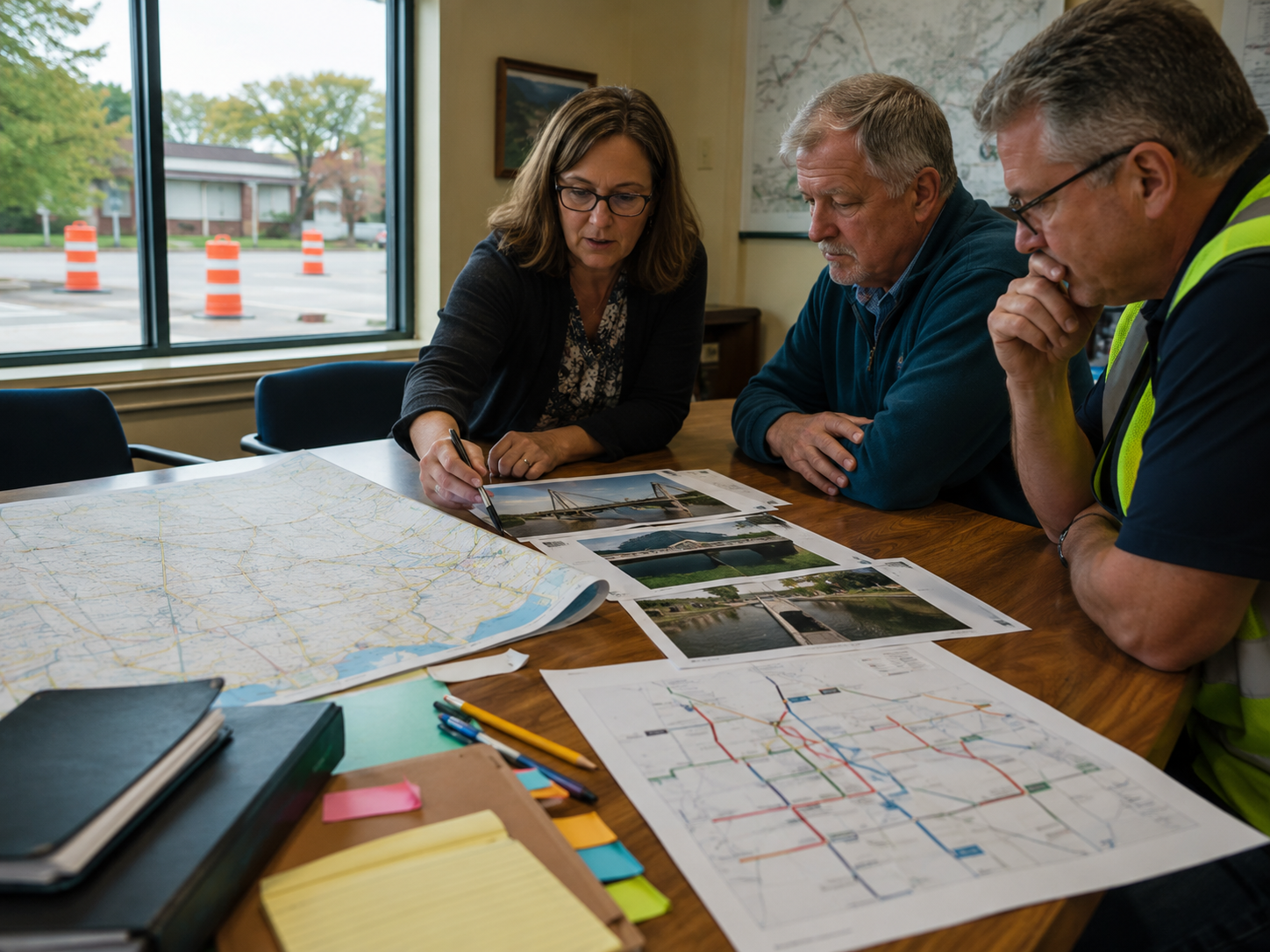
The Department of Transportation says FY2026 BUILD grant selections are expected in late June. Editorial illustration by TheDailyGlobe.
Key Facts
- DOT says the FY2026 BUILD application window has closed and selections are expected in late June 2026.
- The FY2026 BUILD notice says $1.5 billion was authorized and appropriated for Local and Regional Project Assistance Program grants.
- DOT says BUILD grants support surface transportation infrastructure projects with significant local or regional impact.
- Eligible applicants include states, territories, local governments, public agencies, transportation authorities, federally recognized Tribes, transit agencies, and multijurisdictional groups.
- The FY2026 notice lists a maximum award size of $25 million.
Local transportation projects across the country are now in the waiting period for a major federal funding decision. The Department of Transportation says the FY2026 BUILD grant application window has closed, with selections expected in late June 2026.
The program matters because many transportation problems are local or regional, but the money needed to fix them often has to come from several sources. A bridge repair, port access project, rural road upgrade, transit connection, or safety improvement may be too large for a local budget but too specific to fit easily into broader funding streams.
For readers, the issue is practical: federal grant design helps decide which community transportation problems get a shot at funding, which ones wait longer, and which local governments have to keep searching for money elsewhere.
What BUILD Grants Are For
BUILD grants are competitive federal grants for surface transportation projects with local or regional impact. In plain English, they are meant for projects that can improve how people, goods, and services move through a community or region.
The grants may support planning or construction. That distinction matters because not every project is ready to break ground. Some communities need money to plan, design, study, or prepare a project before they can compete for larger construction dollars.
The FY2026 notice lists program goals including safety, environmental sustainability, quality of life, mobility and community connectivity, economic competitiveness, state of good repair, partnership, and innovation. Those categories are broad, but they reflect the kinds of problems local officials often bring to federal transportation grant programs.
Who Can Apply
The applicant pool is wide. Eligible applicants include states, territories, local governments, public agencies, special-purpose transportation authorities, federally recognized Tribes, transit agencies, and multistate or multijurisdictional groups.
That range is one reason the competition matters nationally. A rural county, a transit agency, a Tribal government, a port authority, a state transportation department, or a group of local governments may all be trying to solve different transportation problems through the same grant program.
It also means demand can be high. The fact that an applicant is eligible does not mean it will receive funding. Competitive grants usually force federal officials to sort through more requests than they can support.
How the Money Is Structured
The FY2026 BUILD notice says the Infrastructure Investment and Jobs Act authorized and appropriated $1.5 billion for the Local and Regional Project Assistance Program grants. That is the funding pool communities are watching as selections approach.
The notice lists minimum award sizes of $1 million for rural capital projects and $5 million for urban capital projects. Planning projects do not have a minimum award size. The maximum award size is $25 million.
Those limits shape what kinds of projects fit the program. A small planning effort may be able to compete without meeting a capital-project minimum. Larger construction projects have to fit within the award limits or combine BUILD money with other federal, state, local, or private funding sources.
Why the Guardrails Matter
The FY2026 notice includes several funding restrictions. It says no more than 15% of funding may go to one state. It also says no more than 50% may go to rural projects and no more than 50% may go to urban projects.
The notice also sets aside at least 5% for planning projects and at least 1% for projects in areas of persistent poverty or historically disadvantaged communities. These rules are meant to spread funding across geography, project type, and community need rather than allowing the entire pool to concentrate in one category.
The tradeoff is that guardrails can make selection decisions more complicated. DOT is not only judging individual project quality. It also has to manage the program’s rural, urban, planning, state, and disadvantaged-community requirements.
Why Communities Watch These Grants Closely
Local governments often pursue competitive grants because transportation projects can sit in funding gaps. A project may be important to a town or region but still struggle to compete for regular formula funding or fit into a state’s existing project schedule.
That can matter for everyday life. A road safety project may affect commutes and school routes. A bridge project may affect emergency response and freight movement. A transit project may affect whether people can reach jobs, medical appointments, or classes. A port or freight project may affect local business costs and regional economic activity.
BUILD grants do not solve every transportation problem, and they do not replace long-term transportation planning. But for selected projects, they can help close a funding gap that would otherwise slow or stall work.
What Remains Unclear
The biggest unknown is which projects will be selected in late June. Until DOT announces the awards, communities that applied do not know whether they will receive funding or need to pursue another path.
It is also unclear how DOT will balance rural, urban, Tribal, port, transit, road, bridge, safety, and planning projects in the final selections. The funding rules provide structure, but they do not reveal the outcome.
Another question is timing. Even after an award is announced, a project may still have to move through agreements, planning, design, environmental review, bidding, or construction steps. A grant selection is important, but it is not the same thing as immediate construction.
What Readers Should Watch Next
The next major marker is the late-June selection announcement. Readers should watch which regions receive grants, how funding is divided between rural and urban projects, and whether planning projects and disadvantaged communities receive the minimum shares described in the notice.
After that, the more practical question is whether selected projects are ready to move. Project readiness, local matching funds, permitting, design work, and agency capacity can all affect how quickly a grant turns into visible progress.
For now, the confirmed story is that the application window has closed, $1.5 billion is available for FY2026 BUILD grants, and communities are waiting to see which local and regional transportation projects will move forward with federal help.
Reporting note: Reporting draws on Department of Transportation BUILD program materials, the FY2026 BUILD Notice of Funding Opportunity, DOT grants guidance, and reviewed transportation infrastructure context. This article was produced with AI-assisted research and reviewed by an editor before publication.