Public Parks Are Quietly Doing More Work for Local Communities
Parks are often treated as weekend extras, but they also serve as low-cost public spaces for exercise, family time, youth programs, cooling, events and neighborhood connection.
Save Article
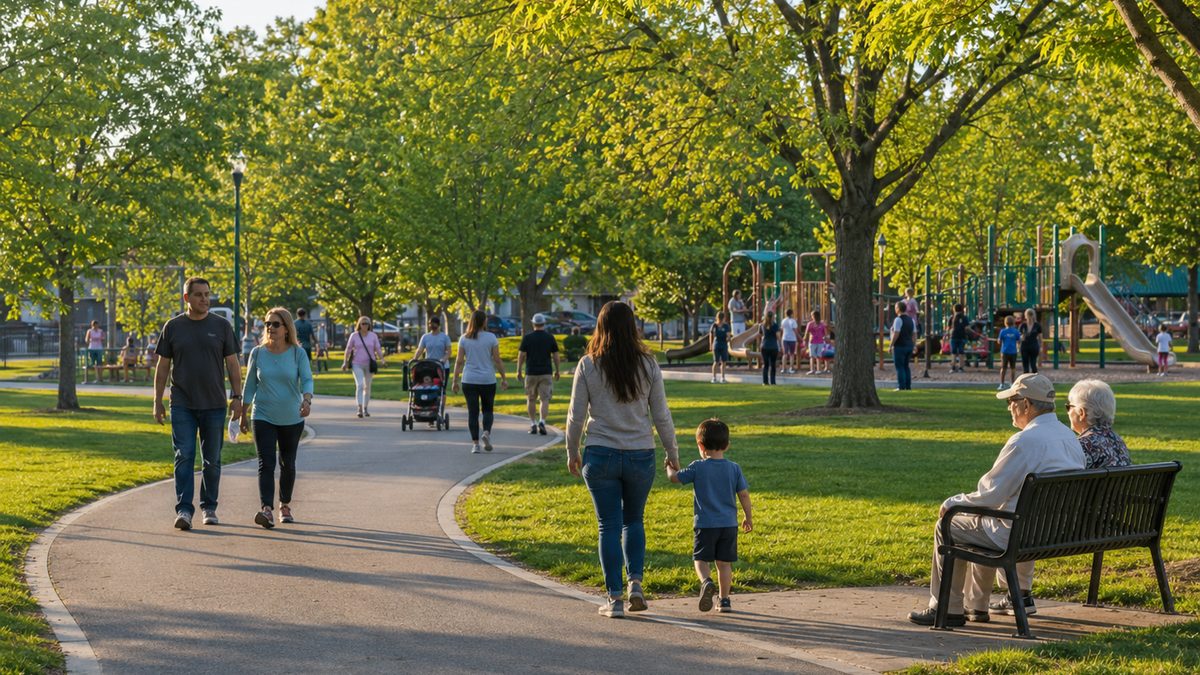
Public parks provide everyday places for recreation, family time, events and neighborhood connection. Editorial illustration by TheDailyGlobe.
Key Facts
- Public parks provide free or low-cost access to recreation, walking paths, playgrounds, sports fields and community events.
- Local park systems often support youth programs, senior activities, fitness classes, public gatherings and seasonal events.
- Green space can also help neighborhoods with shade, cooling, stormwater absorption and everyday quality of life.
- Park quality depends on maintenance, safety, accessibility, transportation and whether residents can reach usable space near where they live.
A public park can look simple from the sidewalk: grass, trees, benches, a playground, a walking path, maybe a ball field or a shaded pavilion. But for many communities, that space does more work than it gets credit for.
Parks serve as low-cost gathering places, outdoor exercise areas, youth program sites, family destinations, event spaces and neighborhood landmarks. They give people somewhere to go that does not require a ticket, a purchase or a membership. In a time when many household costs are rising, that basic public value matters.
For families, parks can stretch a weekend budget. A playground visit, picnic, pickup game or evening walk gives parents something useful to do with children without adding another paid activity. For older adults, a nearby path or bench can make outdoor time easier. For workers, a park can be a lunch break, a walking route or a place to decompress before heading home.
The value is not only recreational. Parks help create a shared public life. A library event, farmers market, concert, youth sports practice, summer movie night or community cleanup can bring neighbors into the same space. Those ordinary interactions are part of what makes a place feel lived in rather than just built.
A Practical Public Service
City and county park departments often operate with less attention than police, schools, roads or utilities, but their work touches daily life. They maintain fields, playgrounds, trails, pools, recreation centers, trees, bathrooms, lighting and event spaces. When those basics are clean and reliable, residents may not notice the work. When they decline, people notice quickly.
Accessibility is one of the most important measures of a park system. A large park across town may be beautiful, but it does not help a family much if they cannot reach it safely. Sidewalks, transit, parking, shade, lighting, restrooms and accessible equipment all affect whether a public space truly serves the public.
Maintenance matters just as much. A park with broken equipment, poor lighting, litter or unreliable bathrooms can lose public trust. Residents may stop using it, and a space meant to connect a neighborhood can become a place people avoid. In that sense, parks are not one-time investments. They are ongoing public commitments.
Why Parks Matter In Hotter Months
Parks also become more visible during warm weather. Tree cover, grass, shade structures and water features can make outdoor time more bearable. In heavily paved neighborhoods, green space can offer relief from heat and give families a safer place to spend time outside when homes or apartments are cramped.
That does not mean every park is automatically comfortable or safe in summer. Shade, water access, maintenance and design all matter. A playground in full sun may be hard to use during the hottest part of the day. A trail without benches may be difficult for older residents. A park without clear paths may be less welcoming for people with mobility needs.
Good park planning often comes down to practical details. Where are the trees? Are the bathrooms open? Can a stroller or wheelchair move through the site? Is there a place to sit? Are youth sports fields shared fairly? Can residents reserve space without confusion? Do people feel comfortable using the park after work?
What Residents Can Look For
Residents who want to understand the value of their local park system can start with a simple question: what does the park make easier? It may make exercise easier, give children a place to play, provide a free weekend plan, host civic events or make a neighborhood more pleasant to walk through.
They can also look at what is missing. A neighborhood may have fields but no shade, a playground but no safe crossing, or a trail but no connection to homes nearby. Those gaps are not cosmetic. They decide who gets to use the park and who mostly sees it from a distance.
Public parks rarely solve one problem by themselves. But they can make many parts of daily life slightly easier. They give people a place to move, meet, rest, celebrate and share space without being customers first.
That is why parks should not be treated only as nice extras. When they are well maintained and easy to reach, they become part of a community’s everyday infrastructure — not loud, not flashy, but useful.
Reporting note: Reporting draws on public park and recreation materials, local government planning resources, National Recreation and Park Association background materials, Trust for Public Land resources, and reviewed community infrastructure materials. This article was produced with AI-assisted research and reviewed by an editor before publication.