Federal Settlement Over Dakota Access Protest Costs Reopens a Familiar Question
Nearly a decade after the Dakota Access Pipeline protests drew national attention, a federal settlement with North Dakota is focusing attention on the public costs left behind and who should bear them.
Save Article
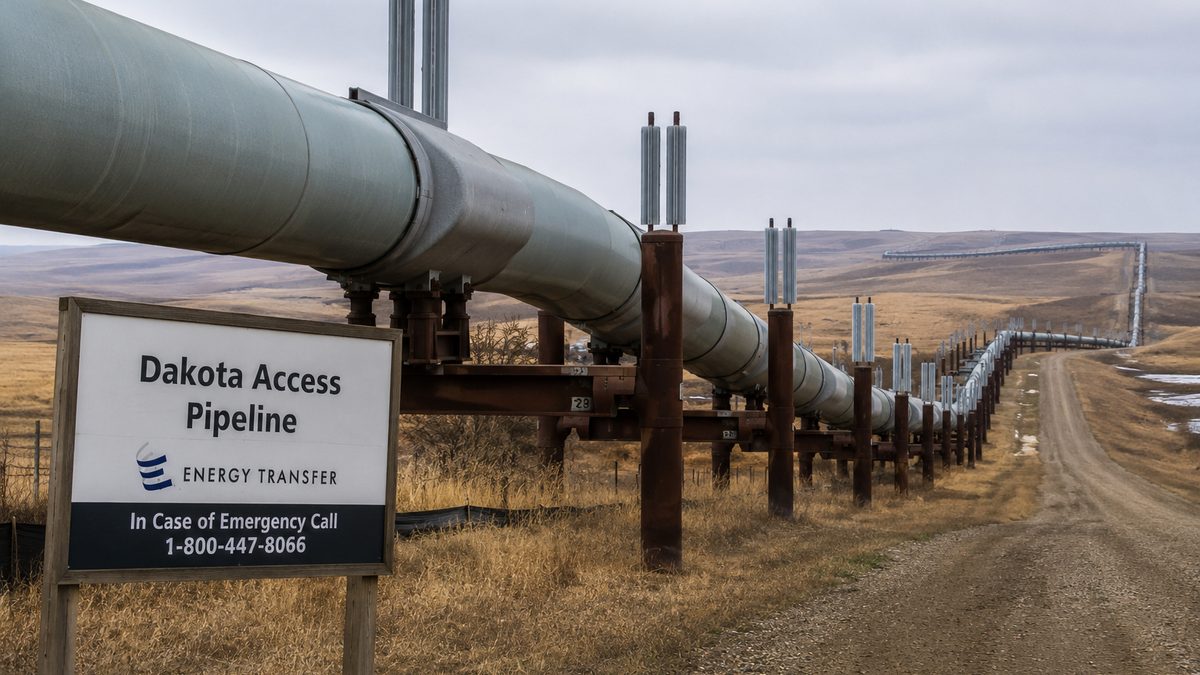
Public costs from national disputes can remain unsettled long after crowds leave and court cases move on. Editorial illustration by TheDailyGlobe.
Key Facts
- The federal government agreed to pay North Dakota nearly $28 million to settle litigation related to protest costs.
- The dispute stems from Dakota Access Pipeline protests that took place in 2016 and 2017.
- North Dakota officials said the state incurred law-enforcement and related expenses connected to the protests.
- The Justice Department said the settlement resolves the case while disputing parts of the district court's legal analysis.
- The agreement does not resolve broader debates over the pipeline, tribal concerns, protest rights or law-enforcement responses.
Long after protest camps disappear, court cases end and national attention moves elsewhere, governments can still be sorting out the bill. That reality is at the center of a new settlement between the federal government and North Dakota tied to the Dakota Access Pipeline protests that captured national attention nearly a decade ago.
The federal government has agreed to pay North Dakota nearly $28 million to settle litigation over costs connected to the 2016 and 2017 protests. The agreement closes a years-long legal dispute over who should bear expenses that state officials say were incurred during one of the most closely watched infrastructure conflicts in recent U.S. history.
An Old Dispute With a New Financial Resolution
The Dakota Access Pipeline protests became a national story because they touched several issues at once. Tribal communities and supporters raised concerns about water protection, treaty rights and the project's impact. The demonstrations also prompted major law-enforcement operations, court battles and political debate over infrastructure development and protest rights.
Years later, the latest development is not about whether the pipeline should have been built. Instead, it concerns who should pay costs that North Dakota says were created by the scale and duration of the protests.
State officials have described the settlement as reimbursement for expenses that North Dakota taxpayers absorbed. The federal government, meanwhile, agreed to resolve the litigation but stopped short of embracing every legal argument advanced by the state.
Why the Justice Department's Position Matters
One important detail in the settlement is that the Justice Department said it continued to dispute aspects of the district court's legal analysis even while agreeing to resolve the case. That distinction matters because settlements are not always admissions that every claim made by one side was correct.
For readers following the case, that means the agreement should be understood primarily as a negotiated resolution rather than a definitive legal ruling that settles every question surrounding responsibility for protest-related costs.
The settlement ends the litigation, but it does not produce a simple answer that all parties agree upon regarding how responsibility should be assigned in similar situations.
The Accountability Question Behind the Dollars
At its core, the case raises a broader public-accountability question. When a dispute becomes national in scope but requires extensive local law-enforcement and government resources, how should those costs be shared?
That question extends beyond North Dakota. Large demonstrations, natural disasters, major security events and other nationally significant incidents often place demands on local governments that can exceed normal budgets. Determining when state taxpayers should carry those costs and when federal assistance is appropriate remains an ongoing challenge.
The settlement does not establish a universal rule for future cases. However, it highlights the tension that can emerge when local governments argue they are carrying expenses generated by events with national consequences.
What the Agreement Does Not Resolve
The payment should not be interpreted as resolving the broader Dakota Access Pipeline controversy. Longstanding disagreements remain over protest rights, tribal concerns, environmental questions, infrastructure policy and the actions taken by various institutions during the protests.
The settlement also does not determine how future administrations should respond when large-scale demonstrations create substantial public costs. Available reporting does not establish whether federal agencies will adopt different approaches in future disputes.
Another unanswered question is whether additional records or future legal disputes will provide greater clarity about how responsibility was assessed during negotiations that led to the settlement.
What Readers Should Watch Next
The legal fight may be ending, but the policy questions remain. Readers should watch whether this settlement is cited in future disputes involving federal, state and local costs connected to major protests or other nationally significant events.
For now, the agreement closes one chapter of a long-running conflict. What it leaves behind is a question governments continue to face across the country: when national controversies create local burdens, who ultimately pays the bill?
Reporting note: Reporting draws on Associated Press reporting, Department of Justice materials, North Dakota government statements, court-related reporting, and reviewed background materials. This article was produced with AI-assisted research and reviewed by an editor before publication.