Federal Waiver Speeds Big Bend Border Work, Raising Public-Lands Questions
Federal officials used waiver authority to speed border infrastructure work in the Big Bend region, drawing criticism over public lands and environmental review.
Save Article
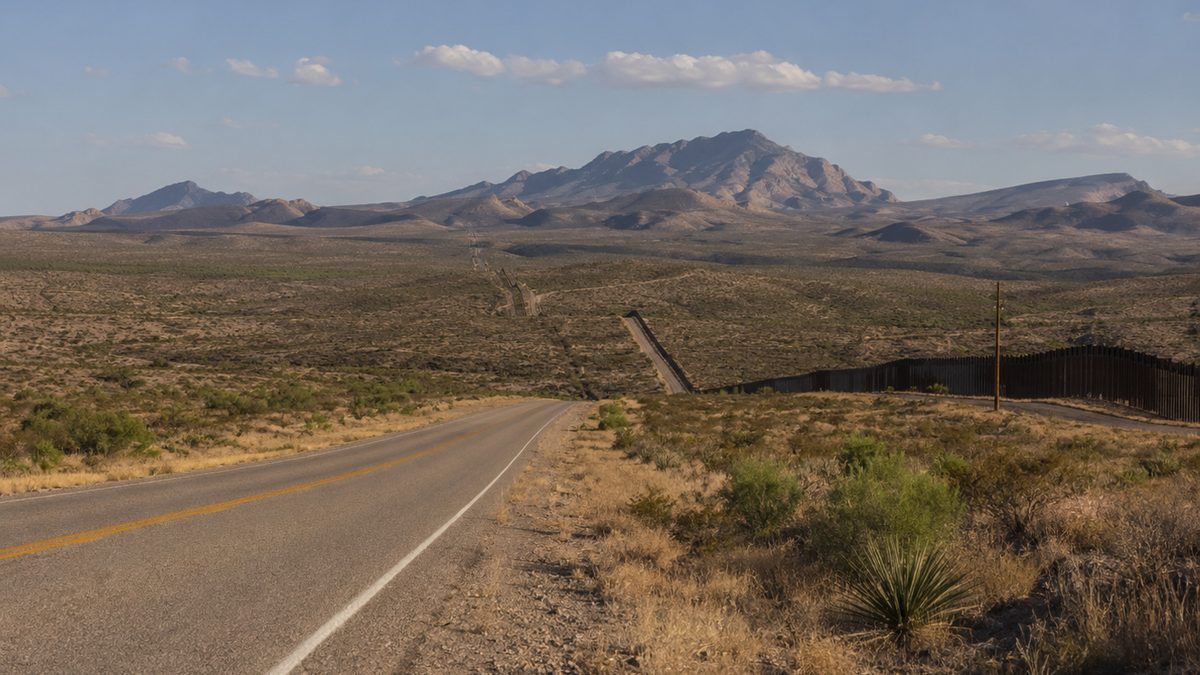
Federal border decisions can reshape public lands long before most people see the details. Editorial illustration by TheDailyGlobe.
Key Facts
- Federal officials used waiver authority connected to border infrastructure work in the Big Bend region.
- CBP describes Smart Wall infrastructure as including barriers, roads, technology and related border-security systems.
- DHS describes NEPA as a process for considering and disclosing environmental impacts.
- Environmental advocates criticized the waiver as bypassing protections for public lands and habitat.
- The full project-level impact of the work near Big Bend remains unclear.
A border decision in a remote stretch of West Texas can still be a national public-lands story. Big Bend is not just a line on a map. It is a landscape many Americans understand as public space, desert habitat and a place where federal choices can leave a long mark.
Federal officials used waiver authority connected to border infrastructure work in the Big Bend region, allowing the project to move faster by setting aside some ordinary review requirements. The decision has drawn criticism from environmental advocates, who argue the waiver bypasses protections for public lands and habitat.
What the Waiver Changes
The core issue is process. Border infrastructure can involve physical barriers, roads, surveillance technology and support systems. CBP describes Smart Wall infrastructure as including barriers, roads, technology and related border-security systems.
Normally, federal projects that may affect land, water, habitat or communities can trigger environmental review. DHS describes the National Environmental Policy Act, known as NEPA, as a process for analyzing and disclosing environmental impacts.
A waiver can change that ordinary path. It does not answer every question about what will be built, where every segment will go or what the final effects will be. It does mean the federal government is using legal authority to accelerate border work by bypassing some review steps that would otherwise apply.
Why Big Bend Makes the Issue Larger
The Big Bend region gives the waiver broader meaning because it is tied to public lands and sensitive desert landscapes, not only border enforcement. A project in a remote area can still affect roads, views, habitat, drainage, access and the way federal land is managed.
That does not mean every predicted harm has been proven. Specific environmental consequences should be judged from project-level records, agency disclosures and any court filings that may follow. But the public-process question is clear: when ordinary review is waived, the public may have fewer chances to see, challenge or understand the details before work moves ahead.
That is why the story should not be reduced to a familiar immigration argument. The issue is also how federal power is used on public land, what information is available before construction, and how the government explains tradeoffs between enforcement speed and environmental review.
The Government's Security Frame
Federal officials frame the work as border-security infrastructure. That is an important part of the record. The government has long argued that border barriers, roads and surveillance systems help agents monitor and respond along difficult terrain.
The use of waiver authority reflects a judgment that speed and enforcement needs should take priority over some normal process requirements. That is a powerful claim, especially when the affected land belongs to the public or sits near places with environmental and cultural value.
The accountability question is not whether border security matters. It does. The question is what government must still explain when it uses special authority to move faster than ordinary review would allow.
What Critics Are Arguing
Environmental advocates criticized the waiver as a bypass of protections for public lands and habitat. The Center for Biological Diversity described the action as a threat to sensitive landscapes and ecological protections.
Those claims should be read as advocacy arguments, not final findings about every project-level impact. But they raise a practical concern: review laws are not only paperwork. They are one way the public learns what a project may do before it is built.
When review is shortened or waived, the dispute often moves elsewhere: into lawsuits, agency updates, local opposition, congressional questions or public-record fights. That can make the process feel less transparent, even when the government says the work is lawful.
What Remains Unclear
Several important details remain developing. The full project-level impact of the Big Bend work is not yet clear. It is also unclear how much additional public review, litigation or agency disclosure will follow.
Another open question is whether similar waiver use will expand to other border areas with public lands. A single waiver can be a local construction decision. A pattern of waivers can become a larger federal-process question.
For readers, the most useful way to understand the dispute is simple: a waiver can speed construction, but it can also reduce the ordinary public process used to study and disclose environmental effects. That tradeoff is the heart of the story.
What to Watch Next
The next signals to watch are project documents, lawsuits, agency updates, local response and any further use of similar waiver authority. Those details will show whether this remains a single Big Bend decision or becomes part of a broader border-infrastructure pattern.
The public should not have to choose between slogans about security and slogans about conservation. The real question is more concrete: what is being built, what review was bypassed, what lands may be affected and who is responsible for explaining the consequences before the work is done.
Reporting note: Reporting draws on federal agency materials, public process guidance, reputable wire reporting, environmental-advocacy statements, and reviewed background materials. This article was produced with AI-assisted research and reviewed by an editor before publication.