License-Plate Camera Fight Shows the Privacy Question Cities Are Facing
A dispute in Troy, New York, shows how local governments are trying to balance police technology, privacy rules and public trust as license-plate camera systems spread.
Save Article
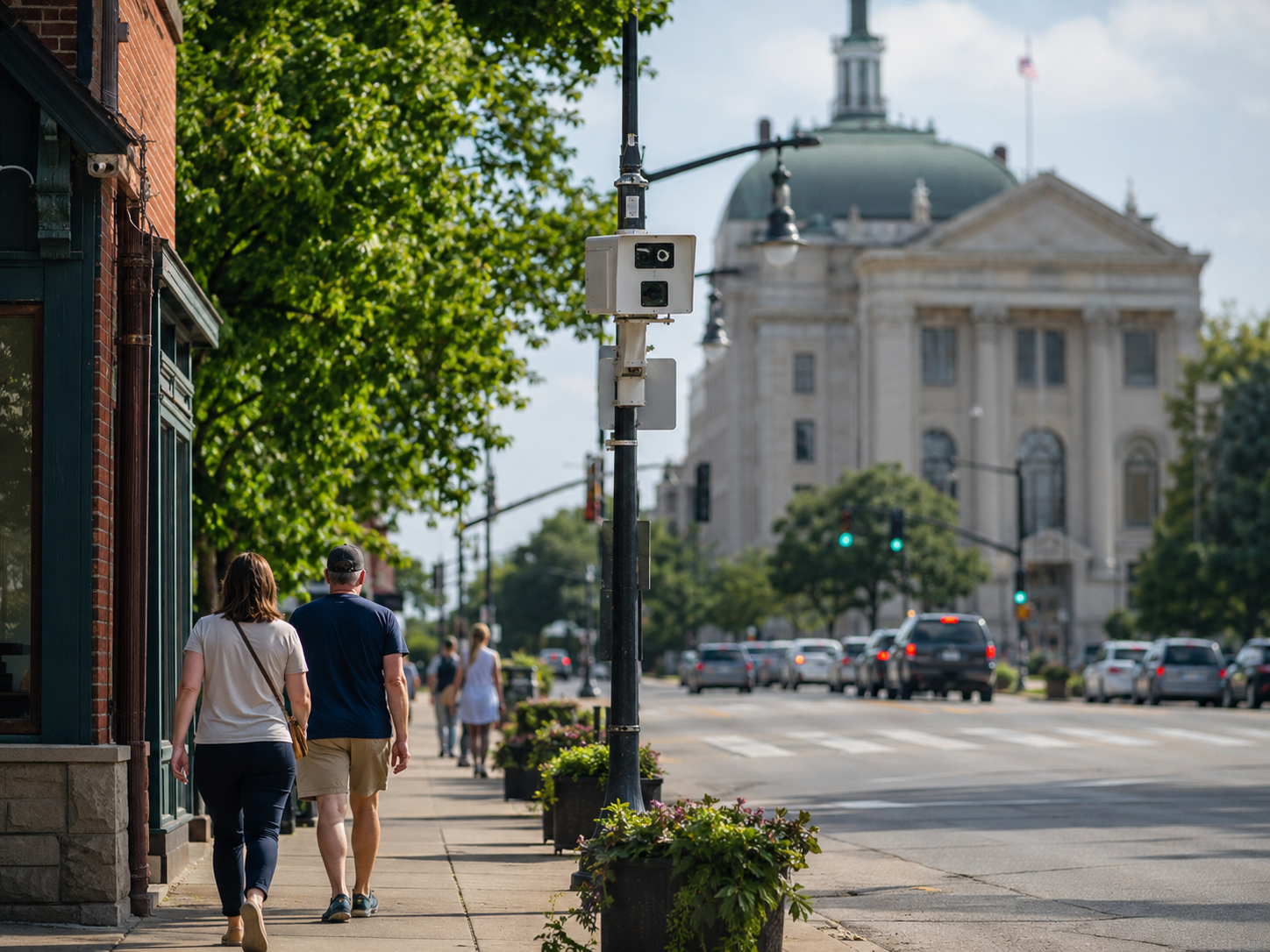
A dispute in Troy, New York, shows how local governments are trying to balance police technology, privacy rules and public trust as license-plate camera systems spread. Editorial illustration by TheDailyGlobe.
Key Facts
- Troy officials have debated Flock Safety license-plate reader cameras, including data sharing and data storage rules.
- Local reporting says Troy leaders reached a temporary compromise involving new limits and further review.
- The Washington Post reported that the fight included a mayoral emergency declaration and council opposition.
- Wired reported that a bipartisan federal amendment would restrict police use of automatic license-plate readers through federal highway funding conditions.
- It remains unclear whether Troy's compromise will become binding local law or whether federal restrictions will advance in Congress.
A local fight over license-plate cameras in Troy, New York, has become a useful test case for a question more cities are facing: who gets to decide how police technology is used, how long the data is kept and who else can see it?
The dispute centers on Flock Safety license-plate reader cameras, which can capture vehicle plate information and help police search for cars connected to investigations. Supporters see the cameras as a public-safety tool. Critics worry about location tracking, data sharing and rules being written after the technology is already in place.
That is why the Troy debate matters beyond one city. It shows the gap between fast-moving police technology and slower public oversight, a gap that local councils, mayors, state lawmakers and Congress are now being pressured to close.
What Troy Is Arguing Over
The Troy debate is not simply about whether cameras exist on city streets. It is about the rules around them. Local officials and residents have been debating how license-plate data should be stored, whether it should be shared outside the city and what limits should apply to police use.
Local reporting said city leaders reached a temporary compromise that would add new limits while allowing further review. That kind of middle-ground outcome is common in technology fights: officials may not want to remove a tool police say is useful, but residents may not want open-ended surveillance rules written behind closed doors.
The Washington Post reported that the dispute included a mayoral emergency declaration and opposition from the city council. That made the disagreement more than a routine contract fight. It became a question of local power, public process and whether emergency authority should be used in a technology dispute.
The Public-Safety Case
Police departments often argue that automatic license-plate readers help them find stolen vehicles, identify cars connected to serious crimes and move faster when time matters. The technology can scan plates far more quickly than officers can manually check them.
For residents worried about car theft, violence or missing-person cases, that argument can be persuasive. A camera system that helps police locate a vehicle tied to an investigation may sound less like abstract surveillance and more like a practical tool.
But the strength of that argument depends on rules. A city can support police investigations while still asking basic questions: What crimes justify a search? Who approves access? How long is the data stored? Can outside agencies search it? What happens if the system is misused?
The Privacy Concern
The privacy concern is not only that a camera captures a license plate. It is that repeated captures can create a record of where a vehicle has been over time. For many people, that begins to feel less like traffic technology and more like location tracking.
That distinction matters. One plate scan may reveal little. Many plate scans, stored and searchable, can say much more about someone's routines, work, medical visits, religious life, political activity or personal relationships. The concern grows when data can be shared outside the city or kept longer than residents expect.
Those concerns do not require assuming bad motives by police. They are governance questions. Public agencies can adopt useful tools and still need clear guardrails, especially when the tool collects information about people who are not suspected of a crime.
Why Congress Is Getting Pulled In
The same questions playing out in Troy are also moving into federal policy. Wired reported that a bipartisan amendment would restrict police use of automatic license-plate readers through conditions tied to federal highway funding.
That approach would not treat license-plate readers as only a local issue. It would use federal funding power to push limits across jurisdictions, reflecting a broader concern that local rules may be too uneven for a technology that can involve regional or national data sharing.
Whether that federal effort advances remains unclear. But the fact that lawmakers are discussing national limits shows how quickly a city-level camera fight can become part of a larger debate over public safety, privacy and government data power.
What Cities Need to Decide
The most useful question for cities is not whether technology is good or bad in the abstract. It is what the rules are before the technology becomes normal.
Cities considering license-plate readers have to decide whether public meetings are required before deployment, what data-retention limits apply, whether outside agencies can access local data, what audits are required and how residents can find out whether the system is being used properly.
Those details can determine whether residents see the cameras as a focused public-safety tool or as a surveillance system with unclear boundaries.
What Remains Unclear
In Troy, it remains unclear whether the temporary compromise will become binding local law. A temporary limit can calm a dispute, but lasting oversight usually requires clear written rules that future officials and agencies must follow.
Nationally, it is also unclear whether proposed federal restrictions will move through Congress. If they do not, cities and states may continue setting different rules from place to place.
For readers, the Troy fight is a reminder that surveillance policy is often made locally first. The cameras may be mounted on ordinary streets, but the decisions behind them can shape how much privacy people keep when public safety technology becomes part of everyday life.
Reporting note: Reporting draws on local reporting from Troy, New York, national reporting on license-plate camera disputes, and reviewed background on proposed federal limits. This article was produced with AI-assisted research and reviewed by an editor before publication.