EPA Water Grants Put Local Infrastructure Needs Back in the National Spotlight
EPA’s FY2026 Community Grants guidance shows how federal funding rules shape drinking water, wastewater, stormwater, and water-quality projects in local communities.
Save Article
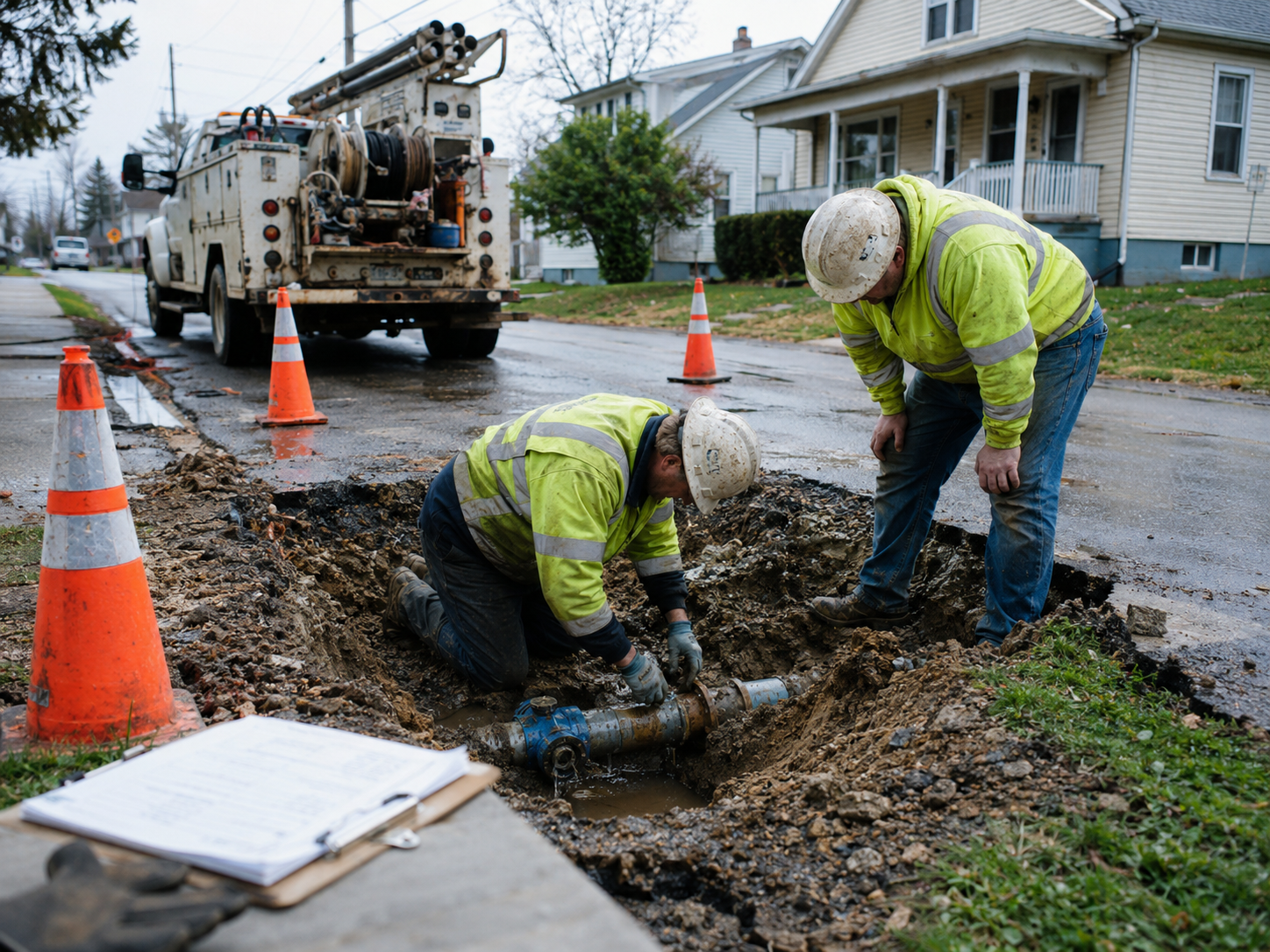
EPA’s FY2026 Community Grants guidance outlines funding and cost-share rules for local water infrastructure projects. Editorial illustration by TheDailyGlobe.
Key Facts
- EPA says Community Grants provide federal funding for water infrastructure and complement resources from infrastructure law funding and annual appropriations.
- EPA’s FY2026 guidance says Community Grants projects cover drinking water, wastewater, stormwater infrastructure, and water-quality protection.
- The FY2026 guidance says Appendix B lists 1,163 water Community Grants projects.
- EPA says the projects are funded through Clean Water State Revolving Fund and Drinking Water State Revolving Fund accounts.
- EPA guidance says the federal contribution generally represents 80% of total grant project cost, with a 20% non-federal cost share unless waived or reduced.
Water problems are usually local. A broken pipe, aging treatment plant, stormwater backup, or drinking water upgrade affects a specific town, neighborhood, utility, or Tribal community. But the money and rules that help pay for those fixes often come from Washington.
EPA’s FY2026 Community Grants guidance puts that national-local relationship back in focus. The program provides federal funding for water infrastructure projects, including drinking water, wastewater, stormwater, and water-quality protection work.
For readers, the practical issue is not just that money is being awarded. It is how federal grant design can affect what a community can afford to fix, how fast a project can move, and whether smaller local governments have the staff and matching funds to get work done.
What Community Grants Pay For
EPA describes Community Grants as federal funding for water infrastructure. In plain terms, that means the program helps selected communities pay for projects tied to basic water systems: the pipes, plants, drainage, and protection work that people usually notice only when something fails.
The FY2026 guidance says eligible projects include drinking water, wastewater, stormwater infrastructure, and water-quality protection. That range matters because local water needs vary widely. One community may need help with sewer upgrades. Another may be trying to manage stormwater. Another may need drinking water system improvements.
The guidance says Appendix B lists 1,163 water Community Grants projects for FY2026. That number shows the scale of local demand, but it should not be read as proof that every listed project has already broken ground or reached construction.
Why the Local Match Matters
The cost-share rule is one of the most important details for local governments. EPA guidance says the federal contribution generally represents 80% of total grant project cost, with a 20% non-federal cost share unless the share is waived or reduced.
That 20% local share can be manageable for some communities and difficult for others. A larger city or utility may have more staff, borrowing capacity, or capital planning experience. A small town, rural district, or financially constrained system may have fewer options.
That is why the local match is not a technical footnote. It can shape whether a project moves quickly, whether a community seeks a waiver, whether local officials have to find another funding source, or whether the work gets delayed while the budget puzzle is solved.
How Waivers and Tribal Treatment Fit In
EPA guidance allows for the non-federal cost share to be waived or reduced in some cases. The source material does not show how many local governments will seek waivers or how many will receive them.
For communities with limited tax bases or small administrative staffs, that question matters. A grant can look generous on paper, but if a local government cannot meet the match, manage the application requirements, or handle federal reporting, the project can still be hard to execute.
EPA guidance also says Tribal recipients do not need to request cost-share waivers because the non-federal cost-share requirement is waived for Tribal recipients. That treatment recognizes that Tribal water infrastructure projects often sit within different legal, financial, and governmental circumstances than municipal projects.
The State Revolving Fund Tradeoff
EPA says Community Grants projects are funded through Clean Water State Revolving Fund and Drinking Water State Revolving Fund accounts. Those revolving funds are a major way states support water infrastructure projects.
EPA’s April 2026 State Revolving Fund allotment memo says FY2026 SRF funding available to states decreased because Congress again earmarked Congressionally Directed Community Grants from SRF funds. Put plainly, some money is being directed to specific community projects rather than flowing through the broader state revolving fund process.
That does not make the grants good or bad by itself. Congressionally directed projects can help specific communities address visible needs. But the structure also raises a fair policy question: when money is earmarked for individual projects, how does that affect other state water priorities competing for the same broader funding pool?
What Readers Should Watch Next
The next questions are practical. Which projects move from award paperwork to design, bidding, and construction? Which communities seek cost-share waivers? Which smaller governments have enough staff to manage federal grant requirements? And how do states adjust if SRF funding available for other priorities is reduced?
Readers should also be careful not to draw unsupported conclusions about local water safety from the grant list alone. A grant can signal infrastructure need, but it does not by itself prove that a community’s water is unsafe. That would require project-specific evidence.
The broader takeaway is clearer: water infrastructure may be local, but the ability to fix it often depends on federal funding rules, state funding channels, local matching dollars, and administrative capacity. EPA’s FY2026 Community Grants guidance shows how much of that work sits at the intersection of Washington policy and everyday community needs.
Reporting note: Reporting draws on EPA Community Grants materials, FY2026 implementation guidance, State Revolving Fund allotment records, and reviewed water infrastructure context. This article was produced with AI-assisted research and reviewed by an editor before publication.