A Jacket That Pulls Water From Air Shows Wearable Tech Moving Beyond Sensors
Researchers at the University of Texas at Austin say a new textile system can collect moisture from the air and turn it into drinkable water, pointing toward a different future for wearable technology.
Save Article
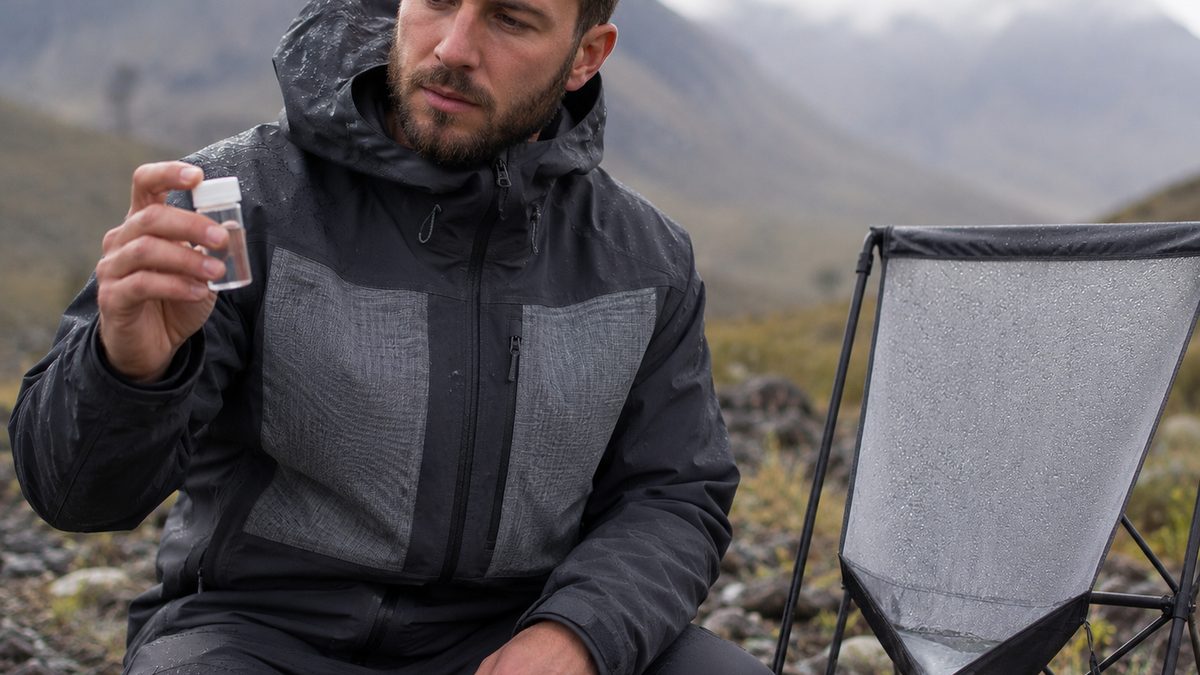
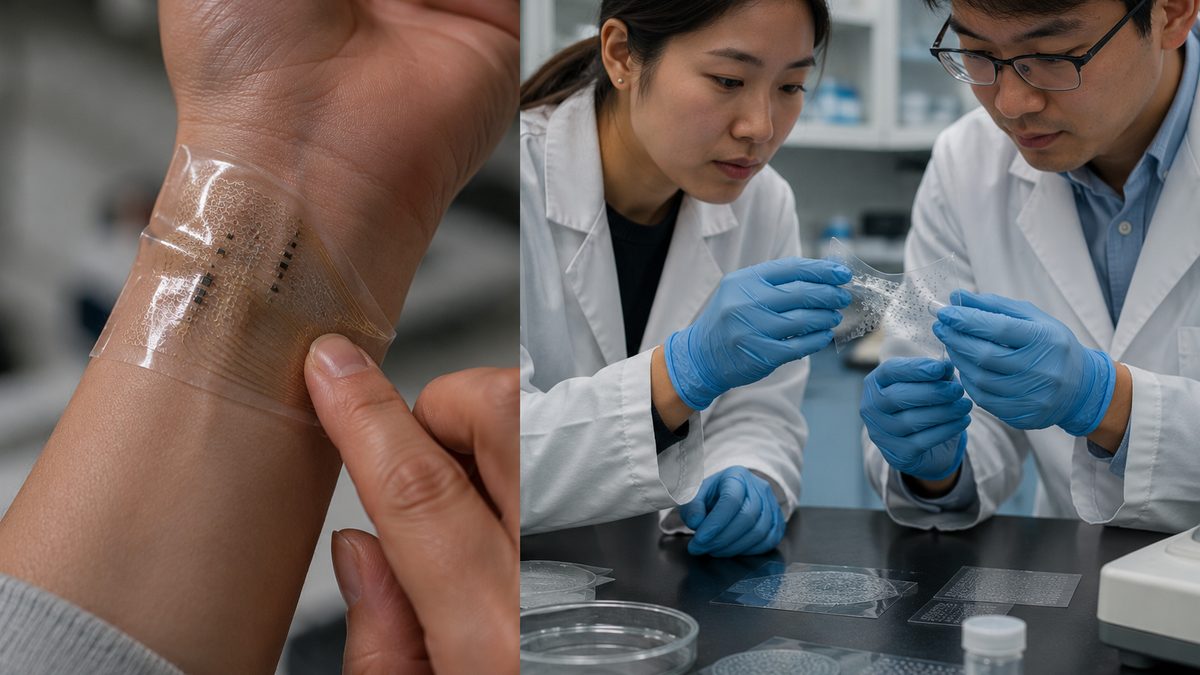
Researchers are exploring whether wearable fabrics can collect moisture from air for field use. Editorial illustration by TheDailyGlobe.
Key Facts
- UT Austin researchers reported a jacket-based system that harvests drinking water from air.
- The textile collects atmospheric moisture and routes it to detachable harvesting units.
- Researchers reported producing roughly 400 to 900 milliliters of water per day depending on humidity conditions.
- The water is released through a foldable collection system using heat.
- The research was published in the journal Science Advances.
Anyone who has spent time hiking, working outdoors, or responding to emergencies knows the same basic problem: water is heavy. The farther people travel from reliable supplies, the more important every bottle becomes.
That practical challenge helps explain why researchers continue looking for ways to pull usable water directly from the environment. A team at the University of Texas at Austin recently reported a wearable system that collects moisture from the air and converts it into drinkable water, all while being incorporated into a jacket-like garment.
The research is still experimental, and nobody should mistake it for a product ready for store shelves. But it offers a glimpse of how wearable technology could someday do more than track steps, heart rate, or location.
From Tracking Data to Collecting Resources
Most wearable technology today focuses on information. Smartwatches monitor heart rates. Fitness trackers count steps. GPS devices record locations. The UT Austin project explores a different idea: wearable equipment that helps gather a physical resource people need.
According to the university, the textile embedded in the garment captures moisture from surrounding air. That moisture is directed into detachable harvesting units. When heated, the units release collected water into a foldable container where it can be gathered.
The concept builds on atmospheric water harvesting, an area of research that seeks to collect water vapor already present in the air. Even relatively dry environments contain some amount of moisture, although the amount available varies widely depending on weather and location.
How Much Water Did the System Produce?
One of the most practical questions readers are likely to ask is simple: how much water are we talking about?
UT Austin reported that the system generated between 400 and 900 milliliters of drinkable water per day during testing, with output depending heavily on humidity levels and operating conditions. At the upper end, that approaches the volume of a typical large water bottle. At the lower end, it is still a meaningful amount but far from meeting a person's daily hydration needs.
Those figures are useful because they provide a sense of scale. The technology is not producing unlimited water. Instead, it demonstrates that wearable materials may be capable of collecting a measurable amount of moisture under favorable conditions.
Why Researchers Are Interested in the Material
Beyond the jacket itself, researchers highlighted improvements in the underlying textile. UT Austin reported that the material achieved a three- to ten-fold improvement at scale compared with more conventional water-harvesting materials used in similar research.
That finding helps explain why the project has attracted attention. In many emerging technologies, the challenge is not proving that something can work in a laboratory. The challenge is producing enough output to make the system useful in real-world settings.
The reported performance improvement does not establish commercial viability, but it suggests researchers may be finding ways to make atmospheric water harvesting more practical than earlier approaches.
What the Research Does Not Prove
Several important questions remain unanswered. The available reporting does not establish how the system performs after months of repeated outdoor use, how comfortable it would be as everyday clothing, or what manufacturing costs might look like if production were expanded.
Water quality is another area that will require continued evaluation. While researchers reported collecting drinkable water, broader deployment would likely require additional testing, maintenance procedures, and quality controls.
The system also depends on environmental conditions. Humidity, temperature, available heat, and other factors can influence how much water is collected. Performance in one location may not translate directly to another.
What Readers Should Watch Next
The most interesting part of this research may not be the jacket itself. It is the broader idea that wearable technology could eventually help gather resources rather than simply measure activity.
Future developments worth watching include extended outdoor trials, independent testing by other research groups, and attempts to adapt the technology for backpacks, tents, emergency-response equipment, or other portable systems. Those efforts will provide a clearer picture of whether atmospheric water harvesting can move beyond promising laboratory results and become something people can rely on in the field.
Reporting note: Reporting draws on university research materials, a peer-reviewed Science Advances paper, science-news coverage, and reviewed background materials. This article was produced with AI-assisted research and reviewed by an editor before publication.