Solid-State EV Batteries Are Leaving the Lab, but the Test Is Just Starting
A new road-test program puts solid-state battery technology into a real vehicle, but major questions about durability, manufacturing, cost, and consumer readiness remain unanswered.
Save Article
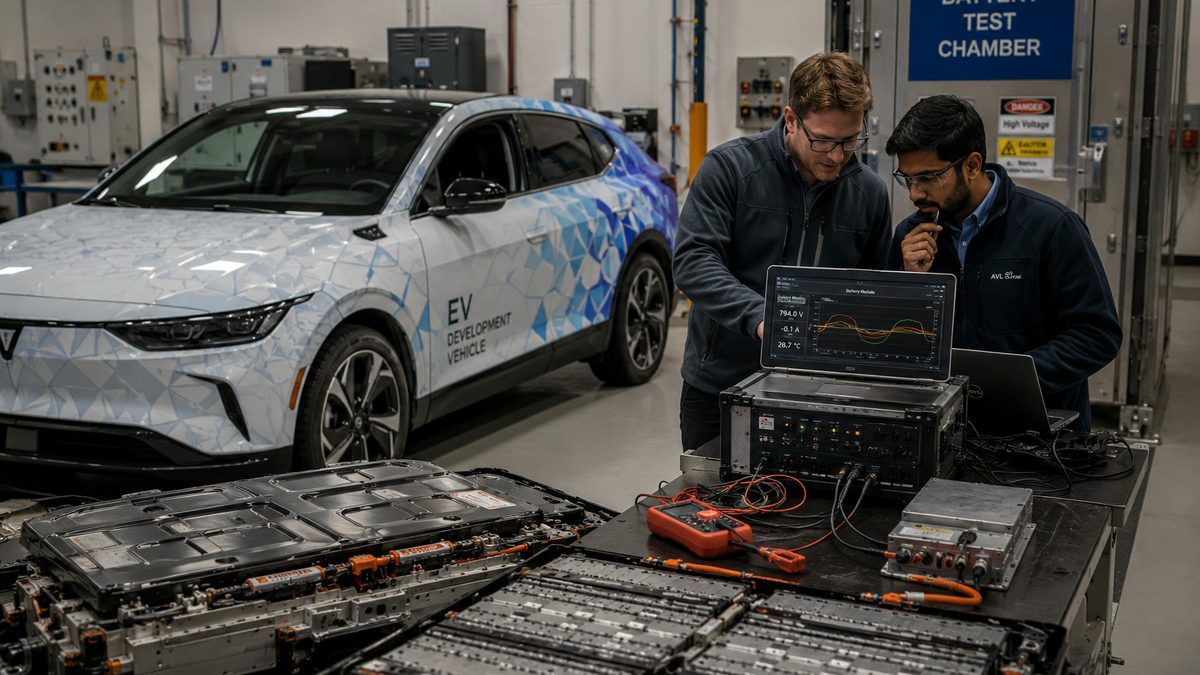
A new road-test program is putting solid-state battery technology into an electric vehicle development platform. Editorial illustration by TheDailyGlobe.
Key Facts
- Stellantis says it has integrated Factorial's solid-state battery technology into a Dodge Charger Daytona development vehicle.
- The companies say road testing has begun to evaluate performance, safety, and reliability.
- Stellantis cited cell-level energy density of 375 Wh/kg for the battery technology.
- The companies reported a 15% to 90% charging time of about 18 minutes for 2025 battery cells.
- Independent reporting describes the effort as a development test program, not a production launch.
Electric vehicle buyers have been hearing about solid-state batteries for years. The technology is often described as a potential step forward for range, charging speed, and safety, yet most EVs on the road today still rely on conventional lithium-ion battery packs.
Part of the reason is that promising laboratory results and real-world driving are two very different things. A battery that performs well in controlled testing still has to survive heat, cold, vibration, repeated charging, and years of everyday use before it can be considered for mass-market vehicles.
That is why a new development announced by Stellantis and battery company Factorial is drawing attention. The companies say they have integrated solid-state battery technology into a Dodge Charger Daytona development vehicle and have begun road testing.
Why Road Testing Matters
Road testing represents a different stage of development than laboratory validation. Engineers can learn a great deal from controlled environments, but real roads introduce challenges that are difficult to fully simulate.
Vehicles encounter changing temperatures, uneven pavement, traffic conditions, charging habits, and countless other variables. Putting a battery into a functioning vehicle allows engineers to study how the technology behaves under conditions closer to what drivers actually experience.
That does not mean the technology is ready for showrooms. It means developers are beginning to gather the kind of information needed to determine whether it eventually could be.
What Solid-State Batteries Promise
Much of the excitement surrounding solid-state batteries comes from their theoretical advantages. Developers have long argued that the technology could potentially store more energy in a similar amount of space, charge more quickly, and improve safety characteristics compared with current battery designs.
Stellantis cited a cell-level energy density of 375 watt-hours per kilogram and reported charging performance that took cells from 15% to 90% in about 18 minutes. Those figures help explain why automakers continue investing in the technology.
However, battery experts often caution that cell-level results are not the same thing as vehicle-level results. What works inside an individual battery cell may perform differently once it becomes part of a complete battery pack operating inside a production vehicle.
The Manufacturing Question Still Looms
Even if road testing produces encouraging results, another challenge remains: manufacturing.
Many technologies perform well in prototypes but struggle when companies attempt to build them at large scale and competitive cost. Solid-state batteries have faced that question for years. Producing small numbers of advanced cells is one thing. Producing millions of them reliably and affordably is another.
The companies involved have not announced a firm timeline for consumer vehicles using this specific battery technology. Available reporting also does not establish what future production costs might look like.
What Has Not Been Proven Yet
The current announcement answers one question but leaves several others unresolved. It confirms that the technology has moved beyond laboratory demonstrations and into a real vehicle development program.
What remains unknown is how the batteries will perform after extensive driving, repeated charging cycles, long-term exposure to weather conditions, and years of use. Safety validation, durability testing, manufacturing scale, and eventual pricing are all still open questions.
For consumers, that distinction matters. A successful test program would be an important milestone, but it would not automatically translate into immediate availability at dealerships.
What Readers Should Watch Next
The next phase of the story will be less about announcements and more about results. Engineers will be looking for evidence that the batteries can handle the demands of everyday driving while maintaining performance and safety targets.
Readers interested in EV technology should watch for long-term testing updates, durability findings, manufacturing announcements, and any future timeline for consumer vehicles. The road test itself is notable because it moves the technology into a more realistic environment. Whether it becomes a practical battery for mass-market cars remains a question that only further testing can answer.
Reporting note: Reporting draws on company technical announcements, engineering reporting, EV industry coverage, and reviewed background materials. This article was produced with AI-assisted research and reviewed by an editor before publication.