Why Better Health Wearables Depend on Better Materials, Not Just Better Software
Caltech researchers say new stretchable sensor materials could help future wearable and implantable devices maintain reliable contact with the body as skin and tissue move.
Save Article
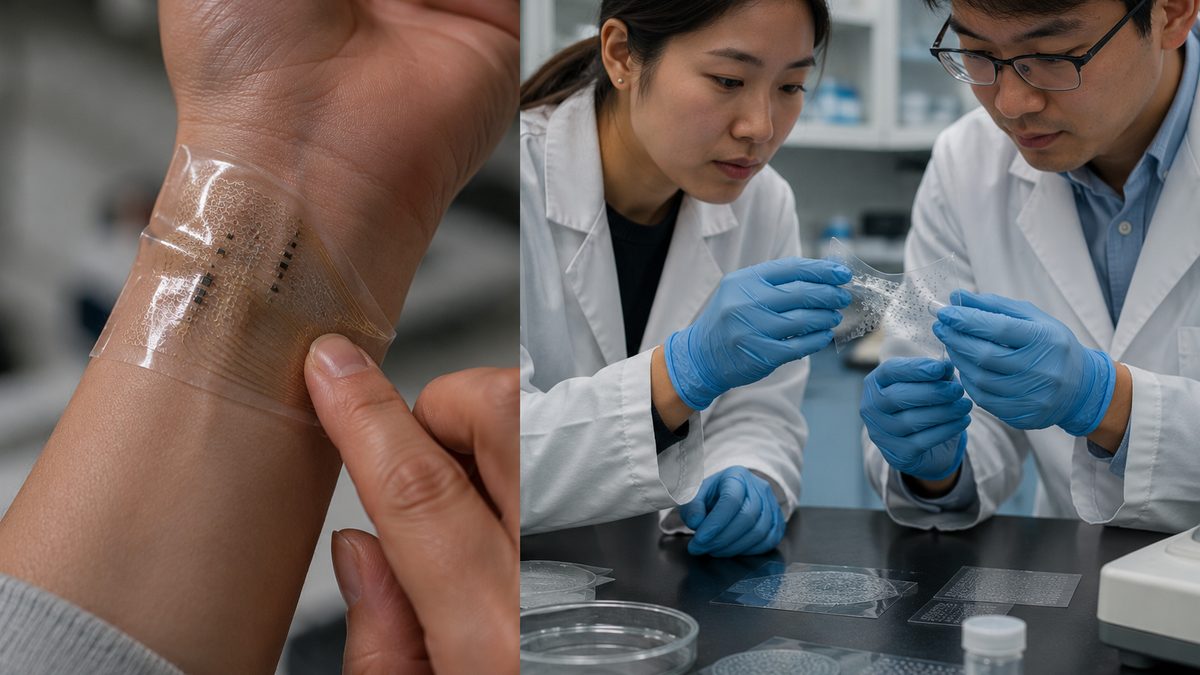
Future health sensors may need soft materials that keep working as skin and tissue move. Editorial illustration by TheDailyGlobe.
Key Facts
- Caltech researchers reported two studies involving soft, stretchable bioelectronics for wearable and implantable sensing.
- The team developed a stretchable sensing interface known as SIRES.
- Caltech said SIRES can stretch up to 300 percent while maintaining high-quality electrical signal transmission.
- The research is aimed at future wearable and implantable sensor technologies.
- The work remains in the research stage and is not an approved medical device.
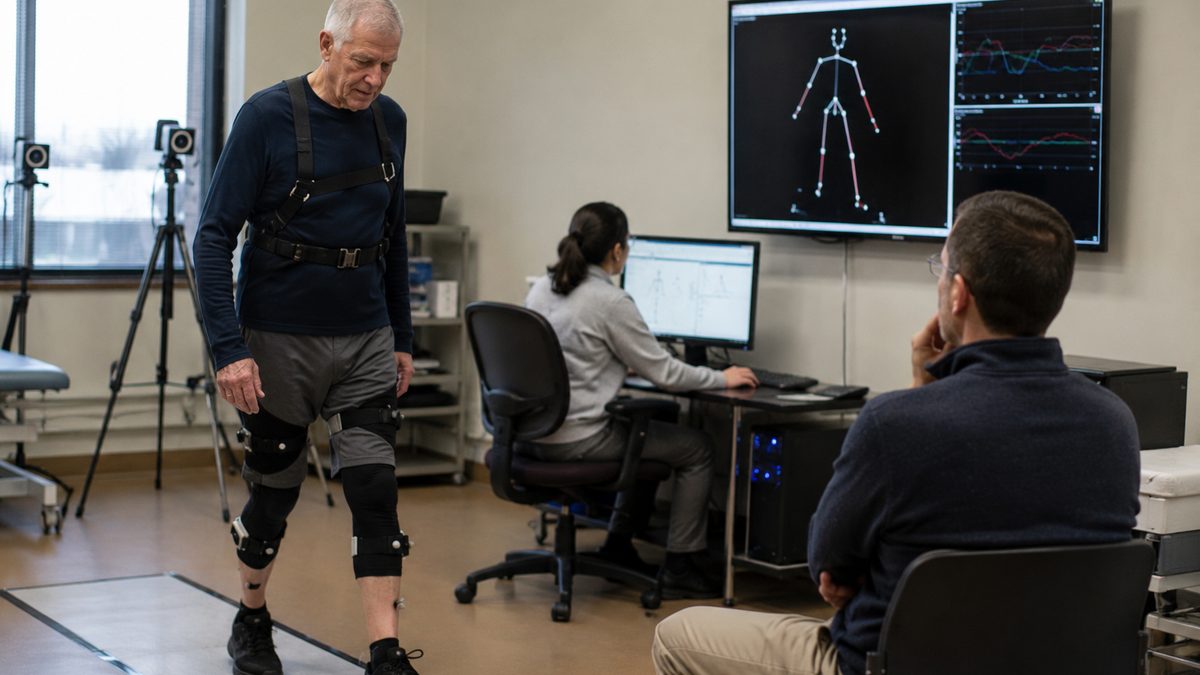
One of the biggest challenges facing health wearables has nothing to do with artificial intelligence, smartphone apps, or cloud computing. It is a simpler problem: the human body rarely stays still.
Skin stretches. Muscles move. Joints bend thousands of times each day. Even internal organs shift and flex as people breathe, walk, and go about normal life. For sensors designed to measure biological signals, maintaining reliable contact with moving tissue can be surprisingly difficult.
Researchers at the California Institute of Technology say they have developed new soft bioelectronic materials designed to address that challenge. The work focuses on making sensors that can stretch, flex, and remain attached to skin or tissue while continuing to transmit reliable electrical signals.
The Hidden Engineering Problem Behind Health Sensors
Many people think of health technology in terms of software, data analysis, or consumer gadgets. Yet engineers often face a more basic challenge before any data can be collected: keeping the sensor physically connected to the body.
A sensor that shifts position, loses contact, or struggles to adapt to movement can produce weaker signals and less reliable measurements. That becomes especially important for devices intended to operate continuously over long periods.
According to Caltech, the new research focuses on improving the interface between electronics and biological tissue. Rather than forcing the body to adapt to rigid electronics, the goal is to create electronics that better adapt to the body.
What Researchers Reported
One of the studies described a technology called SIRES, short for a stretchable interface designed for electrochemical sensing. Caltech reported that the material can stretch by as much as 300 percent while maintaining its ability to transmit high-quality electrical signals.
That capability is important because biological surfaces rarely remain static. A sensor attached near a joint, for example, may experience repeated stretching throughout the day. Materials that can tolerate that movement without losing performance could make future devices more reliable.
Researchers describe the broader effort as part of a push toward tissue-integrated bioelectronics, systems designed to work more naturally alongside the body's own movements rather than resisting them.
Why This Matters Beyond the Laboratory
Although the work remains experimental, researchers believe improved materials could eventually support future generations of wearable and implantable sensors.
Potential future applications discussed by researchers include long-term health monitoring and other sensing technologies that depend on stable biological measurements. However, those possibilities remain research goals rather than demonstrated medical outcomes.
The distinction matters. A material that performs well in laboratory testing does not automatically become a successful medical device. Clinical usefulness depends on many additional factors, including safety, durability, manufacturing, and regulatory review.
What Has Not Been Proven Yet
The available research does not establish how the materials will perform during long-term use in people. Questions remain about durability, comfort, sterilization, large-scale manufacturing, and how future products based on the technology might be regulated.
The studies also do not show that the materials improve patient outcomes or provide new medical treatments. The work focuses on sensor materials and device interfaces, not on proven therapies or approved monitoring systems.
That distinction is especially important in health technology, where promising engineering advances often require years of additional testing before reaching hospitals, clinics, or consumers.
What Readers Should Watch Next
The next phase of development will likely focus on determining whether these materials can perform reliably outside controlled research environments. Future studies may explore long-term durability, biological compatibility, and integration into more complete sensing systems.
Researchers will also need to demonstrate that the technology can be manufactured consistently and safely if it eventually moves toward medical-device development.
For now, the research offers a reminder that the future of health wearables may depend as much on advances in materials science as on advances in software. Before a device can collect useful information, it first has to stay connected to a body that never stops moving.
Reporting note: Reporting draws on university research materials, science-news coverage, and reviewed background materials. This article was produced with AI-assisted research and reviewed by an editor before publication.