Student-Built Moon Rovers Show How Space Engineering Starts Before Launch Day
NASA’s Human Exploration Rover Challenge gives students a hands-on way to learn the testing, teamwork and problem-solving behind future space technology.
Save Article
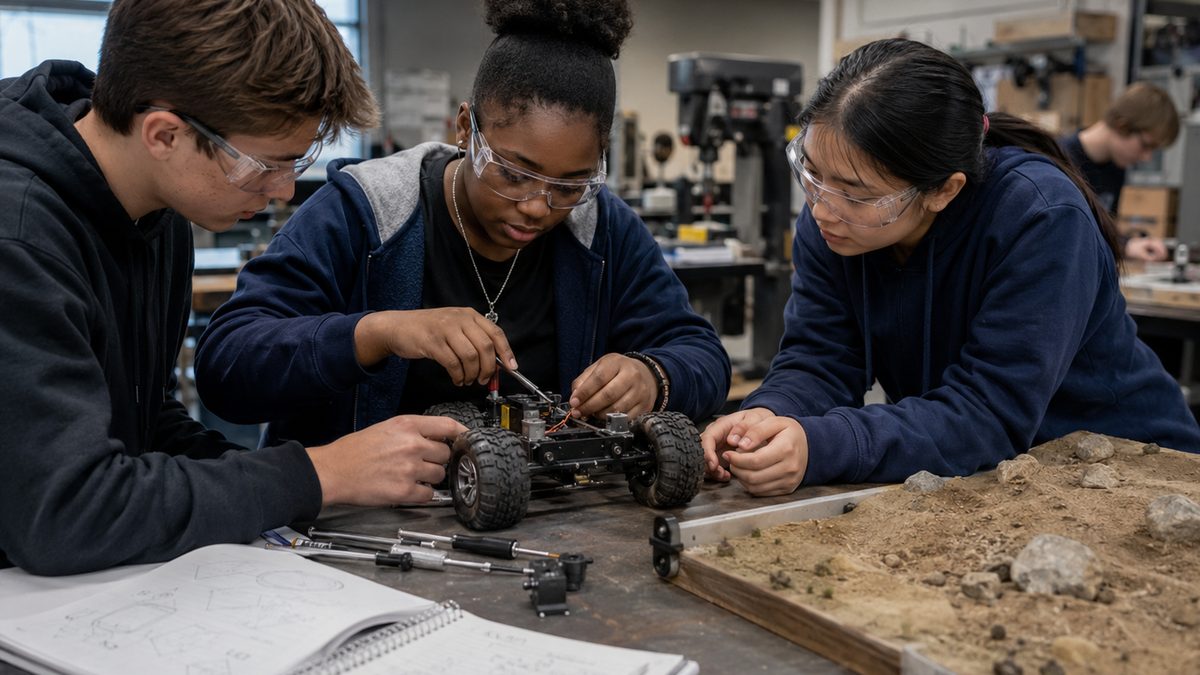
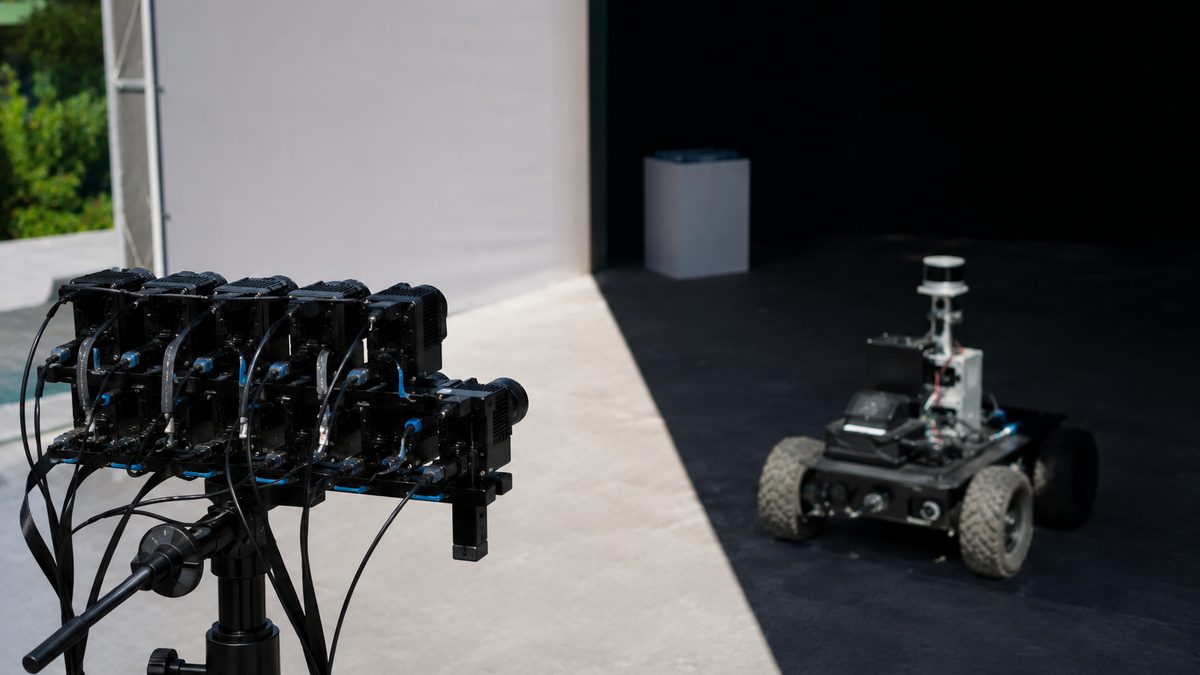
Hands-on rover challenges help students learn the engineering habits behind future space technology. Editorial illustration by TheDailyGlobe.
A student rover does not become useful when it looks good on paper. It becomes real when wheels hit rough terrain, parts shake loose, timing matters and a team has to figure out what went wrong before trying again.
That is the point of NASA’s Human Exploration Rover Challenge, a student engineering competition built around rover design and mission-style tasks. NASA said the 2026 challenge was held April 10 and 11 at the U.S. Space & Rocket Center near Marshall Space Flight Center.
What Students Had To Build
The challenge asks student teams to design, build and test rovers for simulated exploration problems. NASA said teams navigated obstacles and completed mission tasks using human-powered and remote-controlled rovers.
The competition includes students across high school, middle school, university and remote-control divisions. That range matters because it turns space engineering from something students only read about into something they can touch, repair and improve.
Why The Practice Matters
Space technology depends on more than big launches. It depends on smaller habits learned early: planning, testing, measuring, adapting and working through failure without pretending it did not happen.
A rover challenge gives students a controlled version of that process. The terrain is simulated, and the rovers are not mission hardware headed to the Moon. But the engineering lessons are real. Students have to think about weight, movement, durability, communication, task completion and teamwork under pressure.
What Not To Overstate
The challenge should not be confused with a NASA flight program. These student-built rovers are educational projects, not vehicles being prepared for an actual lunar mission.
Still, that does not make the work small. Engineering education often begins with problems that are scaled down but still difficult enough to teach judgment. A wheel that fails in a school workshop can teach a lesson a student remembers later in a lab, factory, launch facility or field test.
What To Watch Next
NASA and the space industry continue to need people who can build, test and fix complicated systems. Student challenges like HERC are one way to find and train that talent before a career begins.
For readers, the hopeful part is practical: future space work is not only built by astronauts and mission control. It starts with students learning how to solve hard physical problems together, one test run at a time.
Reporting note: Reporting draws on NASA education materials, NASA challenge results, space and science reporting, and reviewed background materials. This article was produced with AI-assisted research and reviewed by an editor before publication.