Artificial Eyes Could Help Robots and Self-Driving Cars Handle Changing Light
Researchers reported a vision system inspired by how human eyes adapt to changing light, a challenge that still limits many machine-vision systems.
Save Article
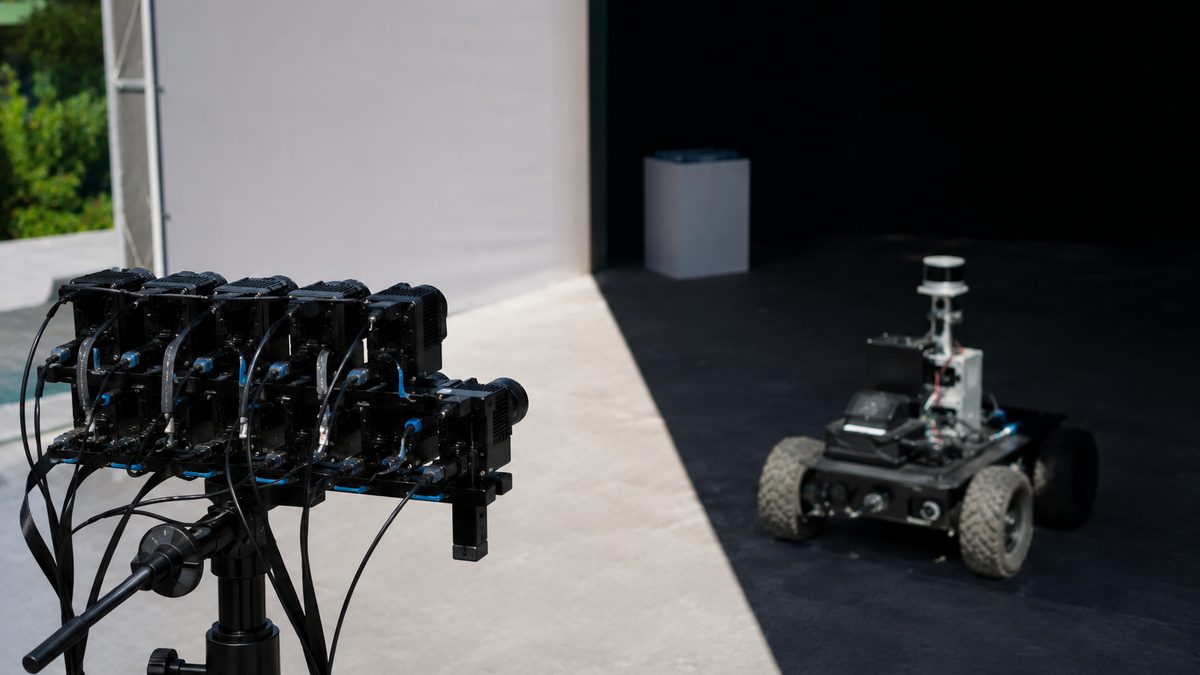
Researchers are studying vision sensors that adapt to changing light more like the human eye. Editorial illustration by TheDailyGlobe.
Key Facts
- Researchers co-led by Penn State reported an artificial vision system inspired by how human eyes adapt to changing light.
- The system is designed to help cameras handle mixed lighting and bright-to-dark transitions.
- The findings were published in the journal Nature Communications.
- Coverage of the research discusses possible future applications in robots and self-driving vehicles.
- Researchers describe the technology as a research-stage system rather than deployed commercial hardware.
Most people barely notice how quickly their eyes adjust when they walk from bright sunlight into a shaded room. Within moments, details that seemed hidden become visible. Cameras, however, often struggle with the same transition. A scene that looks normal to a person can appear washed out, too dark, or missing important details when captured by a machine.
That challenge has become an important problem in robotics, industrial automation and autonomous vehicles. Machines increasingly depend on cameras to understand the world around them, but changing light remains one of the toughest real-world obstacles.
Researchers co-led by Penn State recently reported a vision system inspired by how human eyes adapt to changing light. The findings, published in Nature Communications, describe an approach designed to help cameras handle bright-to-dark transitions and mixed lighting conditions more effectively.
Why Changing Light Is So Difficult for Machines
Human vision evolved to operate in constantly changing environments. People move between sunlight and shadow, drive through tunnels, walk into buildings, and encounter reflections, glare and darkness throughout the day. The brain and eyes work together to adjust so quickly that the process often goes unnoticed.
Traditional cameras have a harder time. A camera may expose an image for a bright area and lose detail in shadows, or expose for darker areas and over-brighten other parts of the scene. Engineers have spent years developing software and hardware to improve performance, but difficult lighting conditions continue to create challenges.
The problem becomes more important when a machine is expected to make decisions. A robot navigating a warehouse, a drone moving between indoor and outdoor spaces, or a future autonomous vehicle traveling through changing conditions must be able to recognize objects accurately even when lighting changes suddenly.
What Researchers Developed
According to research reports and related coverage, the new system takes inspiration from the way human vision adapts to changing brightness levels. The goal is not to create a literal copy of a human eye but to borrow principles that may help cameras respond more effectively to complex lighting environments.
Researchers reported that the design can better manage scenes containing both very bright and very dark areas. In practical terms, that could help machine-vision systems preserve useful visual information that might otherwise be lost during rapid lighting shifts.
The work fits into a broader effort across robotics and sensor development. Engineers continue searching for ways to improve how machines perceive the world, especially in situations where traditional camera systems encounter limitations.
Potential Uses Beyond the Laboratory
Coverage of the research points to possible future uses in robotics and autonomous vehicles. Those applications are easy to understand because both depend heavily on reliable visual information.
A robot working in a factory may move between areas with different lighting conditions. A delivery robot could encounter direct sunlight, shade and reflections during a single trip. Future autonomous vehicles may face changing light caused by weather, tunnels, tree cover, dawn, dusk or oncoming headlights.
Researchers and technology publications describe these as potential applications rather than established outcomes. The research does not demonstrate that the system solves autonomous-driving challenges or guarantees safer vehicle performance. Instead, it suggests one possible path toward improving machine vision under difficult lighting conditions.
What Remains Unproven
As promising as the research may be, several important questions remain unanswered. Laboratory success does not automatically translate into reliable performance in everyday environments.
It remains unclear how the system performs in rain, fog, glare, nighttime driving, or fast-moving real-world scenes. Researchers and technology reporters have also noted open questions about manufacturing, cost, durability and integration with existing sensor systems.
Another unanswered question is how the technology compares with current approaches. Modern autonomous systems often combine cameras with radar, lidar and sophisticated software. Determining where this new sensor design fits into those existing systems will require additional testing and development.
What Readers Should Watch Next
The next stage to watch is real-world demonstration. Research papers can show that a concept works under controlled conditions, but practical deployment requires testing in more demanding environments.
Future demonstrations involving robots, industrial automation systems, drones or vehicle platforms could provide a clearer picture of whether the technology offers meaningful advantages outside the laboratory.
For now, the research is best understood as an effort to address a surprisingly familiar problem. Humans adjust to changing light almost effortlessly. Teaching machines to do something similar remains difficult. This new eye-inspired approach suggests one way engineers hope to narrow that gap, while leaving many practical questions still to be answered.
Reporting note: Reporting draws on university research materials, peer-reviewed findings published in Nature Communications, science and technology reporting, and reviewed background materials. This article was produced with AI-assisted research and reviewed by an editor before publication.