SpaceX Filing Opens a Rare Public Window Into a Private Space Giant
A public SpaceX S-1 filing gives readers a rare look at the business, risks and public reliance behind one of the world's most important private space companies.
Save Article
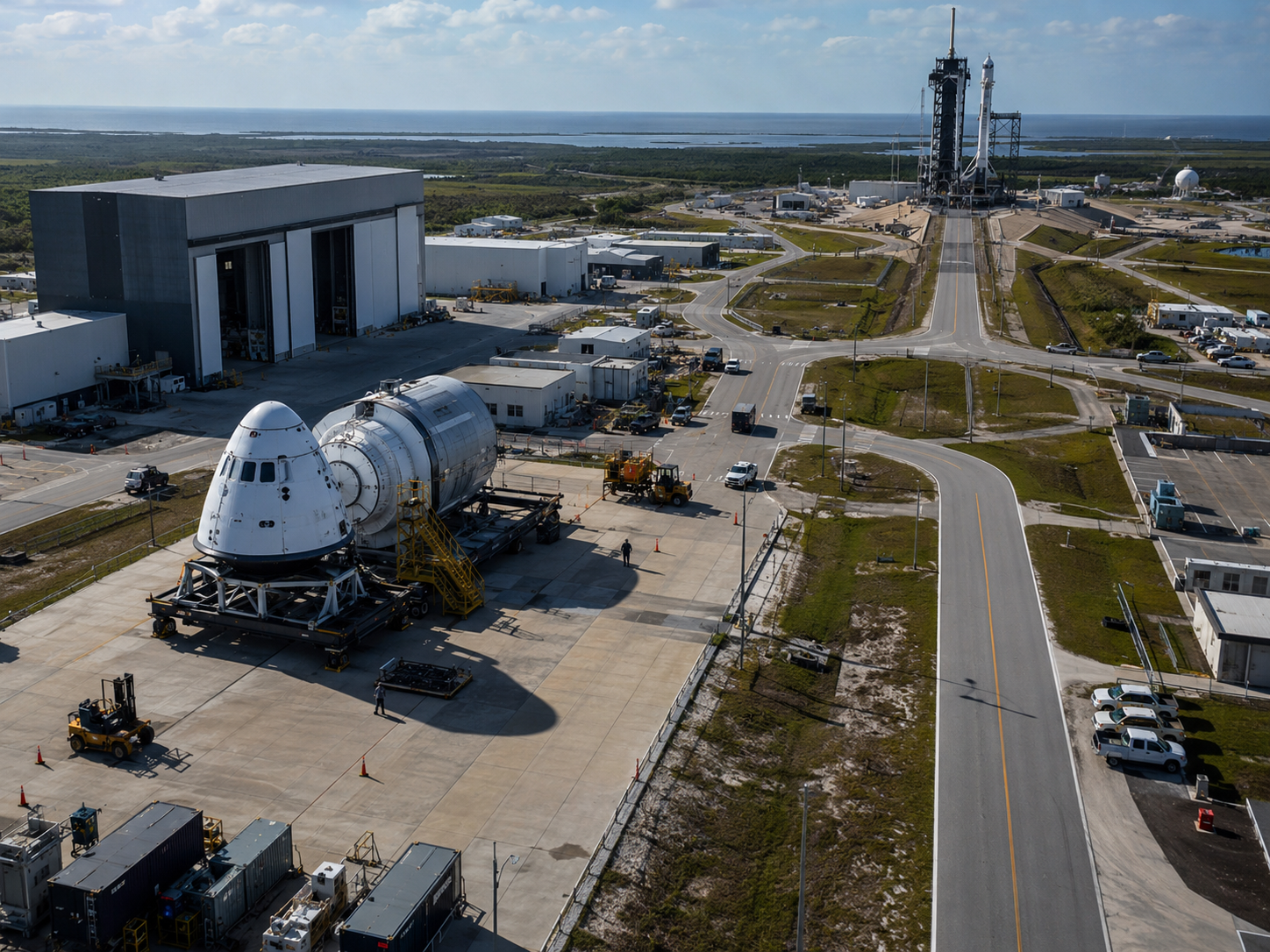
A public SpaceX S-1 filing gives readers a rare look at the business, risks and public reliance behind one of the world's most important private space companies. Editorial illustration by TheDailyGlobe.
Key Facts
- SEC EDGAR shows a SpaceX S-1 filing dated May 20, 2026.
- SEC records show SpaceX had previously filed draft registration materials before the public S-1.
- AP reported that SpaceX tried to launch a larger Starship version on May 21 but halted the countdown due to last-minute problems.
- Guardian reporting described the S-1 as a large investor prospectus with disclosures about SpaceX's business, risks, and Musk-related details.
- Wired reported on SpaceX filing details tied to compute, finances, and risks.
A public SpaceX filing with the Securities and Exchange Commission is giving readers a rare look inside a company that is private in ownership but public in importance.
SEC EDGAR shows a SpaceX S-1 filing dated May 20, 2026. SEC records also show the company had previously filed draft registration materials before the public filing. The S-1 does not turn SpaceX into a public company by itself, but it opens a window into business details, risk disclosures and investor-facing information that are usually harder to see from the outside.
The filing matters beyond markets because SpaceX is tied to launch capacity, satellite internet, NASA plans, defense and civil space infrastructure, and the broader private-space economy. Readers do not need to be investors to understand why the disclosures are worth attention.
Why a Filing Matters for a Private Company
SpaceX has long been one of the most visible private companies in the world, but private companies do not face the same routine disclosure requirements as public ones. That means outsiders often see launches, contracts, statements and headlines without the fuller risk language that investors see in formal filings.
An S-1 is different. It is designed for investors, but it can also help the public understand how a company describes its own business, dependencies, risks and future plans. The language can be dense, and it should not be treated as a consumer guide or investment recommendation. Still, it can reveal what the company considers material enough to disclose.
That makes the filing useful even for readers who never plan to buy a share. SpaceX is not just selling a product. It is part of the physical and digital infrastructure that governments, companies and consumers increasingly rely on.
The Public Reliance Question
SpaceX matters because its work sits at the intersection of private ambition and public dependence. Its launch systems support commercial customers, government missions and NASA-related plans. Its satellite business is tied to internet access and communications. Its future projects could affect how the United States and other customers reach orbit and beyond.
That does not mean every SpaceX risk becomes a public crisis. It does mean the company's business health, technical execution and operational choices can matter outside the company itself.
When a private company becomes central to national space activity, disclosure is no longer only an investor concern. It becomes part of understanding how much public policy, science, communications and infrastructure now depend on private platforms.
Starship Shows the Technical Risk
AP reported that SpaceX tried to launch a larger version of Starship on May 21 but halted the countdown because of last-minute problems. That episode is a useful reminder that space development remains technically difficult, even for a company with a strong launch record.
Starship is important because it is tied to SpaceX's larger ambitions and to future space plans that reach beyond routine launches. But development setbacks, testing delays and engineering problems are part of the reality of building new space systems.
Readers should be careful not to overread a single scrubbed launch attempt. A halted countdown is not the same as a failed business model. It is also not irrelevant. For a company asking investors and public partners to believe in large technical plans, execution matters.
What the Filing Can and Cannot Tell Readers
Guardian reporting described the S-1 as a large investor prospectus with disclosures about SpaceX's business, risks and Musk-related details. Wired reported on filing details tied to compute, finances and risks.
Those details may attract attention, but the most useful way to read the filing is not as gossip or valuation hype. It is a structured look at how SpaceX and its advisers describe the company's exposure: technical risk, financial risk, leadership risk, customer relationships, infrastructure demands and outside dependencies.
The filing should also be read with limits. SEC materials are formal disclosures, not guarantees. They tell readers what the company is presenting and warning about in a registration context. They do not, by themselves, settle whether SpaceX is a good investment or predict whether its largest projects will succeed.
Why Investors Are Not the Only Audience
The public-market frame can make this story sound as if it belongs only to traders and analysts. It does not.
If a private space company becomes a major provider of launch capacity, satellite services and space infrastructure, then its risks affect more than shareholders. NASA programs, federal agencies, commercial satellite operators, internet users, researchers and vendors may all have reasons to watch how the company performs.
That is the real value of the S-1 for regular readers. It turns a company often seen through launches, livestreams and founder headlines into a company that has to describe its business in formal risk language.
What Remains Unclear
It remains unclear what final public-market path SpaceX will take, how investors will respond, or how much the filing will change public understanding of the company once more details are reviewed.
It is also unclear how near-term Starship development, satellite expansion, compute-related business ties and broader financial risks will affect the company's long-term plans. Those questions require careful reading of the filing and continued reporting, not simple predictions.
For readers, the clean takeaway is this: SpaceX's filing matters because a company that helps shape public space infrastructure is revealing more about itself. The question is not whether that makes SpaceX good or bad. The question is what the public can learn when a private space giant has to show more of its work.
Reporting note: Reporting draws on SEC filing materials, SEC company records, Associated Press reporting, technology reporting, space reporting, and reviewed background materials. This article was produced with AI-assisted research and reviewed by an editor before publication.