A Solar-Fuel Device Learned to Adjust to Clouds Without a Battery
Researchers in Japan say they have developed an artificial photosynthesis system that can automatically adapt to changing sunlight, potentially simplifying one of the challenges facing solar-fuel technology.
Save Article
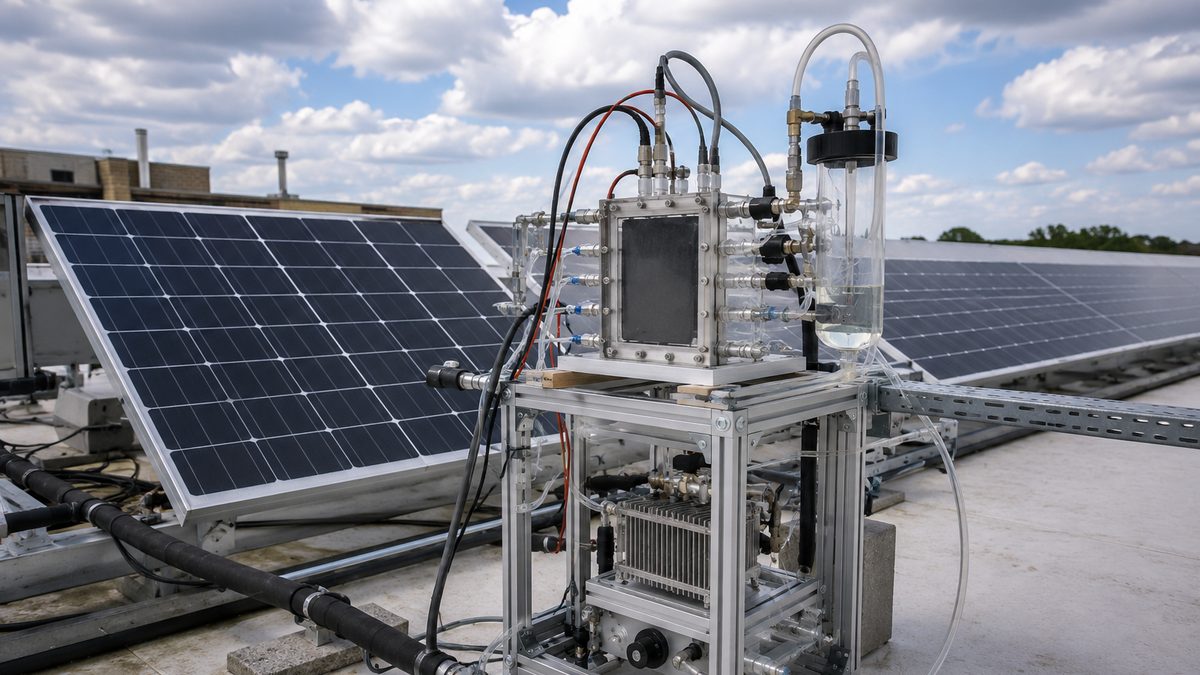
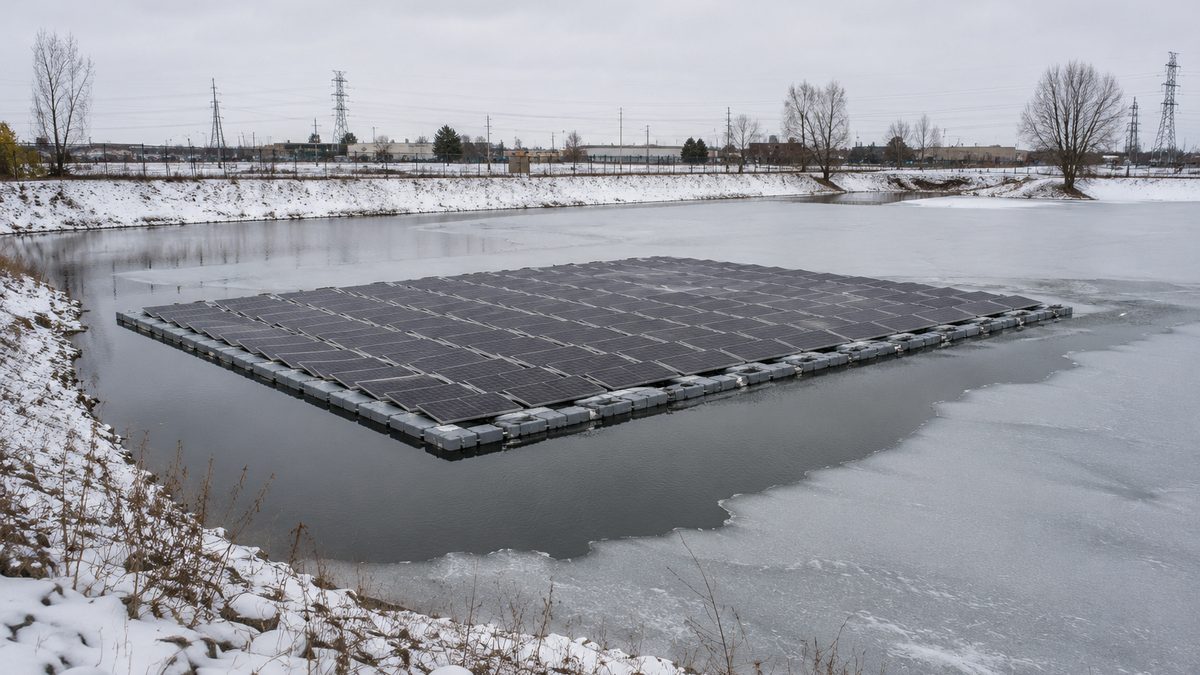
Researchers are testing ways for solar-fuel systems to keep working as sunlight changes. Editorial illustration by TheDailyGlobe.
Key Facts
- Researchers reported an artificial photosynthesis system that produces formic acid from water and carbon dioxide.
- The system includes a self-regulating component integrated into the electrolyzer.
- The university said the design can perform maximum-power-point tracking automatically without battery-based control.
- Researchers tested the system under real sunlight conditions with changing light levels.
- The study describing the work was published in EES Solar.
Even on a clear day, sunlight is rarely constant. A passing cloud can reduce solar output within seconds, and that creates a challenge for machines designed to convert sunlight into usable fuels. To keep operating efficiently, those systems often need controls that continuously adjust to changing conditions.
Researchers at Osaka Metropolitan University say they have developed an artificial photosynthesis system that can handle some of that adjustment on its own. The research, published in EES Solar, describes a design that automatically adapts to changing sunlight without relying on a battery-based control system for a key part of the process.
The work remains firmly in the research stage, but it addresses a practical engineering problem that has long complicated efforts to turn sunlight, water, and carbon dioxide into useful fuels.
What Artificial Photosynthesis Tries to Do
Artificial photosynthesis is an area of research inspired by how plants use sunlight. Instead of creating sugars, researchers attempt to use sunlight to drive chemical reactions that produce fuels or other useful compounds.
In this case, the research team focused on producing formic acid using water, carbon dioxide, and solar energy. Formic acid is sometimes studied as a potential energy carrier because it can store hydrogen and energy in chemical form, although practical deployment still faces technical and economic challenges.
The broader goal is to find ways to capture renewable energy and convert it into substances that can be stored and transported more easily than electricity alone.
Why Changing Sunlight Is a Real Problem
Solar-powered systems perform best when they operate near their optimal power level. Engineers often use a process known as maximum-power-point tracking to continually adjust equipment as sunlight changes throughout the day.
That adjustment process can require additional electronics, control systems, and energy-management components. According to Osaka Metropolitan University, the new design incorporates self-regulating behavior directly into the electrolyzer, allowing the system to automatically respond to changing sunlight conditions.
For readers unfamiliar with the technology, the practical idea is straightforward: instead of relying on a separate battery-based control method to keep the system operating efficiently, the device itself helps manage those fluctuations.
What the Research Actually Demonstrated
According to the university, researchers tested the system outdoors under real sunlight rather than only under fixed laboratory lighting. During those tests, the device continued generating formic acid while sunlight levels changed.
That result is important because real-world solar systems rarely experience perfectly stable conditions. A technology that performs well only under controlled laboratory lighting may encounter difficulties when exposed to changing weather and daylight patterns.
The reported demonstration suggests the design can function under those variable conditions, although the available reporting does not establish how it would perform over months or years of operation.
What Remains Unproven
The research addresses one technical challenge, but many others remain. Public information about the project does not establish long-term durability, commercial cost, large-scale efficiency, or how the system would perform in industrial settings.
The research team has suggested that reducing control-system complexity could eventually lower costs. That remains an engineering hypothesis rather than a demonstrated market outcome. The available evidence does not show how much money could be saved or whether the approach would be competitive with other methods of energy storage or fuel production.
Questions also remain about scaling the technology beyond research demonstrations. Systems that work successfully in small experiments sometimes encounter new challenges when expanded to commercial size.
What Readers Should Watch Next
For now, the most important takeaway is not that a new solar fuel is ready for widespread use. Instead, the study highlights a creative attempt to solve a practical problem that renewable-fuel researchers face every day: sunlight changes constantly.
Future developments worth watching include longer outdoor testing, independent validation by other research groups, additional performance data, and efforts to determine whether the design can operate economically at larger scales. Those answers will help determine whether this approach becomes a useful building block for future solar-fuel systems or remains primarily a promising laboratory achievement.
Reporting note: Reporting draws on university research materials, published study reporting, science news coverage, and reviewed background materials. This article was produced with AI-assisted research and reviewed by an editor before publication.