Floating Solar Panels Are Being Tested for Icy Winters
A year-long Canadian field test explored whether floating solar panels can continue generating power through freezing winters, one of the biggest challenges facing the technology in colder climates.
Save Article
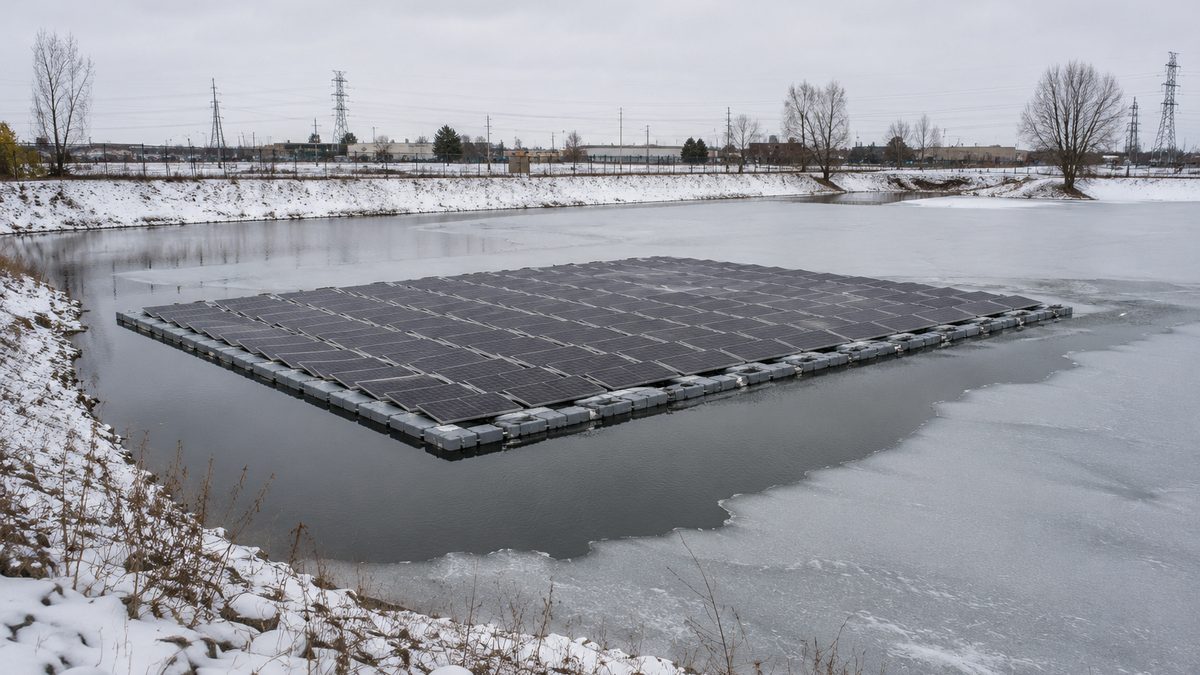
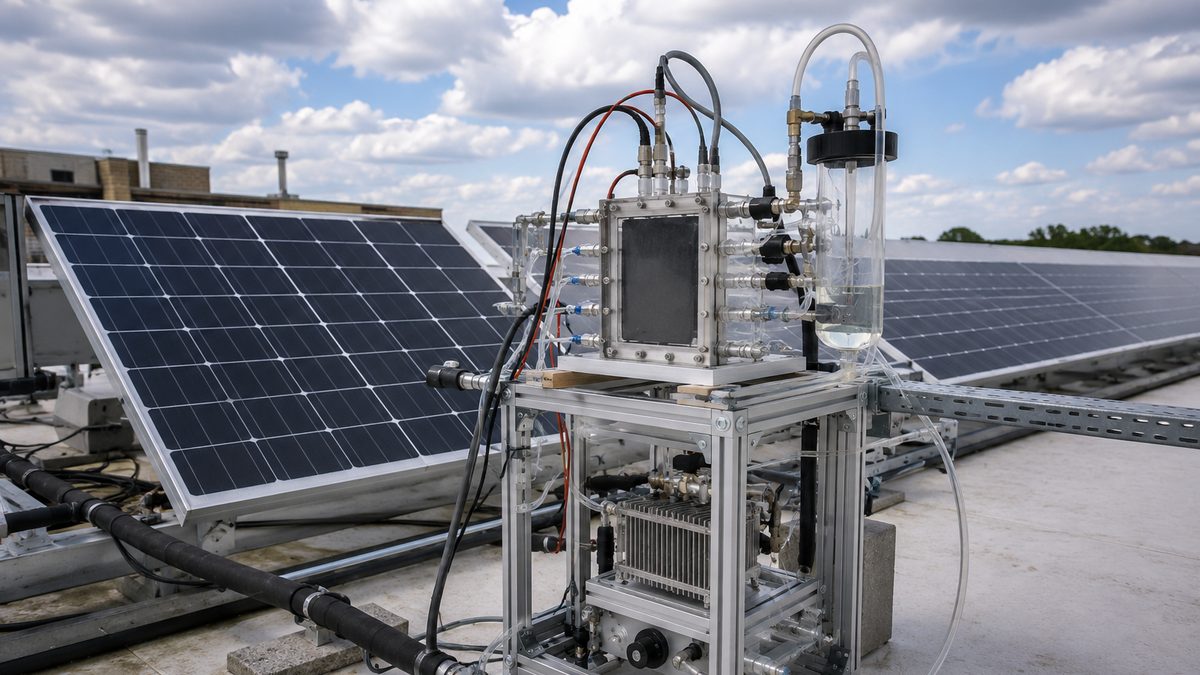
Researchers are testing whether floating solar systems can keep working through icy winter conditions. Editorial illustration by TheDailyGlobe.
Key Facts
- Researchers at Western University tested a 7-kilowatt floating solar system on an Ontario stormwater pond.
- The design used a foam-backed floating photovoltaic platform.
- An air-bubbler system helped keep water open around the panels during winter conditions.
- The system generated 7.7 megawatt-hours of electricity during the year-long test.
- The research was published in the journal Applied Energy.
Floating solar panels sound like a simple idea until winter arrives. Ice can damage equipment, restrict movement, and create conditions that many solar systems were never designed to handle.
That challenge has limited interest in floating solar projects across many colder regions, even as the technology has expanded in warmer parts of the world. Engineers have long known how to place solar panels on water. The harder question has been whether those systems can survive and perform through months of freezing temperatures.
Researchers at Western University in Ontario recently completed a year-long test designed to explore exactly that problem. Their findings offer an early look at how floating solar systems might operate in places where winter ice has traditionally been a major obstacle.
Why Ice Has Been a Challenge
Floating solar systems are exactly what they sound like: solar panels mounted on structures that float on ponds, reservoirs, treatment facilities, or other bodies of water. The approach can be attractive because it allows electricity generation without using additional land.
Water can also help cool solar panels, which may improve performance under some conditions. But in colder regions, floating equipment faces a different problem. As ice forms, expands, shifts, and melts, it can place stress on the structures supporting the panels.
That uncertainty has made many cold-climate projects difficult to evaluate. Engineers need to know whether systems can operate reliably before utilities, municipalities, or private owners are willing to invest in larger installations.
How the Ontario Test Worked
The research team built a foam-backed floating photovoltaic system and deployed it on a stormwater pond in Ontario. One of the key features was an air-bubbler system positioned beneath the installation.
The bubbler pushes air through the water, creating circulation that helps prevent ice from fully forming around the floating structure. Instead of allowing the panels to become trapped in solid ice, the system maintained open-water areas near the installation.
Researchers then monitored performance through changing weather conditions over the course of a year, including the winter season that represented the project's primary engineering challenge.
What the Results Showed
According to the reported findings, the system generated 7.7 megawatt-hours of electricity during the test period. Researchers also reported that it was approximately 2.7 percent more productive than a reference floating system used in the study.
That number should be viewed carefully. The improvement applies to the specific setup tested by the researchers and does not automatically mean every floating solar system would achieve the same result.
Still, the study demonstrated that the installation continued operating through freezing conditions rather than being shut down by winter ice. For researchers focused on cold-climate renewable energy, that may be one of the most important findings from the project.
What Still Needs to Be Proven
The Ontario project was a relatively small demonstration system, producing 7 kilowatts of capacity. Larger commercial projects face additional challenges that cannot be fully answered by a single field test.
Researchers still need to evaluate how similar designs perform on larger reservoirs, deeper ponds, and locations exposed to stronger winds, heavier ice movement, and more severe winter conditions. Long-term maintenance requirements for the bubbler system also remain unclear.
Economic questions are still open as well. Whether floating solar makes financial sense depends on installation costs, maintenance expenses, electricity prices, permitting requirements, and site-specific conditions.
There are also environmental considerations that require further study. Larger deployments may raise questions about water quality, wildlife interactions, and how covering portions of a water body affects local ecosystems.
What Readers Should Watch Next
The next step will likely involve larger demonstrations on different types of water bodies. Researchers want to understand whether the results seen in Ontario can be repeated under a wider range of conditions.
Municipal stormwater ponds, water-treatment facilities, reservoirs, and industrial sites could become future testing locations if organizations decide the technology is worth exploring further.
For now, the study does not prove that floating solar is ready for every cold-climate deployment. What it does show is that engineers are beginning to address one of the technology's most persistent challenges. If future testing produces similar results, floating solar could become a more realistic option in places where winter ice once seemed like a deal-breaker.
Reporting note: Reporting draws on university research, engineering publications, renewable-energy reporting, and reviewed background materials. This article was produced with AI-assisted research and reviewed by an editor before publication.