OTC Hearing Aids Show Health Technology Moving Onto Retail Shelves
Over-the-counter hearing aids are giving some adults another way to access hearing technology, but FDA guidance makes clear they are not for every hearing problem.
Save Article
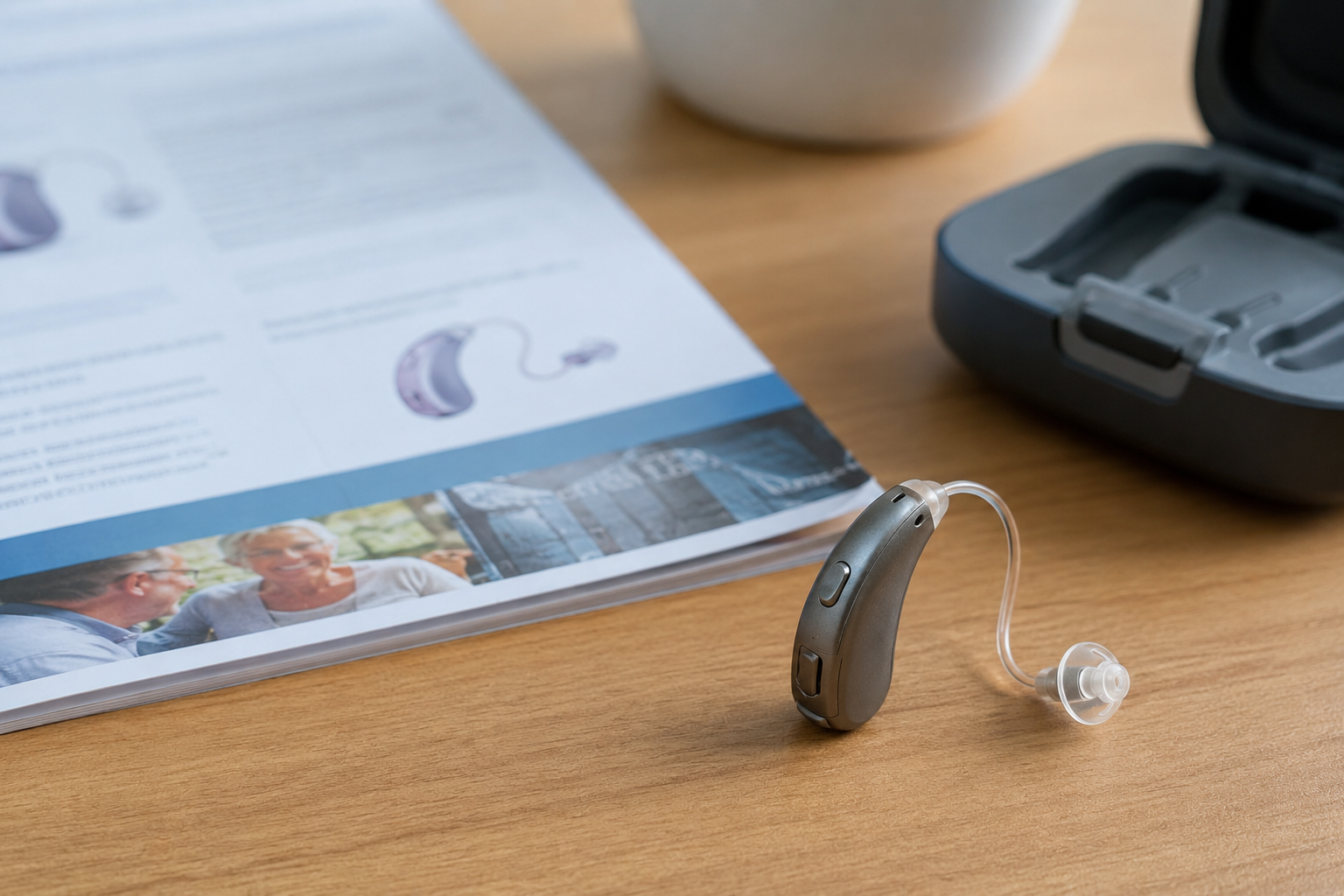
Over-the-counter hearing aids have made some hearing technology more accessible, but they are not meant for every kind of hearing loss. Editorial illustration by TheDailyGlobe.
For an adult who starts missing parts of conversations at dinner, turning up the TV more often or struggling in noisy rooms, hearing technology may feel like a medical appointment, a prescription and a specialist visit away.
Over-the-counter hearing aids have changed part of that path. The Food and Drug Administration says OTC hearing aids are available to consumers in stores or online without a medical exam, prescription or audiologist fitting.
The devices are intended for adults 18 and older with perceived mild to moderate hearing loss, according to FDA guidance. They are not intended for severe or profound hearing loss or for people younger than 18.
Who OTC Hearing Aids Are For
The main idea is access. OTC hearing aids can give some adults a more direct way to try hearing technology when their hearing difficulty appears mild to moderate. That makes the category part of a broader shift in health technology moving closer to retail shelves and consumer devices.
But easier access does not mean the devices are right for every hearing problem. FDA guidance draws a clear line between OTC hearing aids and prescription hearing aids, which may involve professional fitting and care for different hearing needs.
What The Category Does Not Promise
OTC hearing aids should not be treated as a fix for every kind of hearing loss. People with severe or profound hearing loss, children and people with symptoms that may need medical attention fall outside the basic OTC category described by FDA.
FDA has also authorized the first over-the-counter hearing aid software device intended for compatible versions of Apple AirPods Pro. That authorization shows how hearing technology is blending with consumer electronics, but it should not be read as a blanket endorsement of every product or every use.
The next things to watch are FDA updates, product labeling, return policies and how clearly companies explain who their devices are meant to help. For readers, the takeaway is practical: OTC hearing aids may make help easier to reach for some adults, but the details and limits still matter.
Reporting note: Reporting draws on FDA consumer medical device guidance, FDA hearing-aid resources, OTC hearing-aid software authorization materials, and reviewed background materials. This article was produced with AI-assisted research and reviewed by an editor before publication.