Digital Wallets Are Moving From Payments Into Everyday ID Checks
New wallet tools from Google show how phones are becoming part of identity checks, age verification and online checkout, though physical documents still matter.
Save Article
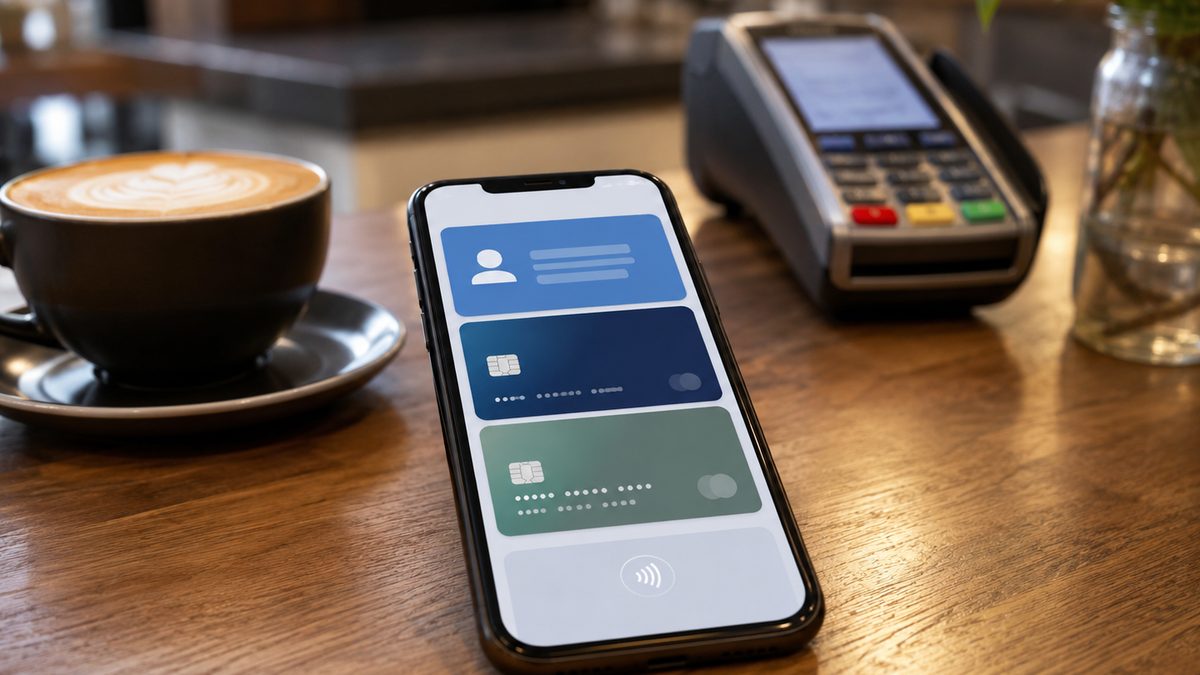
Digital wallets are moving deeper into payments, identity checks and online verification, but physical documents still matter. Editorial illustration by TheDailyGlobe.
Key Facts
- Google announced new Wallet and Pay tools focused on digital identity, age verification and payment convenience.
- Google says digital IDs are expanding to select European countries, though full availability depends on regional support and partners.
- Google Wallet Help says an ID pass is not an official form of identification or a replacement for physical documentation.
- The TSA says travelers using digital IDs should still carry a physical ID as backup.
- Adoption will depend on governments, banks, merchants, airports, devices and local rules.
A familiar moment is starting to change. Someone reaches a checkout screen, an airport security line or an age-restricted website and, instead of pulling out a plastic card or typing in payment details, reaches for a phone.
That shift is not happening all at once, and it is not happening everywhere. But new tools announced by Google last week show where major technology companies want digital wallets to go next: beyond tap-to-pay and deeper into identity checks, age verification and online commerce.
Google’s June 4 announcement focused on a broader version of digital wallet use. The company described new identity and payment tools meant to let people prove certain information about themselves, verify age in some settings and move through online checkout with fewer manual steps. The company also said Google Pay direct checkout will bring stored payment options directly to participating retailer websites.
For ordinary users, the practical meaning is simple: the phone is becoming less like a pocket-sized credit card holder and more like a credential holder. It may help prove who someone is, whether they meet an age requirement or whether they can complete a purchase without reentering card details.
That could be useful. A digital wallet may make some online checkouts faster. Age verification tools may allow a service to confirm that a user is old enough without requiring the user to share every detail printed on an ID. At airports, mobile IDs can make some identity checks more efficient at participating TSA checkpoints.
But the limits matter as much as the convenience. Google Wallet Help warns that an ID pass is not an official form of identification or a replacement for physical documentation. The company also notes that acceptance may not be universal and that regional requirements can vary. TSA guidance similarly tells travelers using digital ID to keep a physical ID as backup.
That means a phone-based ID should not be treated like a magic replacement for a driver’s license, passport or other official document. A traveler may be able to use a mobile credential at a participating checkpoint, but that does not mean the same credential will work at every airport, with every airline, at border control or in every state. A shopper may see faster checkout at one retailer, but not at another. A digital age check may work with one provider or bank partner, but not across the wider internet.
The Big Question Is Acceptance
The technology itself is only one part of the story. For digital identity tools to become routine, many different institutions have to agree to accept them. Governments must authorize or support credentials. Banks and payment processors need to participate. Merchants have to add the right checkout and verification systems. Airports and agencies need compatible equipment and rules. Phone makers and app developers need to make the experience reliable enough for people to trust it.
That is why digital wallets can feel advanced and limited at the same time. A user may be able to store a payment card, loyalty pass, transit card, event ticket or ID credential in one place, but each item still depends on a separate network of issuers and acceptors. The phone can hold the credential; it cannot force every institution to recognize it.
The privacy question is also important. Company announcements often emphasize that digital credentials can share less information than a physical card. In theory, that can be a real advantage. A person proving they are over a certain age may not need to reveal a home address, full birthdate or ID number. But readers should still pay attention to what data is shared, who verifies it, whether a third-party service is involved and what records are created during the process.
The safest way to think about digital wallet identity tools is as an emerging convenience layer, not a full replacement for traditional documents. They may reduce friction in some situations. They may protect some personal information when designed carefully. They may also create new dependencies on phones, apps, batteries, accounts, networks and company policies.
What Readers Should Watch Next
The next phase will be less about the announcement and more about rollout. Readers should watch which airports, states, European countries, banks, payment processors and major retailers actually support the tools. Availability will likely remain uneven, especially across regions and institutions.
For now, the practical advice is straightforward. Try digital wallet identity features only where they are clearly accepted. Check official guidance before travel. Keep physical ID available. Do not assume a phone can replace a passport, driver’s license or state ID. And before using age or identity verification online, look for clear information about what is being shared and with whom.
Digital wallets are no longer just about paying for coffee with a tap. They are becoming part of how people prove things about themselves in daily life. That may make some transactions faster and some checks less intrusive. But until acceptance is wider and the rules are clearer, the old wallet still has a job.
Reporting note: Reporting draws on Google product announcements, Google Wallet support documentation, Transportation Security Administration digital ID guidance, technology reporting and reviewed background materials. This article was produced with AI-assisted research and reviewed by an editor before publication.