NASA Test Points to a More Flexible Future for Space Missions
NASA's PExT demonstration tested ways for spacecraft to route data through NASA and commercial networks, then extended operations into 2027.
Save Article
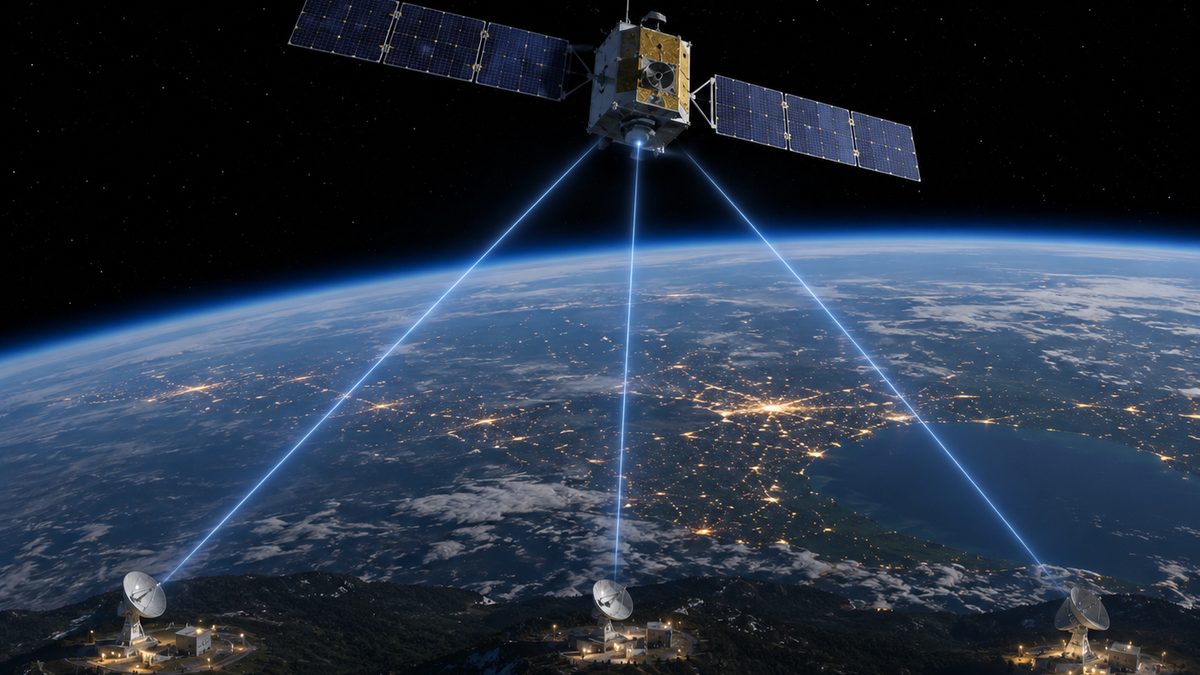
NASA is testing ways for future spacecraft to communicate across more flexible network paths. Editorial illustration by TheDailyGlobe.
A spacecraft is only useful if it can send information home. Pictures, weather data, science readings and mission updates all depend on communication links that work when they are needed.
NASA said its PExT demonstration completed its planned technology demo and extended operations. The test sent data through NASA's Tracking and Data Relay Satellite system and commercial networks operated by Viasat and SES Space & Defense.
The point was not to replace every existing space communications system overnight. It was to test a more flexible way for future missions to move data across more than one path.
What NASA Tested
PExT stands for Polylingual Experimental Terminal. In plain English, it is a communications test meant to show whether a spacecraft can talk through different kinds of networks instead of depending on one route.
NASA said the demonstration used wideband communications, meaning higher-capacity links designed to move larger amounts of data. The extended mission will also include direct-to-Earth links using SSC Space's global ground station network.
Why Flexible Space Links Matter
Flexible routing matters because missions do not all have the same communications needs. A spacecraft may need more coverage, a backup path or a faster way to send data during a busy part of a mission.
NASA said the demonstrations show how missions can route data more flexibly to improve resilience, coverage and operational efficiency. For readers outside the space world, that means future spacecraft may be less dependent on a single communications lane.
What Comes Next
The work is still a demonstration, not a universal standard for all spacecraft. Broader use would depend on future missions, technical performance and decisions about how NASA and commercial networks work together.
Extended mission operations are scheduled to continue through April 2027. The next useful thing to watch is whether the direct-to-Earth tests show that spacecraft can move between network paths in ways that make future missions more reliable and easier to operate.
Reporting note: Reporting draws on NASA mission updates, NASA PExT materials, SSC Space information, Johns Hopkins APL background, and reviewed context. This article was produced with AI-assisted research and reviewed by an editor before publication.