NASA's Private Space Station Plan Shows The Post-ISS Era Moving Closer
NASA is preparing to shift from the International Space Station toward commercial stations, but timing, safety and continuity remain major open questions.
Save Article
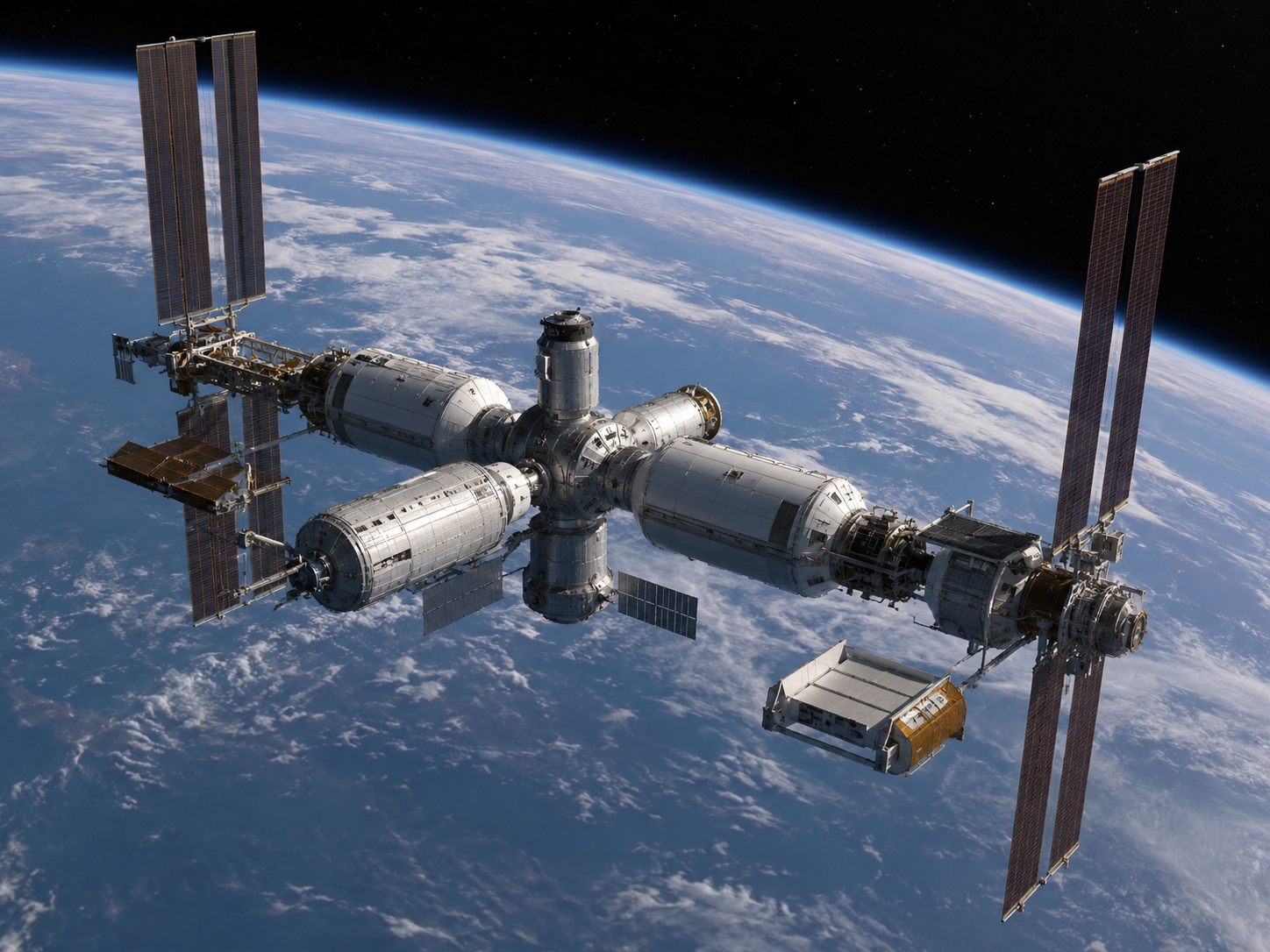
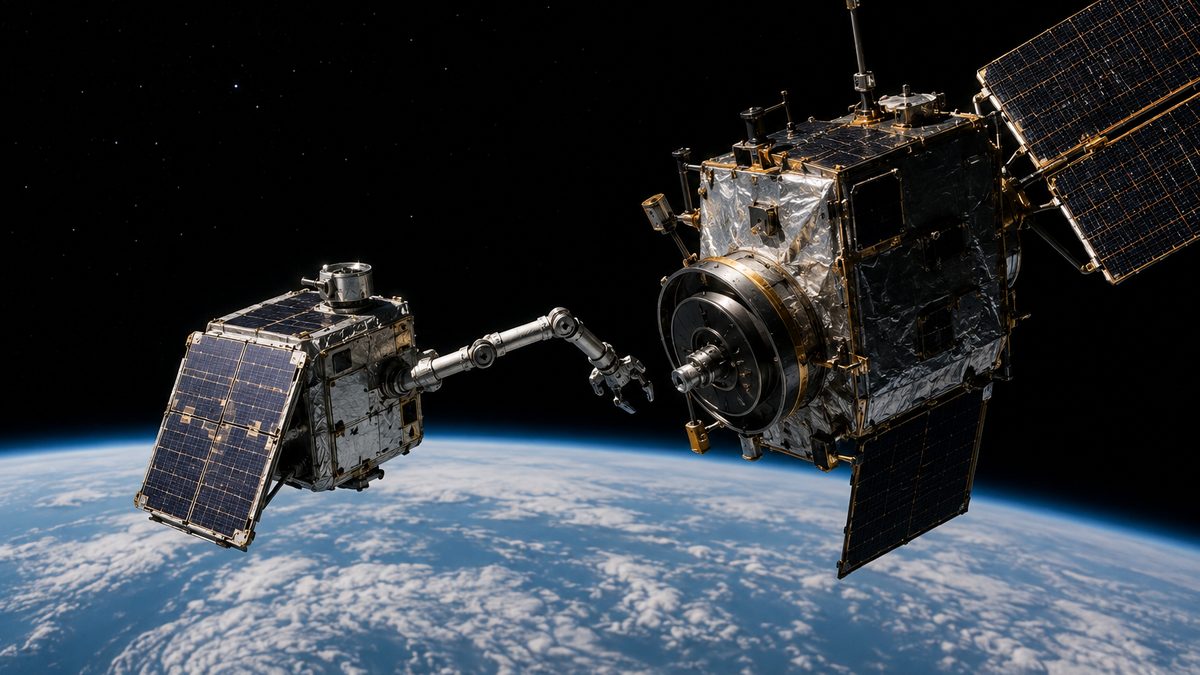
NASA's next low-Earth-orbit chapter depends on whether commercial space stations can replace key parts of the ISS role. Editorial illustration by TheDailyGlobe.
Key Facts
- NASA plans to transition from the ISS toward commercial low Earth orbit space stations as the station nears the end of its operational life.
- NASA says commercial space stations are intended to preserve access to microgravity research and low Earth orbit.
- Current reporting says NASA has reaffirmed support for commercial alternatives rather than pivoting to a government-led module.
- Companies developing private station concepts include firms tied to projects such as Starlab, Axiom Station and Orbital Reef.
- It remains unclear whether commercial stations will be ready in time to avoid a gap after the ISS.
The International Space Station has been part of the public imagination for decades: astronauts circling Earth, science experiments in microgravity and a permanent human presence in orbit. But the station will not operate forever.
NASA is preparing for what comes next by supporting commercial low Earth orbit space stations. The agency says those future platforms are intended to preserve access to microgravity research and low Earth orbit as the ISS nears the end of its planned operating life.
The shift matters because the ISS is not only a symbol of space exploration. It is also a working research platform, an astronaut destination and a piece of national space capability that NASA does not want to lose before a replacement system is ready.
Why NASA Wants A Commercial Path
NASA's commercial space station strategy is built around a familiar idea in modern space policy: the government helps create a market, then buys services from private providers instead of owning and operating every piece of infrastructure itself.
In low Earth orbit, that could mean NASA becomes one customer among others on privately built stations. The agency could still send astronauts, support research and maintain a presence in orbit, while companies look for additional customers in science, manufacturing, tourism or other commercial services.
That approach could give NASA more flexibility, but it also shifts more responsibility to companies that still have to prove their stations can be built, launched, operated and certified safely.
What The ISS Has Been Providing
The ISS gives researchers a place to study how materials, biology, medicine and technology behave in microgravity. It also gives astronauts and engineers a long-running platform for learning how people and equipment perform in orbit.
Losing that access without a ready replacement would matter. Research programs could be interrupted. Astronaut training and operations could change. U.S. presence in low Earth orbit could become more dependent on whether commercial stations are available on time.
That is why the transition is not just a space-industry story. It is a public technology story about how a major government research platform may be replaced by privately operated infrastructure.
Private Stations Are Not Replacements Yet
NASA's support for commercial stations does not mean those platforms are already operational replacements for the ISS. Projects tied to Starlab, Axiom Station and Orbital Reef are part of the future-station landscape, but readiness remains an open question.
Space hardware is difficult even when plans are well funded and technically sound. Developers have to work through design, launch planning, safety certification, operations, business models and customer demand. Any one of those steps can affect the schedule.
Current reporting says NASA has reaffirmed support for commercial alternatives rather than pivoting to a government-led module. That keeps the commercial strategy at the center of the post-ISS plan, while leaving the hard timeline questions unresolved.
What Remains Unclear
The biggest unknown is whether private stations will be ready before the ISS reaches the end of its operating life. A smooth transition would preserve research access and astronaut operations. A gap could complicate both.
It is also unclear which business models will prove durable. NASA can be an important customer, but commercial stations may need other revenue sources to support long-term operations. Companies will have to show that demand exists beyond government use.
Safety certification is another unresolved piece. A station meant to host astronauts and research cannot be treated like a simple commercial product. It has to meet strict operational and safety expectations before it can take over meaningful parts of the ISS role.
What To Watch Next
The next signals to watch are NASA acquisition steps, development milestones from private station companies and updates to ISS transition planning. Those will show whether the commercial path is moving from concept to working infrastructure.
Congress will also matter because funding and oversight can shape how aggressively NASA supports private stations and how much risk lawmakers are willing to accept in the transition.
For now, the direction is clear even if the schedule is not. NASA is trying to preserve a U.S. foothold in low Earth orbit after the ISS, but the next chapter depends on whether private stations can become reliable public-use infrastructure before the old station's time runs out.
Reporting note: Reporting draws on NASA commercial space station materials, space policy reporting, congressional and industry context, ISS transition materials, and reviewed background materials. This article was produced with AI-assisted research and reviewed by an editor before publication.