NASA Artemis III Planning Shows Commercial Moon Landers Moving Into Mission Design
NASA's preliminary Artemis III planning shows how commercial landers are becoming part of the actual design for future Moon missions.
Save Article

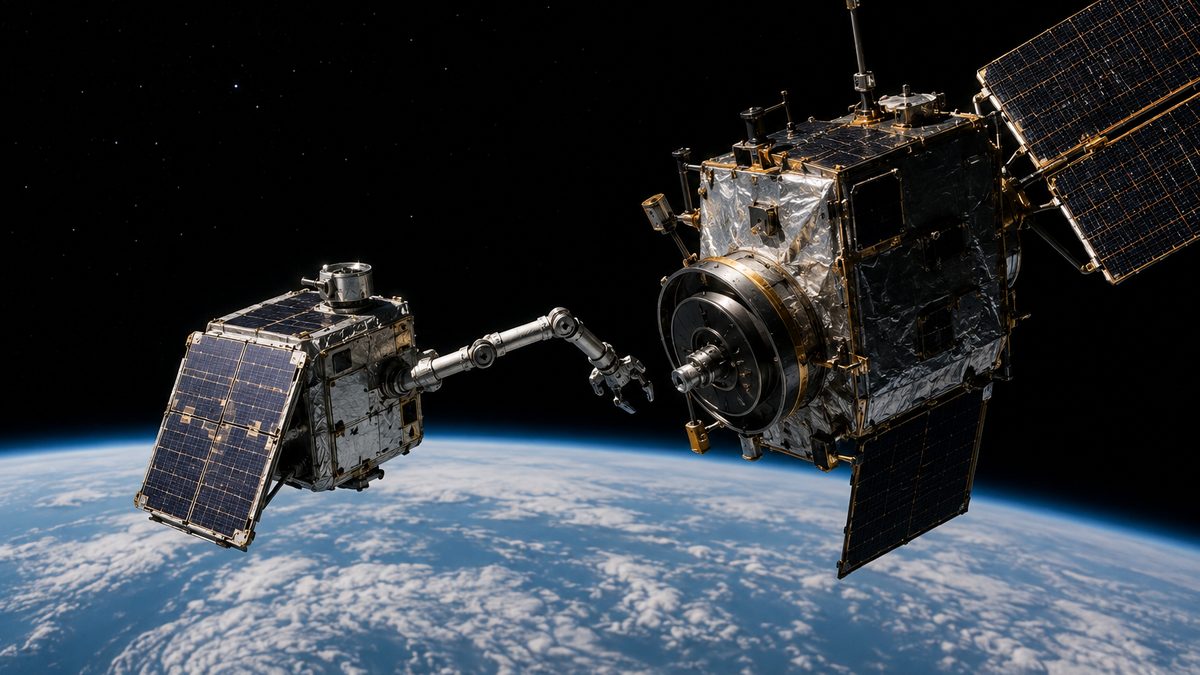
Moon missions increasingly depend on several spacecraft and commercial systems working together precisely. Editorial illustration by TheDailyGlobe.
Future Moon missions will depend on more than one powerful rocket or one spacecraft reaching space. They will depend on separate systems meeting, docking and working together safely far from Earth.
That is the practical point behind NASA's preliminary Artemis III mission planning. NASA said it is defining Artemis III around Orion rendezvous and docking with commercial landers, showing how privately built lunar systems are moving from contract language into actual mission design.
What NASA Is Planning
NASA's planning language is important because it is still preliminary. The agency has not presented every detail as final, and readers should not treat the outline as proof that the mission schedule or design cannot change.
What NASA has confirmed is the basic direction: Artemis III planning includes Orion working with commercial landers. NASA's Human Landing System program includes SpaceX for Artemis III and IV and Blue Origin for Artemis V.
Why Commercial Landers Matter
Commercial landers are not side projects in this plan. They are part of how NASA expects future Moon missions to function. If astronauts are going to move from Orion toward the lunar surface, the lander system has to be ready, tested and integrated into the larger mission.
That makes mission design a useful window into where the Artemis program is headed. NASA is not only buying hardware. It is building commercial systems into the architecture of national Moon missions.
What Remains Unclear
Several questions remain open, including the final mission design, lander readiness and schedule. NASA says lander systems are part of broader Artemis plans to return humans to the Moon, but preliminary planning does not guarantee that every technical or timing question has been settled.
The next developments to watch are NASA updates, lander testing, Artemis schedule milestones and any changes to the mission architecture. For now, Artemis III planning shows a clear direction: future Moon missions are being designed around several systems working together, including commercial landers that still have to prove themselves before flight.
Reporting note: Reporting draws on NASA Artemis III planning materials, NASA Human Landing System references, official program context, and reviewed space technology background. This article was produced with AI-assisted research and reviewed by an editor before publication.