Meta Smart-Glasses Investigation Puts Wearable Privacy Back in the Spotlight
A Texas investigation into Meta AI glasses highlights the privacy questions that come with camera-equipped wearables moving into everyday life.
Save Article
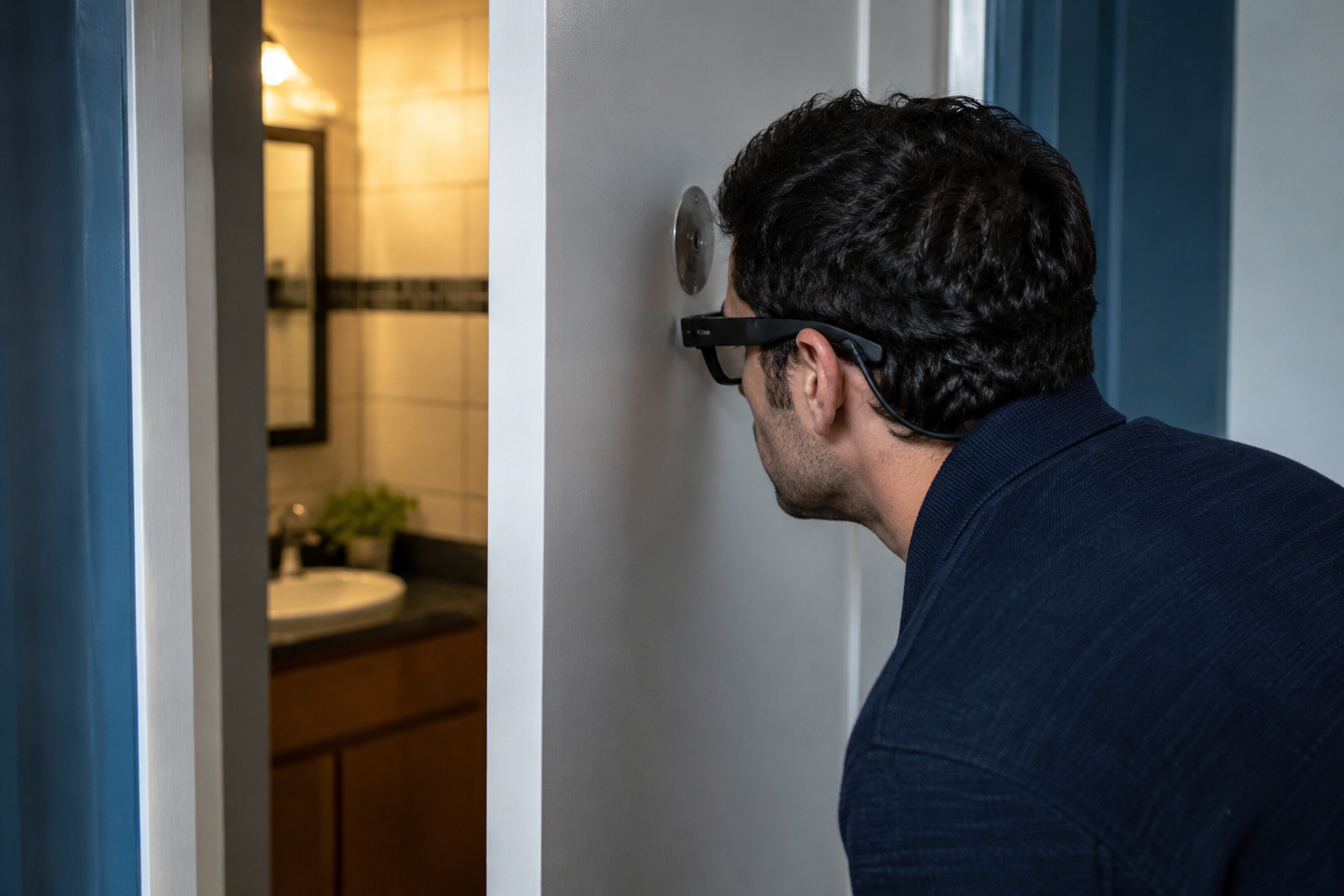
A Texas investigation into Meta AI glasses highlights the privacy questions that come with camera-equipped wearables moving into everyday life. Editorial illustration by TheDailyGlobe.
Key Facts
- Texas Attorney General Ken Paxton launched an investigation into Meta AI Glasses over privacy concerns, according to local reporting.
- CBS Texas reported that the investigation concerns whether the devices could pose privacy risks to Texans.
- Houston Chronicle reporting said the glasses can capture audio and video with a built-in camera, microphones and speakers, with an LED indicator when recording is active.
- Ray-Ban's product page describes Meta AI glasses as including camera, audio and performance features.
- TechCrunch previously reported on litigation raising privacy concerns about Ray-Ban Meta smart glasses and footage review.
A Texas investigation into Meta AI glasses is putting a familiar privacy question into a newer form: what happens when cameras, microphones and AI assistants move from phones into eyewear?
Local reporting said Texas Attorney General Ken Paxton launched an investigation into Meta AI Glasses over privacy concerns. CBS Texas reported that the investigation concerns whether the devices could pose privacy risks to Texans.
The investigation does not prove Meta violated the law. It does, however, give readers a concrete reason to think about wearable cameras before they become ordinary background objects in coffee shops, offices, classrooms, sidewalks and homes.
Why Glasses Are Different From Phones
Phones already record the world around us. The difference is that a phone usually looks like a recording device. When someone raises a phone, points it and taps the screen, people nearby have at least some visual cue about what may be happening.
Smart glasses make that cue less obvious. A camera worn on someone's face can blend into normal conversation or casual movement. Even with a recording indicator, people nearby may not notice it, understand it or know what the device is capturing.
That is the bystander privacy problem. The owner of the glasses may choose to buy and use the device. The person standing nearby did not make that choice. Privacy questions become harder when the person affected by the recording is not the person controlling the device.
What the Product Features Raise
Ray-Ban's product page describes Meta AI glasses as including camera, audio and performance features. Houston Chronicle reporting said the glasses can capture audio and video through a built-in camera, microphones and speakers, with an LED indicator when recording is active.
Those features are not automatically improper. Wearable cameras can be useful for hands-free photos, video calls, accessibility tools, quick notes, travel, repair work or moments when holding a phone is inconvenient.
The privacy question is how those features are disclosed, controlled and understood. Users need to know when recording is active. People nearby need reasonable signals. Regulators may ask what data is captured, where it goes, how long it is kept and whether it can be reviewed or used beyond the moment of recording.
AI Adds Another Layer
A simple camera raises one set of questions. A camera tied to AI features raises more.
If a device can see, hear, answer questions or help interpret the user's surroundings, consumers may want to know what gets processed on the device, what is sent to company servers, what is stored, what is deleted and whether any data may be used to improve products.
The source material does not answer every one of those questions for every use case. That is why the investigation matters as a consumer-tech story. It is not only about one product. It is about whether privacy rules and social norms can keep up as AI devices become easier to wear in public.
Allegations Are Not Findings
TechCrunch previously reported on litigation raising privacy concerns about Ray-Ban Meta smart glasses and footage review. Those concerns should be described carefully. Lawsuits and investigations can raise serious questions, but they are not the same as final findings.
For readers, that distinction matters. It is fair to ask hard questions about wearable cameras and AI data practices. It is not fair to treat every allegation, investigation question or lawsuit claim as already proven.
A careful privacy debate should separate product features, company statements, user behavior, regulatory questions and any proven legal violations. Mixing those together makes the issue more alarming, but not clearer.
What Consumers Should Watch
Before buying or wearing AI glasses, consumers should look for plain answers: when the camera records, how people nearby are notified, what audio is captured, what data leaves the device, how settings work and whether recordings can be reviewed or deleted.
People who encounter smart glasses in public may have fewer choices. That is why visible indicators, clear product design and enforceable privacy rules matter. A device can be convenient for the wearer and still create questions for everyone around them.
What remains unclear is where regulators will draw the line and whether companies will adjust product design, disclosures or data practices as wearable AI becomes more common.
The clean takeaway is that smart glasses are not just another gadget. They move recording and AI features into ordinary face-to-face life. The technology may be useful, but the privacy test will be whether people can understand when they are being recorded, who controls the data and what happens after the moment passes.
Reporting note: Reporting draws on Texas local reporting, product materials, technology reporting, privacy litigation coverage, and reviewed consumer technology context. This article was produced with AI-assisted research and reviewed by an editor before publication.