EV Charging Buildout Is Testing Whether Electric Driving Feels Practical
Federal and state charging programs are expanding public EV infrastructure, but driver confidence still depends on access, uptime and easy payment.
Save Article
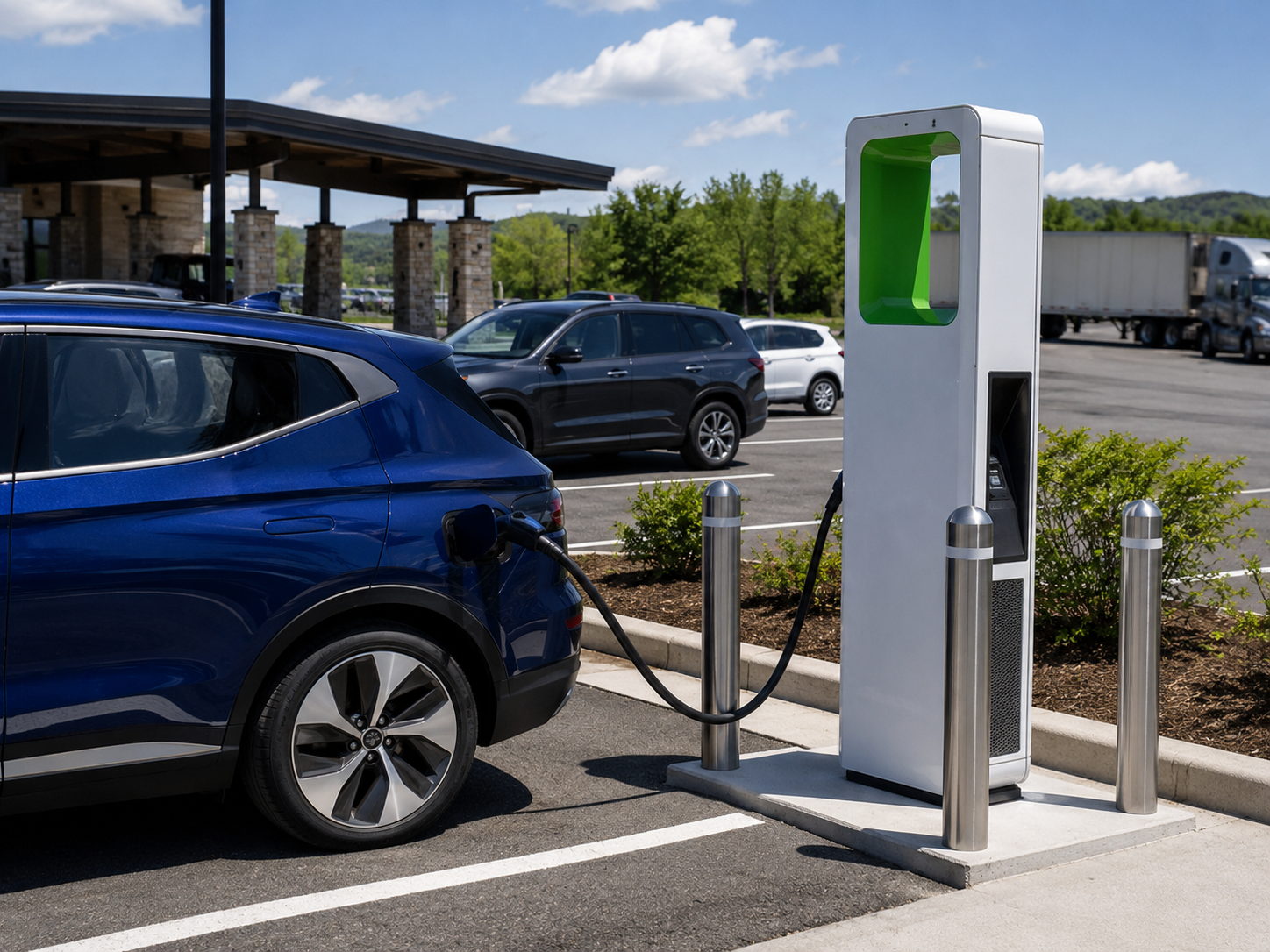
Electric driving depends not only on vehicle range, but on whether public chargers are available, working and easy to use. Editorial illustration by TheDailyGlobe.
Key Facts
- The NEVI Formula Program provides funding to states to deploy electric vehicle charging infrastructure.
- Program materials say funds can support charger acquisition, installation, network connection, operation, maintenance, data sharing, access and reliability.
- The Department of Energy describes the national EV charging network as intended to establish an interconnected network and support public charging infrastructure updates.
- NEVI chargers must be publicly available or available to authorized commercial motor vehicle operators from more than one company.
- NEVI chargers must use open-access payment methods.
For many drivers, the electric-vehicle question is not only how far the car can go. It is what happens on a long workday, a family trip or a drive through an unfamiliar area when the battery gets low.
That is where public charging becomes the real test. Federal and state programs continue to support the buildout of EV charging infrastructure, including the National Electric Vehicle Infrastructure Formula Program, known as NEVI.
The goal is not just to place chargers on a map. For electric driving to feel normal beyond home charging, drivers need stations that are available, working, easy to find and easy to pay for.
Why Chargers Matter As Much As Range
Vehicle range gets much of the attention in EV conversations, but range only answers part of the driver problem. A car with enough battery for daily commuting may still feel limiting if public charging is hard to find during travel.
That is why charging reliability matters. A driver who reaches a station needs the charger to be open, functioning, compatible and simple to use. If the charger is out of service or the payment system is confusing, the technology feels less practical, even if the vehicle itself performs well.
For drivers without home charging, the stakes can be even higher. Public chargers may not be a backup convenience. They may be part of the basic routine that determines whether an EV fits their life.
What NEVI Is Trying To Build
NEVI sends federal funding to states for EV charging infrastructure. The program is meant to help build a more connected public charging network rather than leaving every state, corridor or charging operator to develop in isolation.
Program materials say funds can support more than buying chargers. They can also support installation, network connection, operation, maintenance, data sharing, access and reliability. Those details matter because a charger is only useful if it can keep working after it is installed.
The open-access payment requirement also matters for drivers. Public charging becomes harder to use if every stop requires a different membership, account or closed payment system. A practical network has to work for people who are passing through, not only regular users of one charging brand.
Policy Goals Are Not The Same As Driver Experience
A funded charging program can set standards and push deployment, but it cannot guarantee that every driver in every region will have the same experience. Buildout pace, charger uptime, station location and local travel patterns can all vary.
Rural access is one of the practical questions. A charging network that works well in dense metro areas may still leave longer gaps on rural routes or in places where stations are harder to maintain.
Payment experience is another test. Drivers are used to gas stations being simple: pull in, pay, fill up and leave. Public charging may take longer, and frustration grows if payment systems or charger status information are unreliable.
What Remains Unclear
It remains unclear how quickly the charging buildout will feel reliable to drivers across different regions. Federal materials describe program goals and requirements, but real-world confidence depends on state implementation and station performance.
It is also unclear how evenly the benefits will reach commuters, apartment dwellers, rural drivers, delivery operators and long-distance travelers. Each group uses charging differently, and a network that solves one problem may not solve all of them.
The larger point is that EV adoption depends on more than the cars themselves. Drivers are also judging the system around the car: where they can charge, how long it takes, whether the charger works and whether the payment process is straightforward.
What To Watch Next
The next signals to watch are state deployment updates, public charger reliability reporting and how quickly charging corridors fill in along major travel routes.
Drivers should also watch how charging networks explain availability, pricing and payment options. Clear information can make the difference between a charger that exists on paper and one that feels useful during a real trip.
For now, the EV charging buildout is a practical infrastructure test. Electric driving will feel normal for more people only if the charging experience becomes predictable enough that drivers can stop worrying about the next plug.
Reporting note: Reporting draws on Department of Energy materials, Alternative Fuels Data Center program resources, federal charging infrastructure materials, vehicle-grid integration reporting, and reviewed background materials. This article was produced with AI-assisted research and reviewed by an editor before publication.