Blue Origin Lander Testing Moves NASA's Commercial Moon Plans Forward
NASA says Blue Origin's Blue Moon Mark 1 lander completed vacuum chamber testing, a ground milestone tied to future lunar payload delivery.
Save Article
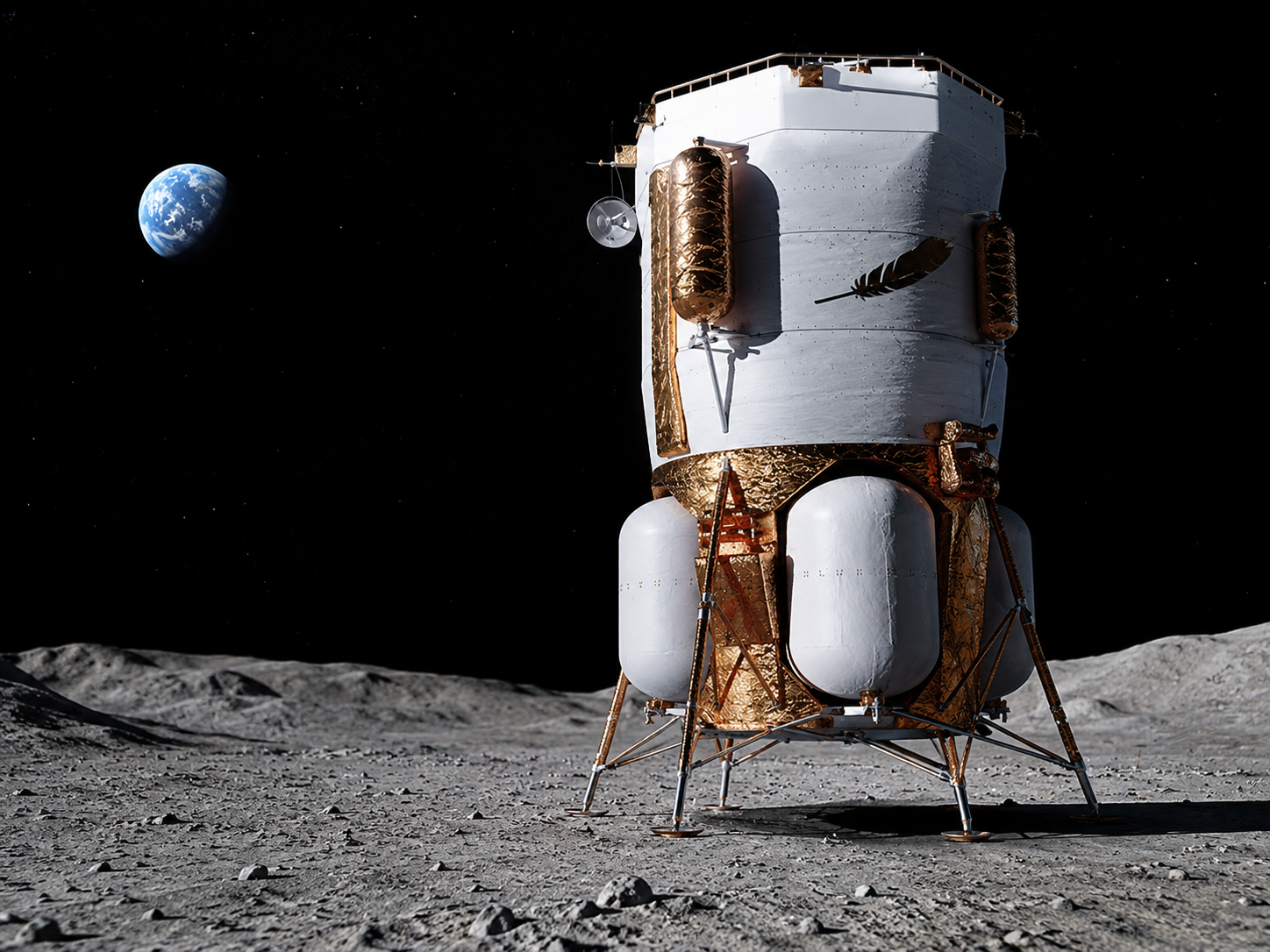
Before lunar technology reaches the Moon, it has to survive the less glamorous work of testing on Earth. Editorial illustration by TheDailyGlobe.
Key Facts
- NASA says Blue Origin's Blue Moon Mark 1 lander completed testing at a NASA vacuum chamber.
- NASA says the uncrewed cargo lander is intended to advance Human Landing System capabilities in support of Artemis.
- NASA's Commercial Lunar Payload Services materials say Blue Moon Mark 1 will deliver science and technology to the lunar South Pole.
- The Guardian reported that NASA selected Blue Origin for the first of three uncrewed lunar missions in 2026.
- Ground testing is not the same as a completed lunar mission.
Space technology becomes easier to imagine when it is shown in artwork. It becomes more real when engineers put hardware through the kind of testing that decides whether it can survive the conditions it was built for.
NASA says Blue Origin's Blue Moon Mark 1 lunar lander, also called Endurance, completed testing inside a NASA vacuum chamber. The uncrewed cargo lander is part of NASA's push to use commercial spacecraft to deliver science, equipment and technology demonstrations to the Moon.
What NASA And Blue Origin Tested
The testing took place on Earth, not in space. That distinction matters. Vacuum chamber testing is meant to help determine whether a spacecraft can handle conditions closer to what it may face beyond Earth, including low-pressure environments.
NASA described the milestone as part of the Blue Moon Mark 1 lander's path toward supporting lunar cargo delivery. The agency has connected the lander to both its Human Landing System work and its wider Artemis program, which is aimed at returning astronauts to the Moon and building the systems needed for sustained lunar exploration.
The test does not mean the lander has flown, landed or completed a lunar delivery. It means one important piece of ground work has been completed before any mission can prove the hardware in actual flight.
How This Fits Into NASA's Moon Strategy
NASA's current Moon plans do not depend only on government-built spacecraft. Through programs such as Commercial Lunar Payload Services, the agency is using private companies to help carry scientific instruments, technology demonstrations and other payloads to the lunar surface.
Blue Moon Mark 1 is part of that commercial approach. NASA's CLPS materials say the lander is intended to deliver science and technology to the lunar South Pole, an area that has drawn interest because of its potential value for future exploration.
For readers, the useful point is not a billionaire rivalry or a dramatic new space race. It is infrastructure. If commercial landers can reliably move payloads to the Moon, NASA and its partners may have more ways to test tools, study lunar conditions and prepare for later missions.
Why Cargo Landers Matter Before Crewed Missions
Uncrewed cargo missions are less visible than astronaut flights, but they can do important work. They can carry instruments, test landing systems, deliver supplies and give engineers real performance data before people are placed on more complicated missions.
That makes commercial cargo landers a practical step between planning and long-term lunar operations. NASA can learn from how landers perform, how payloads survive, how landing sites are managed and how private contractors handle technical problems that emerge before or during missions.
The approach also spreads work across companies and contracts. That can create more options for NASA, but it also means each provider has to prove its hardware through testing, launch, transit, landing and payload operations. A successful vacuum test is one piece of that chain, not the whole chain.
What Remains Uncertain
Several questions remain open. The launch schedule, final payload details and mission performance still matter more than any single ground milestone. The lander has to move from testing to flight before anyone can judge how it performs on the way to the Moon and on the lunar surface.
It is also unclear how future Artemis architecture will evolve as NASA balances crewed missions, cargo delivery, commercial contracts, budgets and technical readiness. NASA's larger Moon plans depend on many systems working together, and one lander test cannot answer every question.
The other uncertainty is reliability. Commercial lunar landers are still proving themselves as a regular transportation system for science and equipment. The promise is clear, but the record will be built mission by mission.
What To Watch Next
The next developments to watch are Blue Moon's launch schedule, NASA payload announcements, follow-up test results and Artemis milestones tied to lunar surface operations.
For now, the confirmed development is modest but meaningful: Blue Origin's lander has cleared a ground test NASA says is tied to future lunar cargo work. If the lander advances from testing to a successful mission, it would give NASA another commercial tool for turning Moon plans into hardware on the surface.
Reporting note: Reporting draws on NASA mission updates, NASA Commercial Lunar Payload Services materials, Artemis program records, established reporting, and reviewed space technology context. This article was produced with AI-assisted research and reviewed by an editor before publication.