Automatic Braking Rule Shows Car Safety Tech Becoming Standard, Not Luxury
Federal rules will require automatic emergency braking on new light vehicles, moving a once-premium safety feature toward a baseline standard.
Save Article
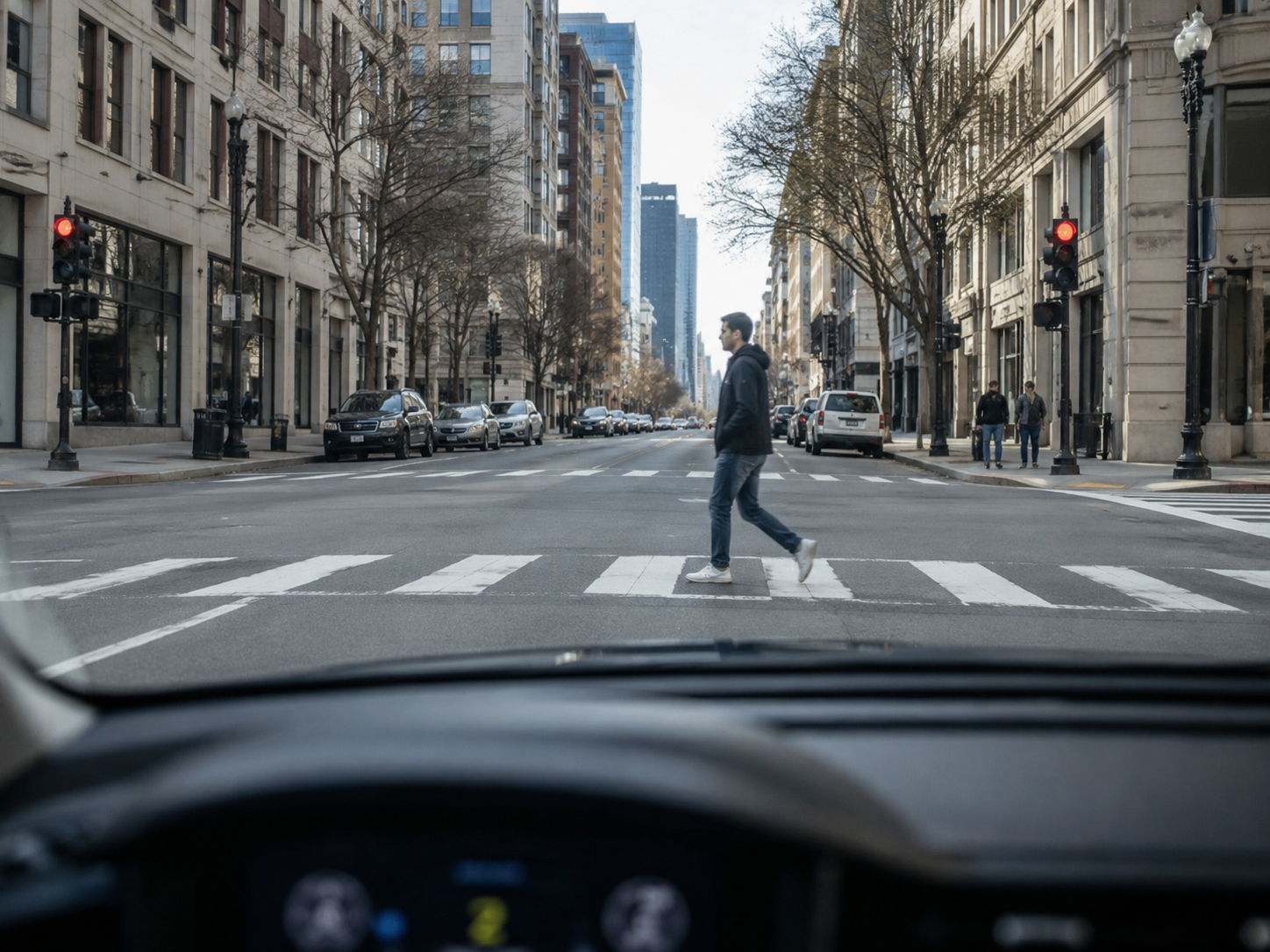
Automatic braking systems are becoming part of the expected safety baseline for new vehicles. Editorial illustration by TheDailyGlobe.
Key Facts
- NHTSA finalized a rule requiring automatic emergency braking and pedestrian automatic emergency braking on new cars and light trucks.
- The Department of Transportation said the standard applies starting in 2029.
- NHTSA says AEB systems use sensors and braking systems to detect crash-imminent situations and automatically apply or supplement braking.
- NHTSA materials say the rule applies to light vehicles, including passenger cars, multipurpose passenger vehicles, trucks and buses under 10,000 pounds GVWR.
- The rule applies to new vehicles and does not mean every vehicle currently on the road already has the required system.
In traffic, a few seconds can matter. A driver looks down too long, a car ahead stops suddenly, or someone steps into a crosswalk before there is much time to react.
That is the driving moment behind a federal vehicle-safety rule that will require automatic emergency braking and pedestrian automatic emergency braking on new cars and light trucks. The National Highway Traffic Safety Administration finalized the rule in 2024, and the Department of Transportation said the standard applies starting in 2029.
The rule shows how some car safety technology is moving from an optional feature or higher-end selling point toward required equipment. It does not make cars self-driving, and it does not promise to prevent every crash. But it does set a new baseline for what new light vehicles will be expected to include.
What Automatic Braking Does
Automatic emergency braking systems are designed to help when a crash appears imminent. NHTSA says the systems use sensors and the vehicle's braking system to detect certain dangerous situations and then automatically apply or supplement braking.
Pedestrian automatic emergency braking is aimed at another common risk: a person in or near the vehicle's path. The technology is meant to help reduce crashes involving pedestrians, though its performance can depend on the system, the speed, the lighting, the weather and the situation.
The key point is that AEB is a driver-assistance safety feature, not full automation. Drivers still have to pay attention, steer, brake and understand that no system works perfectly in every condition.
What The Rule Requires
The rule applies to new light vehicles, including passenger cars, multipurpose passenger vehicles, trucks and buses under 10,000 pounds gross vehicle weight rating. That means the requirement is aimed at the kinds of vehicles many households use every day.
The 2029 timeline matters because vehicle rules do not transform the road overnight. Automakers need time to design, test and build systems into new models. Older vehicles will still be on the road after the standard begins.
For consumers, the rule is less about one model year and more about direction. Safety features that were once marketed as upgrades are increasingly becoming part of what regulators expect new vehicles to include.
What The Technology Cannot Promise
AEB can help reduce certain crash risks, but it cannot erase the need for careful driving. Systems may perform differently depending on manufacturer design, road conditions, sensor visibility, vehicle speed and driver behavior.
That matters because driver-assistance technology can be misunderstood. A safety feature that can brake in some situations is not the same as a car that can safely manage all driving decisions.
The best way to understand the rule is as a safety baseline, not a guarantee. It raises expectations for new vehicles, but it does not remove the limits of technology or the responsibility of the person behind the wheel.
What Drivers Should Watch Next
The next thing to watch is how automakers implement the rule before the 2029 standard takes effect. Vehicle safety ratings, model updates and manufacturer explanations may help show how systems perform and how clearly companies explain their limits.
NHTSA guidance and safety information will also matter, especially as more driver-assistance features become common. Clear public understanding may be just as important as the technology itself.
For now, the rule shows where vehicle safety is heading. Automatic braking is becoming part of the expected foundation for new cars, but it remains a backup system, not a replacement for an alert driver.
Reporting note: Reporting draws on U.S. Department of Transportation materials, NHTSA rulemaking records, vehicle safety agency explanations, and reviewed background materials. This article was produced with AI-assisted research and reviewed by an editor before publication.