Android XR Glasses Push AI Wearables Closer to Real Consumers
Google and Xreal’s Android XR glasses news points to a wearable future that is getting more serious, but pricing, privacy and everyday usefulness remain unsettled.
Save Article
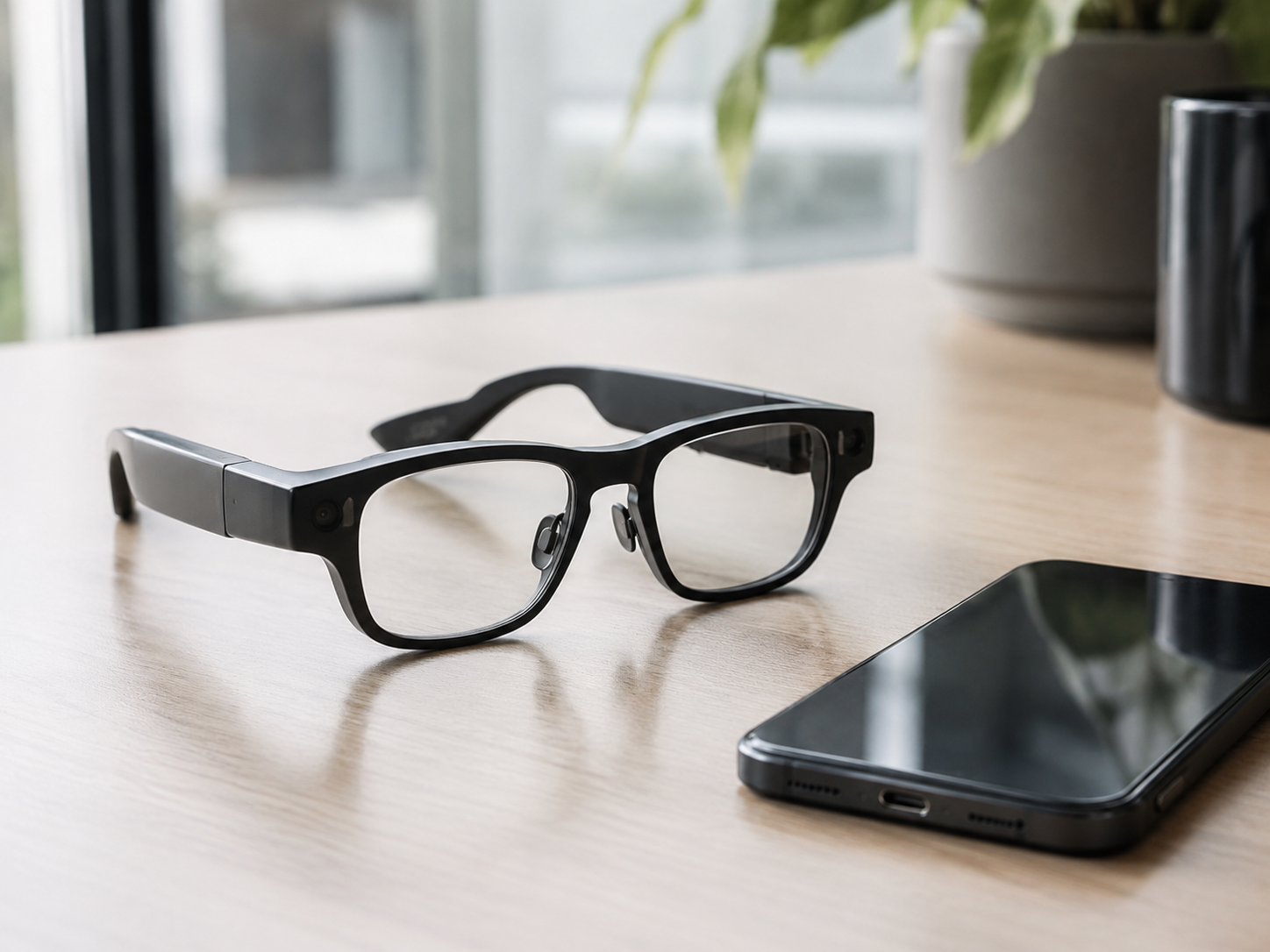
Google and Xreal’s Android XR glasses news points to a wearable future that is getting more serious, but pricing, privacy and everyday usefulness remain unsettled. Editorial illustration by TheDailyGlobe.
Key Facts
- Google said it would preview glasses tied to Android XR and Gemini-era Android updates around Google I/O 2026.
- Xreal and Google revealed Project Aura Android XR glasses at Google I/O 2026.
- Reporting says the glasses are expected later in 2026, though exact launch and pricing details remain limited.
- The product news sits inside a larger Google push to bring AI features deeper into Android and consumer devices.
- The glasses have not yet proved whether AI wearables will be useful enough for everyday buyers.
Smart glasses are moving closer to the part of the technology market where ordinary people may actually have to decide whether they want them.
Google said ahead of its 2026 I/O developer conference that it would preview glasses connected to Android XR, the company’s platform for extended-reality devices. At I/O, Google and Xreal revealed Project Aura, a pair of Android XR glasses that reporting says are expected later in 2026. The details are still limited, but the message from the companies is clear enough: AI-powered wearables are no longer only a futuristic demo category.
That does not mean consumers should treat the hardware as proven, affordable or ready to replace phones. It means the category is entering a more serious phase, with Google’s Android ecosystem, Gemini-era AI updates and outside hardware partners all moving toward devices people may eventually wear in daily life.
What Android XR Glasses Are Trying to Become
Android XR is Google’s platform for devices that blend digital information with the physical world. In practice, that can mean headsets, glasses or other wearable displays that put apps, visuals or AI assistance closer to a person’s field of view instead of keeping everything on a phone screen.
Project Aura appears to fit that idea: glasses built around Android XR, developed with Xreal, and meant to connect with Google’s broader AI and Android strategy. The public information so far does not settle exactly what the glasses will cost, how they will be sold, what features will be included at launch or how polished the experience will be.
That uncertainty matters because smart glasses have had a long history of impressive demos and awkward consumer questions. A device can look useful on a conference stage but still struggle if it is uncomfortable, expensive, socially awkward, too dependent on a phone or unclear about what problem it solves better than existing devices.
Why AI Changes the Wearable Question
The new factor is AI. Earlier smart-glasses efforts often focused on screens, cameras, notifications or augmented-reality overlays. The newer pitch is different: wearable devices could become a way to bring AI assistance into daily moments without pulling out a phone.
That could mean navigation, translation, visual search, reminders, hands-free help or other contextual features. But the strongest use cases are not fully proven for most consumers. The practical question is simple: will people wear AI glasses because they truly make life easier, or will they feel like another device asking for attention?
Google’s broader I/O announcements, according to AP coverage, centered heavily on AI advances. The Android XR glasses news should be read inside that larger push. Google is not only trying to show a new gadget. It is trying to show that AI can move across phones, apps, search, assistants and wearable devices.
The Privacy Question Consumers Should Watch
Wearable AI also brings privacy questions that are harder to ignore than with a phone in a pocket. Glasses can include cameras, microphones, sensors or always-near displays. Even when those tools are useful, they raise questions about what is being captured, when recording is obvious, how data is processed and whether people nearby have meaningful notice.
That does not make AI glasses automatically unsafe or unacceptable. It does mean companies will have to explain the rules clearly. Consumers will need to know what information stays on the device, what goes to cloud systems, what is stored, what is deleted and how easy it is to control recording or AI features.
The social side matters too. Phones became normal partly because people learned the signals around them: when someone is recording, texting, navigating or taking a picture. Smart glasses blur those signals. If the next wave of wearables is going to work in everyday life, companies will have to solve trust and comfort problems as much as display and battery problems.
What Remains Unknown Before Release
The biggest unanswered questions are ordinary consumer questions: price, battery life, weight, comfort, app support, privacy controls and whether the glasses work well outside controlled demos. Reporting says Project Aura is expected later in 2026, but the available information does not yet show whether it will be a mainstream consumer product, a developer-focused device or something in between.
There is also the question of competition. Smart glasses and AI wearables are becoming a more crowded field, with major technology companies trying to figure out whether the next important device sits on a desk, in a pocket, on a wrist or on a person’s face.
For now, the safest reading is not that Android XR glasses are about to change daily life overnight. It is that one more major platform is moving toward AI wearables, and the category is getting closer to the moment when consumers can judge it by real products instead of promises.
That is the useful test ahead. Not whether smart glasses look impressive in a demo, but whether they are helpful, trustworthy and comfortable enough for people to actually wear.
Reporting note: Reporting draws on Google product materials, Associated Press technology reporting, Shacknews reporting, and reviewed background context on consumer wearable technology. This article was produced with AI-assisted research and reviewed by an editor before publication.