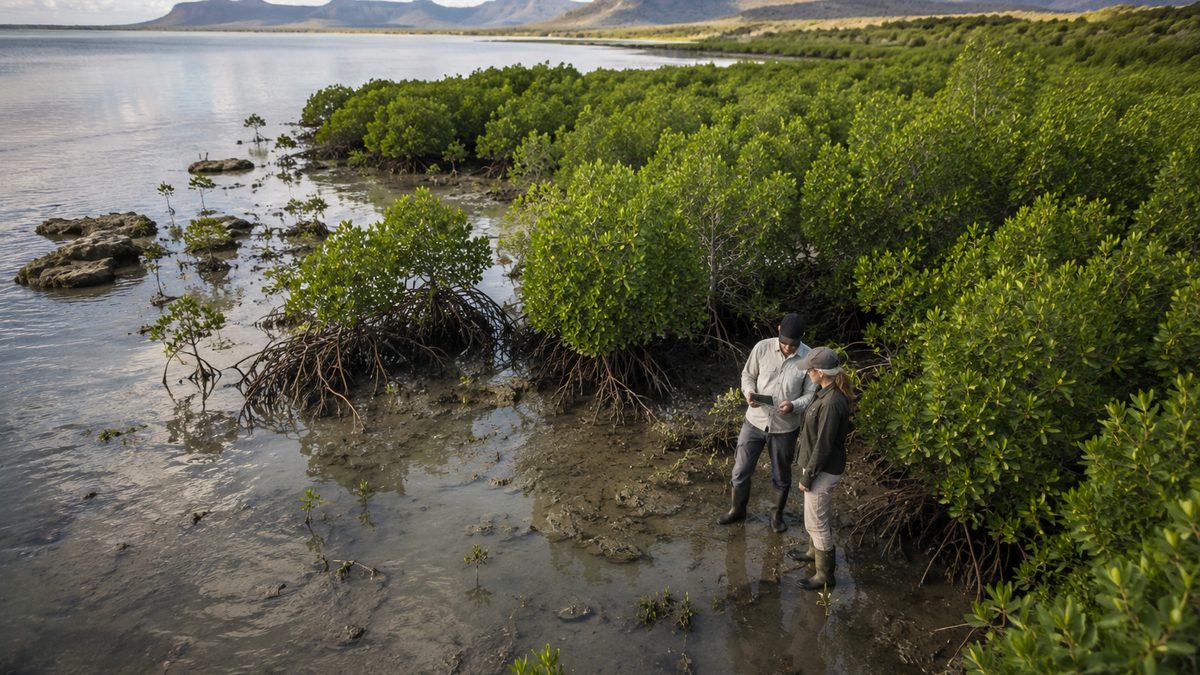
Warming May Weaken Lakes’ Natural Ability to Filter Nitrogen
A new study of a Swiss lake suggests warming could disrupt a quiet microbial process that helps remove excess nitrogen from water.
Save Article
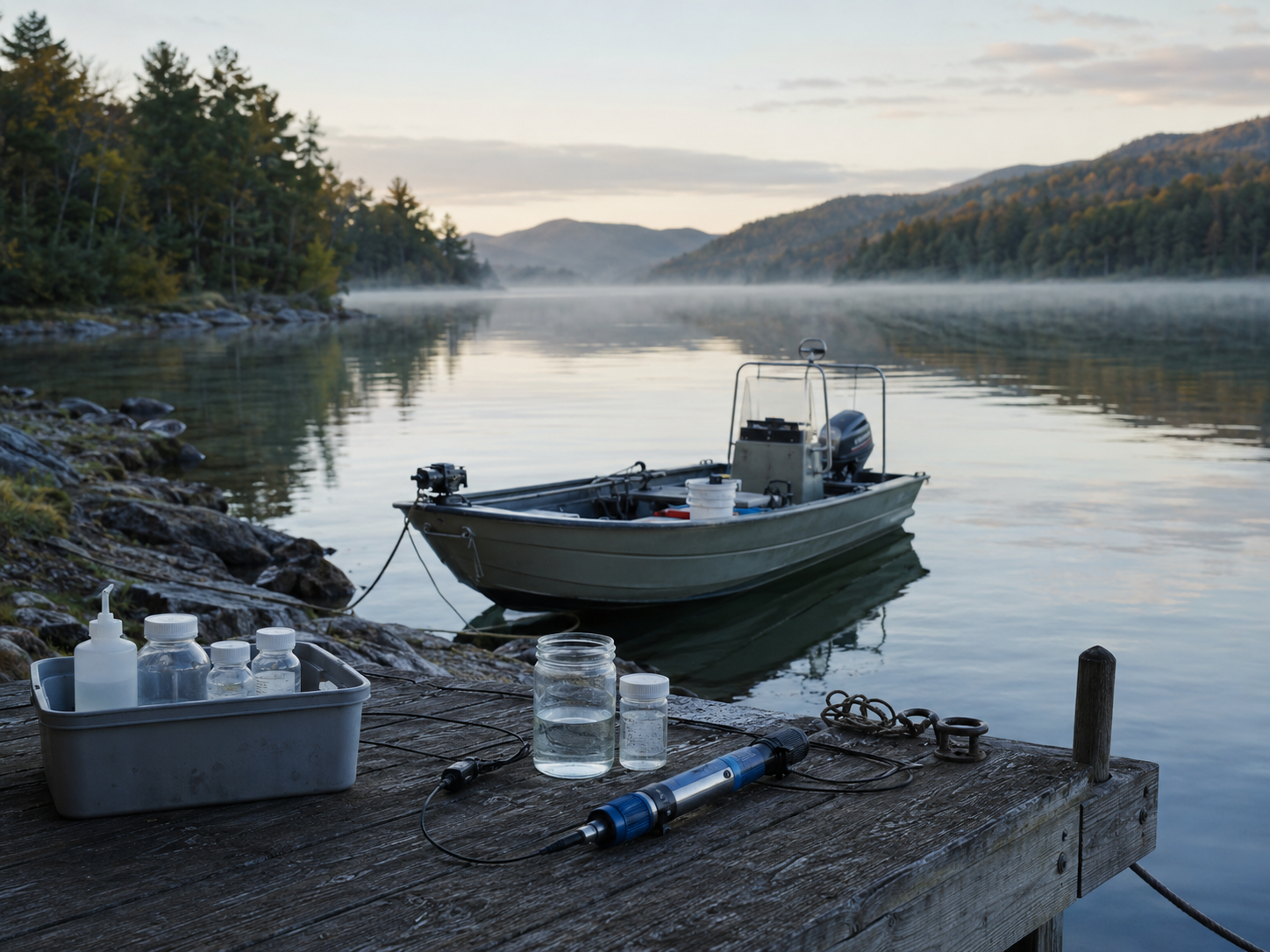
Researchers are studying how warming may affect the natural processes that help lakes remove excess nitrogen from water. Editorial illustration by TheDailyGlobe.
Key Facts
- Lakes remove excess nitrogen from water through microbial denitrification.
- A University of Basel and Eawag-led study found this purification function is sensitive to warming.
- Researchers studied Lake Baldegg in Switzerland.
- The study found denitrification activity was nearly 50% more active during winter mixing than summer stratification.
- The results were published in Nature Microbiology.
Lakes do more than give people a place to swim, fish, boat, or sit by the water. They also perform quiet work that helps protect water quality.
One of those hidden jobs is removing excess nitrogen from water. A new University of Basel and Eawag-led study suggests that warming could weaken that natural filtering process in at least some lakes, with possible effects for algae growth, downstream ecosystems, and coastal waters.
The study focused on Lake Baldegg in Switzerland and examined denitrification, a microbial process that converts excess nitrogen into a form that leaves the water system. The results were published in Nature Microbiology.
How Lakes Help Clean Water
Nitrogen is a necessary nutrient, but too much of it can create problems. Excess nitrogen from farms, wastewater, urban runoff, and other sources can feed algae blooms. When those blooms decay, they can reduce oxygen in the water and harm fish and other aquatic life.
Denitrification is one way lakes help reduce that pressure. Microbes in low-oxygen parts of a lake can transform reactive nitrogen into nitrogen gas, which leaves the water and returns to the atmosphere. It is not a process most people see, but it can affect how much nitrogen moves downstream.
That makes lakes more than passive basins. In many watersheds, they can act as natural filters between the land and larger rivers, reservoirs, and coastal waters.
What the Lake Baldegg Study Found
Researchers studied Lake Baldegg to understand how seasonal mixing affects nitrogen removal. In colder months, many lakes mix from top to bottom as surface water cools and sinks. In warmer months, lakes often become stratified, with warmer water sitting above colder, deeper water.
The study found that denitrification activity was nearly 50% more active during winter mixing than during summer stratification. That matters because warming can shorten or weaken winter mixing in some lakes, reducing the time when this nitrogen-removal process is most active.
The finding does not mean every lake will respond in the same way. Lake depth, oxygen levels, nutrient loads, climate, watershed conditions, and local water circulation all affect how nitrogen is processed.
Why Warming Could Change the Balance
Warming can change how long lakes remain mixed and how quickly they settle into layers. If winter mixing becomes shorter or less complete, the microbial conditions that support denitrification may shift.
The real-world concern is not only what happens inside one lake. If a lake removes less nitrogen, more nitrogen may continue downstream. That can add to algae blooms and oxygen-depleted dead zones, depending on the watershed and how much nutrient pollution is already entering the system.
For communities near lakes and rivers, this kind of research connects climate change to water quality in a practical way. The issue is not just warmer air or warmer water. It is whether warming changes the natural processes that help keep freshwater systems working.
What Scientists Still Need to Learn
The study’s detailed measurements come from Lake Baldegg, so the broader meaning needs careful testing. Researchers still need to know how similar lakes respond, how the effect varies by region, and how severe warming would have to be to meaningfully reduce nitrogen removal in different freshwater systems.
Researchers also said they do not yet know why denitrification is especially active during winter mixing. That unanswered question matters because understanding the mechanism could help scientists better predict which lakes are most vulnerable.
Future studies may compare more lakes, track regional water-quality changes, and examine how local nutrient pollution interacts with warming. For now, the Lake Baldegg findings point to a quiet but important risk: as lakes warm, some of their natural cleanup work may become less reliable.
Reporting note: Reporting draws on University of Basel and Eawag research materials, a peer-reviewed Nature Microbiology study, environmental microbiology research, and reviewed background materials. This article was produced with AI-assisted research and reviewed by an editor before publication.