New Study Adds Detail to Why Some Ocean Life Survived After the Dinosaur-Killing Impact
A new Nature study uses ecosystem modeling to examine how darkness, energy needs, and body size may have shaped survival in ancient oceans.
Save Article
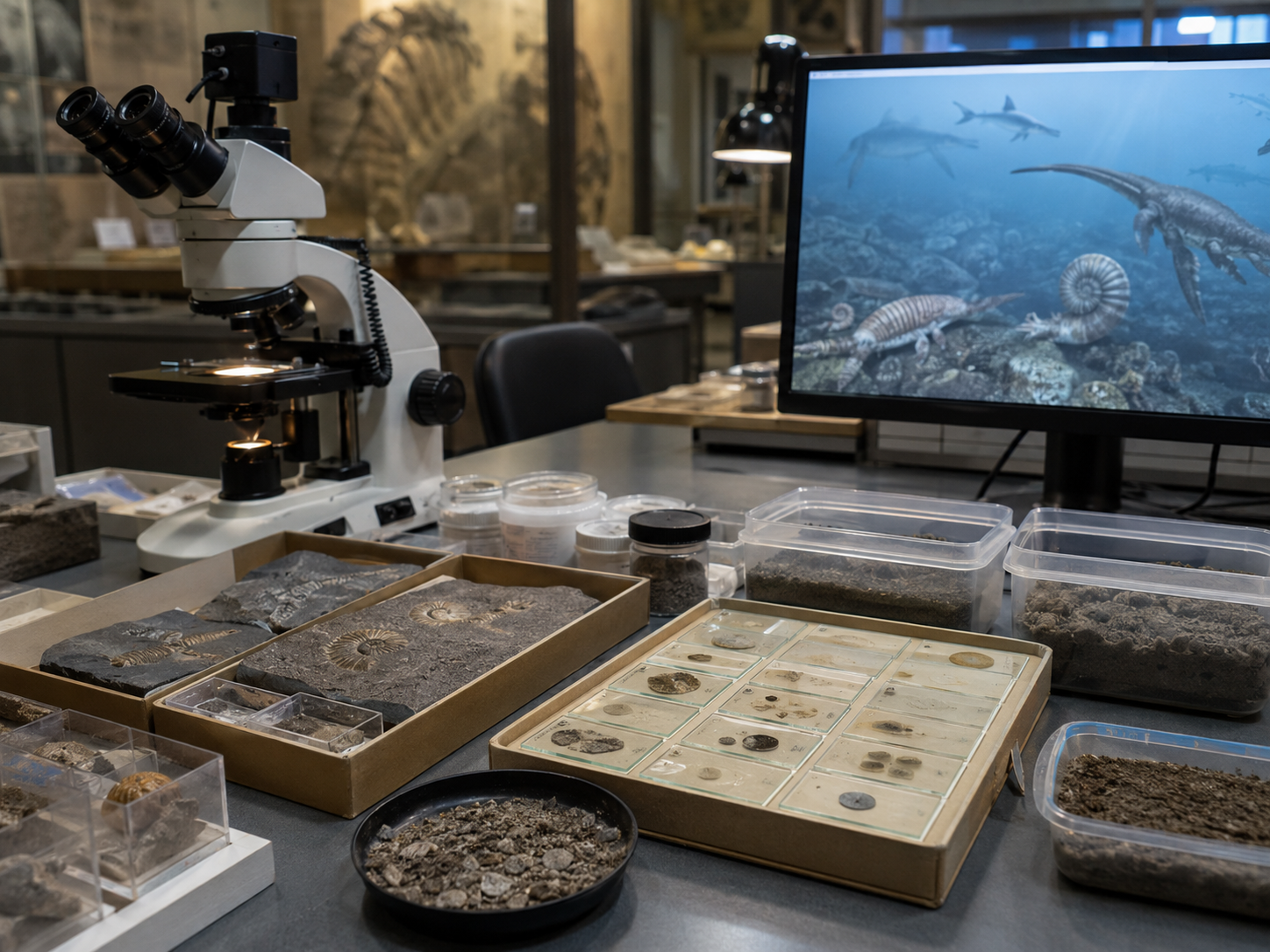
New modeling research is helping scientists study why some marine organisms survived after the end-Cretaceous impact. Editorial illustration by TheDailyGlobe.
One of the lasting mysteries of the asteroid impact that ended the age of the dinosaurs is not only why so much life disappeared, but why some life managed to hang on.
A new study published May 27 in Nature adds detail to that question by looking at ancient marine life. The research used trait-based ecosystem modeling to examine extinction patterns in the oceans after the end-Cretaceous impact, focusing on how darkness, energy needs, and body size may have affected survival.
What the Study Modeled
The study examined how impact-driven darkness could have disrupted marine ecosystems. After the asteroid impact, reduced sunlight would have made photosynthesis harder, cutting into the food supply that many ocean organisms depended on.
The researchers found that darkness and body-size-dependent extinction thresholds drove much of the observed pattern in the model. Put simply, some organisms may have been more vulnerable because they needed more energy to survive, while smaller organisms with lower energy needs may have had a better chance of enduring the dark period.
Why Tiny Polar Organisms Matter
The University of Bristol said tiny marine organisms in polar oceans may have survived partly because they needed less energy and were better able to tolerate darkness. That finding gives readers a clearer way to understand the study: survival was not random, and it was not only about where organisms lived. It may also have depended on how much energy they needed when sunlight and food became scarce.
That does not mean the study fully explains the mass extinction. It focuses on marine extinction patterns, not every species or every effect of the asteroid impact. The dinosaur extinction itself is not the focus here.
What Remains Unclear
Like all modeling studies, the findings depend on assumptions and the quality of available fossil and ecological data. Models can test whether a proposed explanation fits known patterns, but they cannot replace the fossil record or prove every detail of what happened.
The next test is how well the model results line up with evidence from different marine groups and regions. Follow-up research comparing the model with more fossil data could help scientists better understand why some ecosystems collapsed while others left enough survivors for ocean life to rebuild.
Reporting note: Reporting draws on peer-reviewed research, university research materials, scientific institution statements, and reviewed background materials. This article was produced with AI-assisted research and reviewed by an editor before publication.