Tiny Seabirds May Use Smell to Find Food Across the Open Ocean
NASA-funded research suggests Mediterranean storm petrels may choose crosswind flight paths because moving air carries odor clues that help them find food at sea.
Save Article
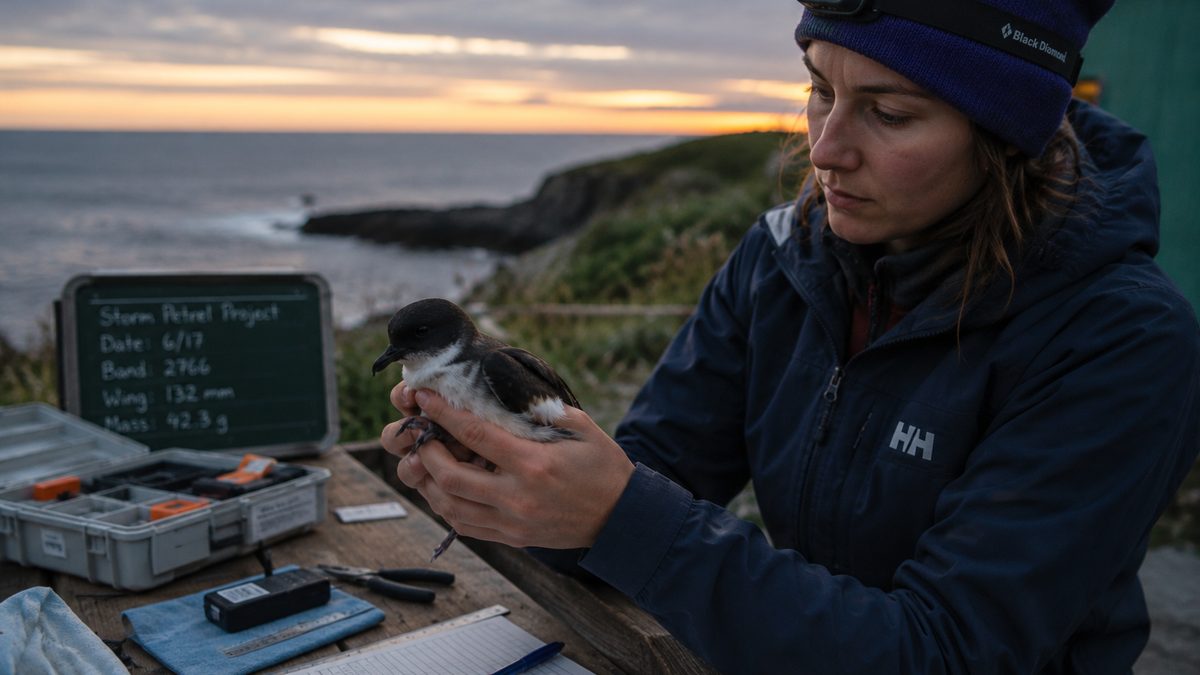
Tracking tiny seabirds can help researchers understand how wind and scent guide life over the open ocean. Editorial illustration by TheDailyGlobe.
Key Facts
- NASA reported the storm petrel research on June 12, 2026.
- The peer-reviewed paper was published in Royal Society Biology Letters.
- Researchers attached lightweight GPS sensors to Mediterranean storm petrels.
- The birds appeared to seek crosswinds that carried odor cues toward prey.
- The study focuses on Mediterranean storm petrels and should not be generalized to all seabirds.
A storm petrel is not built like an ocean giant. It is small, light, and easy to overlook against the scale of open water. Yet these seabirds cross vast marine spaces in search of food, making choices that can determine whether a long flight is worth the energy.
New NASA-funded research suggests one clue may be moving through the air. Mediterranean storm petrels tracked with lightweight GPS sensors appeared to seek crosswinds that could carry odor signals toward prey, according to research reported by NASA and published in Royal Society Biology Letters.
Why a Harder Flight Path May Help
Flying with the wind can save energy. Flying across it can be harder. That is why the reported behavior is interesting: the birds may be trading some flight efficiency for better information.
The idea is that wind does more than push a bird along. It also carries smells. Over the ocean, those odors can come from biological activity linked to feeding areas. For a small bird searching a huge, shifting surface, a scent carried by crosswind may act like a moving clue.
The finding does not mean the birds are following a simple scent trail like a line on a map. Ocean air is messy. Wind changes, odors spread unevenly, and food sources move. But the research suggests smell may help storm petrels make navigation choices during foraging flights.
How Scientists Tracked the Birds
To study the behavior, researchers attached lightweight GPS sensors to Mediterranean storm petrels. Those devices allowed scientists to compare the birds' flight paths with wind conditions and look for patterns in how the birds moved across the ocean.
That kind of tracking gives researchers a more detailed view of animal movement than shoreline observation alone. Instead of only knowing that birds leave and return, scientists can examine how they travel, where they change direction, and how their routes line up with environmental conditions.
In this case, the flight-path analysis pointed toward a possible role for odor-bearing crosswinds. The birds appeared to choose routes that gave them access to scent information, even when those paths may have required extra effort.
What This Says About Ocean Life
For readers, the wonder of the study is not just that birds may smell their way across water. It is that navigation, food, wind, and ocean ecology are connected in ways that are easy to miss from land.
A feeding area at sea is not marked by a sign. It can be shaped by plankton, fish, currents, temperature, and other marine conditions. If certain odors help birds locate productive areas, then smell becomes part of how life above the ocean responds to life below it.
That connection may also matter as scientists study how changing environmental conditions affect seabirds. If wind patterns shift, the scent information available to birds may shift too. The current research points toward that question but does not settle it.
What the Study Does Not Prove
The limits are important. The study focuses on Mediterranean storm petrels. It does not prove that all seabirds navigate this way, or that smell is the only tool these birds use to find food.
Animals often combine multiple cues, including wind, sight, memory, ocean conditions, and possibly smell. The new research adds evidence for one part of that larger picture. It should be read as a careful step in understanding seabird navigation, not as a complete explanation of how ocean birds travel.
What Comes Next
Future research could test whether similar patterns appear in other seabird species, regions, and seasons. More tracking could also help scientists understand whether birds use odor cues differently depending on weather, food availability, or breeding demands.
The larger question is how animals make sense of environments that are always moving. For Mediterranean storm petrels, the answer may include a remarkable skill: reading the ocean not only by sight and wind, but by scent carried through the air.
Reporting note: Reporting draws on NASA science materials, peer-reviewed research, Royal Society Publishing materials, and reviewed background context. This article was produced with AI-assisted research and reviewed by an editor before publication.